
The Almanzo Wilder Farm
Almanzo Wilder's boyhood farm near Malone, the setting of Farmer Boy: the 1843 farmhouse, barns rebuilt from his sketches, tours, events and the drive.
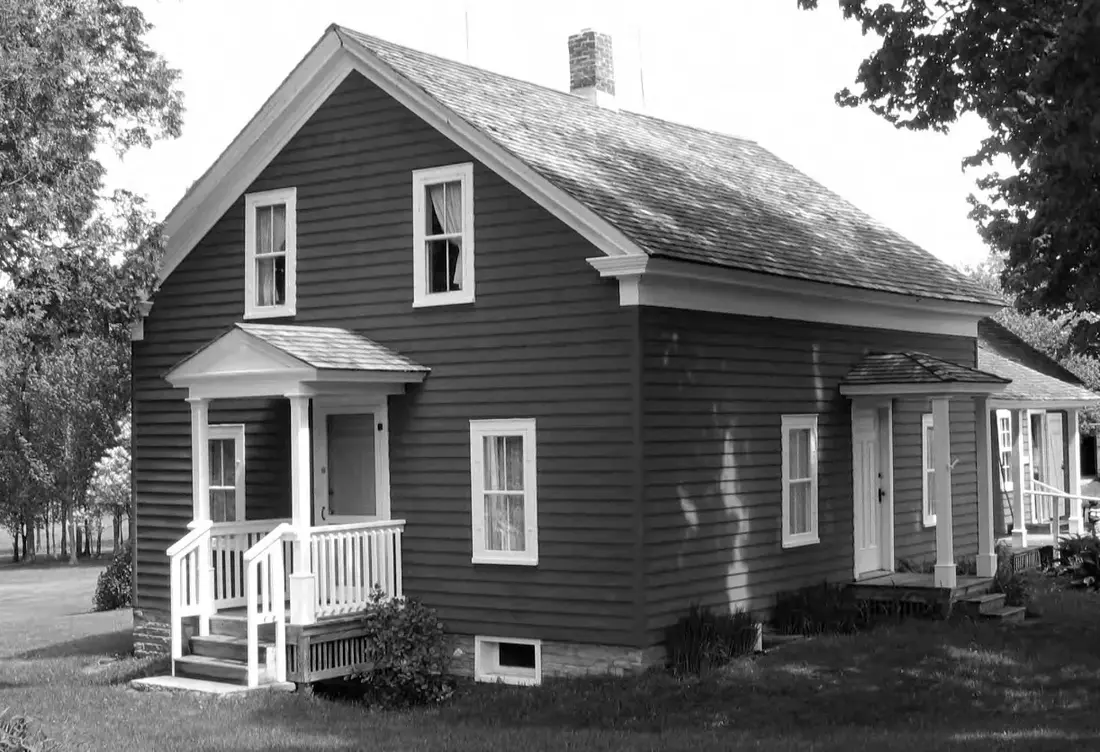
The Almanzo Wilder Farm on Stacy Road in Burke is the boyhood home of Almanzo Wilder and the setting of Farmer Boy, the book his wife, Laura Ingalls Wilder, wrote about his childhood here. The farmhouse his father built in the 1840s still stands on its original site, the barns have been rebuilt from Almanzo's own sketches, and guided tours run from Memorial Day weekend into the fall. It is about 13 road miles from the cabins, and children who know the book will recognize the parlor, the barns and the river from its pages.
Whose farm it was
This was Almanzo Wilder's home. Laura Ingalls never lived here, and she never visited. She was born near Pepin, Wisconsin, in 1867, and her family moved on to Kansas, Minnesota, Iowa and Dakota Territory while she grew up; her other books tell that western childhood. She built Farmer Boy from her husband's memories, the stories he told her and the drawings he made of the house and barns, and it came out in 1933 as the second Little House book, a year after Little House in the Big Woods.
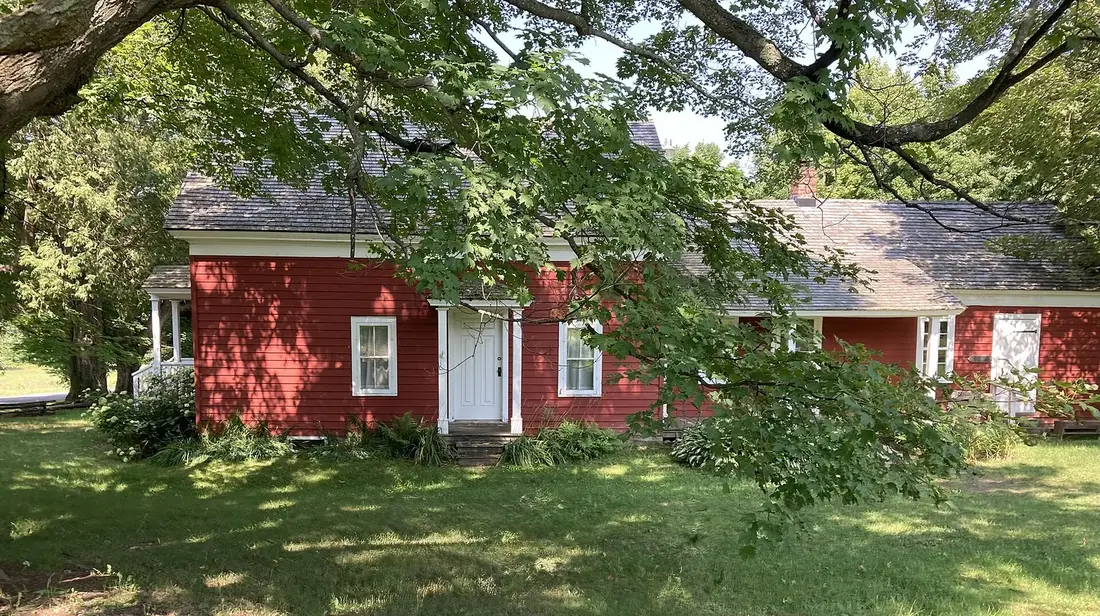
The book follows about a year in Almanzo's life when he was nine, around 1866, on this farm and in Malone, which the Wilders called town. Its 29 short chapters are mostly work, school and food: breaking calves, filling the icehouse, sheep shearing, threshing, hauling wood and the county fair. It is the only book in the series with a boy at its center, and of all the family homes in the series, the Wilder farmhouse is the only one still standing on its original site. The homestead was listed on the National Register of Historic Places in November 2014.
The Wilder family on Stacy Road
Almanzo's grandparents, Abel and Hannah Wilder, came to Malone from New England in 1816. Their son James bought 88 acres on a branch of the Trout River in November 1840, paying $342, and within two years began a modest two-story farmhouse on a low rise just east of Stacy Road. The house dates from 1843, the year he married Angeline Day. Its main block was nearly square, about 25 feet on a side, built of vertical planks two inches thick under weatherboard siding, and a rear wing was added around 1855. It was painted red, originally with Duane Paint, a pigment made from iron ore found in the southern part of the Town of Malone.
James and Angeline raised six children here: Laura Ann, born in 1844, Royal in 1847, Eliza Jane in 1850, Alice in 1853, Almanzo in 1857 and Perley in 1869. Only four of them are in Farmer Boy. Laura Ann was probably left out so readers would not confuse her with the author, and Perley was born after the year the book tells. Almanzo was born in the farmhouse on February 13, 1857, the date on his death certificate, though census records give birth years for him anywhere from 1858 to 1861.
The Wilders were prosperous farmers. They kept cattle and horses, raised sheep for meat and wool, grew potatoes and corn, kept a large kitchen garden and grew hops as their cash crop. Angeline's brother Andrew Day ran a potato-starch mill in the village of Burke, and the two families were tied twice over, because Andrew married James's sister Sarah. When Almanzo was small, the Town of Burke had about 2,200 people. It had been split off from Chateaugay in 1844; its petitioners wanted to call it Birney, after the Liberty Party's candidate for president, but the legislature named it for the British statesman Edmund Burke instead.
The move west
Several poor hop harvests in a row ended the Wilders' years in New York. Relatives had already gone west, and half the family moved to Spring Valley, Minnesota, in 1871. In April 1875 James and Angeline sold the 88-acre farm to Mary and Francis White for $5,000, and it kept working as a farm under other owners until the 1970s. None of this is in the published book: Laura Ingalls Wilder wrote pages about the family's decision to move west, but they were left out.
In 1879 Almanzo, Royal and Eliza Jane went on to Dakota Territory to claim homesteads near De Smet, where the Ingalls family had also arrived that year. Almanzo married Laura Ingalls there on August 25, 1885, and their daughter, Rose, was born in 1886. Diphtheria left Almanzo with a lasting disability, the couple lost a baby in 1889, and fire destroyed their house and barn. In 1890 they moved to Spring Valley to live with or near his parents, and in 1894 they settled for good at Rocky Ridge Farm in Mansfield, Missouri. James and Angeline later moved on to Crowley, Louisiana.
In 1930, at sixty-three, Laura finished Pioneer Girl, a memoir of her frontier childhood. Through the 1930s and into the early 1940s she reworked it into the Little House books, with Rose, who by then had made her own name as a writer, as her editor. Almanzo supplied the anecdotes, descriptions and diagrams for Farmer Boy, and the architects who later studied the farmhouse for its restoration found his sketches of the house and farmstead amazingly accurate. Almanzo died in 1949 and Laura in 1957.
How the farm was saved
Lightning set fire to the Wilder barns in 1851, while James owned the farm, and the barns burned down entirely a second time in 1967. In 1987 the Almanzo and Laura Ingalls Wilder Association, a volunteer-run educational nonprofit incorporated on June 5 that year, bought the property to restore it. Its stated purpose is to teach about rural life in northern New York from 1840 to 1875, with the farmhouse and Farmer Boy at the center.
The house was restored room by room, with the materials and building methods of the mid- to late 1800s. A historic structure report by the architects Crawford and Stearns in 1998 guided the work, and the house now looks as it did around 1866 to 1870. Twentieth-century alterations came out, the siding was remade to match a few surviving original weatherboards, the windows are period replicas, and the original eight-inch plank floors and some original plaster over lath survive. During the restoration a black stain turned up on the parlor wall, and the association believes it came from the stove-blacking brush Almanzo threw at Eliza Jane, a scene from the book.
The barns had to be rebuilt from scratch. Archaeologists from SUNY Potsdam found the old foundations in 1988, and stones from them went into the foundations of the new Big Barn, built in 1995, and the South Barn, built in 1997; the Horse Barn followed in 1999. Each was built from the digs, from Almanzo's descriptions and sketches, and from the book. The visitor center and a corn crib went up in 1989, the picnic pavilion in 1998, the restroom building in 1999, a pump house over what is probably the family's original well in 2002, and a replica one-room schoolhouse in 2013. When the farm's National Register nomination was written in 2008, eight of the nine buildings on the grounds were modern; only the farmhouse was original. An icehouse and an outhouse are on the list for when money allows, and in 2026 the association was raising money to repair and replace the roofs on the barns and the house.
On July 11, 2015, the farm was dedicated as a Literary Landmark, the first in northern New York and the only Little House site with the designation. The plaque stands in the kitchen garden at the farmhouse entrance, on a pedestal of locally quarried stone.
What you see on a tour
The farmhouse, the barns and the schoolhouse are open only on a guided tour. The visitor center, with the museum and the gift shop, is free during open hours.
The farmhouse
The tour goes through the pantry and past the wood stoves to the dining room where the traveling cobbler would have worked when he came around, the parlor with its horsehair chairs kept for special occasions, and the bedrooms upstairs. Some of the household things were dug up on the site, and local families gave many more. Farmer Boy refers to the house some fifty times, and much of what it says can still be checked: the front parlor with its door to the porch on the west side, a bedroom door in the south wall, and the stove set in a niche between the parlor and the dining room. In the parlor, look for the photographs of the stain on the wall.
The barns
The barns stand close behind the house around a square barnyard, as in the book. They are wood-framed and sided with vertical boards. The Big Barn held the oxen, the cows, the hay and the wagons. The Horse Barn, joined to it in an L, held horse stalls, hen houses, calf sheds, a box stall and the buggy house, and the book makes a point of the door between the two barns, unusual for its day; the rebuilt barns have it. The South Barn held the sheepfold, a manger, a cattle shed, calf pens, hog pens and the feed room. The small corn crib, with walls that slope inward, follows Almanzo's description too.
The schoolhouse and the river
The schoolhouse is a replica, built in 2013 to show what the Wilders' school may have looked like and reached by a path through the woods. School groups sit in it for a short lesson in the old style. It is dedicated to Laura Ingalls Wilder, to Eliza Jane Wilder and to all teachers, in memory of the one-room schools in and around Burke. A nature trail runs to the Wilder family's frontage on the Trout River, where the Wilders fished and washed their sheep, downstream from where they would have cut their ice.
The visitor center and the gardens
The visitor center holds the gift shop, the exhibits, staff offices and the farm's archives. The museum has tools, household artifacts, Wilder family photographs and the scale models of the homestead that were used to plan the barns and grounds. The shop sells books, old-time toys, cold drinks and a few snacks. Outside are a display version of Mrs. Wilder's kitchen garden, planted with heritage varieties of vegetables and herbs and a Three Sisters bed of corn, beans and squash, plus an orchard and a nature trail. The lilacs in the front yard, the roses, the raspberry bushes, the apple trees and the sugar maples are probably descended from the Wilders' own, and the St. Lawrence River still shows in the distance, the silver streak the book describes.
Season, days and tour times
The farm opens on Memorial Day weekend and keeps its fullest schedule through August. Tours start at 10 a.m., noon and 2 p.m. on open days. Reservations are not required, though for 2026 the farm encouraged visitors to reserve a tour ahead; otherwise arrive in time for one of the tour times. Groups of ten or more should call or email ahead. The table shows the 2026 season, the best guide to 2027 until the new schedule is posted; check the farm's tours page before you go.
| When, in 2026 | Days open | Tour times |
|---|---|---|
| Memorial Day weekend to August 30 | Wednesday to Sunday | 10 a.m., noon and 2 p.m. |
| September 1 to 30 | Saturday and Sunday | 10 a.m., noon and 2 p.m.; Thursday and Friday tours at 10 a.m. and 12:30 p.m. by appointment |
| Indigenous Peoples' Day weekend, October 10 to 12 | Saturday, Sunday and Monday | 10 a.m., noon and 2 p.m.; Monday at 10 a.m. and noon only |
| October, through mid-month | Saturday and Sunday, by appointment only | 10 a.m. and 12:30 p.m. |
In 2026 a tour cost $16 for adults, $15 for seniors and $9 for ages 6 to 16, and children 5 and under went free. Active-duty military got in free with ID, and their families paid half price. Appointment tours cost $45 a person for the first two guests and the regular price for everyone after that, and the farm asks for at least two weeks' notice by email. The visitor center charges nothing. In September 2026 the farm's posted hours were 10 a.m. to 3:30 p.m. on Saturdays and Sundays. Off season the farm's phone, (518) 483-1207, is checked only now and then, so email farm@almanzowilderfarm.com instead.
Events at the farm
The farm's calendar is a handful of special days spread through the season, and the 2026 list shows the pattern.
- Homeschool Day. Friday, May 15, 2026: tours for homeschooling families at reduced rates.
- Fun on the Farm. Saturday, June 20, 2026: a children's day with old-fashioned games, shingle shaving and farm animals, awards for a children's art show and essay contest, and the naming of an honorary Almanzo and Laura. Guides were in the buildings for visitors to look around on their own. Admission was $8 for adults, $5 for ages 6 to 16 and free for 5 and under, with a hot dog and burger stand on site.
- Wilder Weekend. July 25 and 26, 2026: actors from the Little House on the Prairie television series came to the farm for two days of music, nineteenth-century demonstrations, crafts, food and autographs. Dean Butler, who played Almanzo, and Charles Bloom were on the grounds, and Alison Arngrim, who played Nellie Oleson, brought her one-woman show to the Chateaugay Town Hall Theater the night before. The program also listed a fundraising dinner at the Malone Golf Club and a closing fiddle concert at the First Congregational Church in Malone.
- Self-sufficiency classes. Five Tuesday evenings between May and October, 6 to 8 p.m., with registration ahead: composting with worms, wool spinning, a hike with a goat, preserving food, and seed saving and starting on October 20, 2026.
- Indigenous Peoples' Day weekend. October 10 to 12, 2026, the last regular tours of the year.
The 2027 dates had not been posted in early October 2026. Watch the farm's events page from spring, and see the events calendar for everything else happening around the cabins.
Reading Farmer Boy before you go
Read it aloud on the drive up, or a chapter a night at the cabin. These are the chapters you will be standing in.
- School Days, chapter 1, starts with the walk to school. Nobody is sure which schoolhouse Almanzo walked to. In 1851 James Wilder was a trustee of the district school that later stood southeast of the farm, but the walk in the book fits a school just south of the farm across the Trout River, in the Town of Bellmont, the town the cabins are in. The Hardscrabble Settlement of the school chapters borrowed its name from Spring Valley, Minnesota, where the family moved later.
- Winter Evening, chapter 2, describes the house and the barns, the best preparation for the tour.
- Filling the Ice-House, chapter 6. There is no icehouse at the farm yet, but the river walk ends downstream of the spot where the family would have cut its ice.
- Sheep-Shearing, chapter 14, goes with the sheepfold in the South Barn and the river where the Wilders washed their sheep.
- Cold Snap, chapter 15, is where Almanzo plants the pumpkins that lead to chapter 21.
- Independence Day, chapter 16, takes the family to town, which is Malone.
- Keeping House, chapter 18, leaves the children in charge of the house, and it includes the stove-blacking brush Almanzo throws at Eliza Jane. The photographs of the stain are in the parlor.
- County Fair, chapter 21, is the Franklin County Fair, still held in Malone, usually in August; the fair guide has what the old records say about Almanzo's prize pumpkin.
- Cobbler, chapter 23, brings the traveling shoemaker into the dining room you will walk through.
- Mr. Thompson's Pocketbook and Farmer Boy, chapters 28 and 29, end the book. In the last chapter Mr. Paddock, the wheelwright, offers to take Almanzo on as an apprentice. How Almanzo answers is on the last page; let your children find it.
Visiting with children
Children who have read the book get the most from the tour, which is why the farm asks teachers to have their classes read it first. The youth price covers ages 6 to 16, and children 5 and under are free. School groups are booked for about two hours, a fair guide for a family that wants the tour, the museum and the walk to the river. Bring a picnic for the covered pavilion, or buy a cold drink and a snack in the shop.
- In 2026, Fun on the Farm in June was the day for younger children: games, farm animals and shingle shaving, for about half the price of a regular tour.
- Keep children close on the river walk.
- Photographs for your own use are welcome. Handheld cameras only, with no tripods or extra lighting, and video outside the buildings only.
- Back at the cabin, try the test the farm suggests after a visit: can popcorn and milk occupy the same space?
Dogs and accessibility
Pets are not allowed on the farm grounds, and the cabins' rules say a pet may never be left alone in the cabin, so plan the visit around the dog; all three cabins take pets for a fee, and bringing your dog covers the rest of the area's rules.
The farm's tour pages give no accessibility details, so call or email ahead about mobility needs. Each farmhouse door is up three or four steps, the schoolhouse is reached on a path through the woods, and the river is a walk away from the buildings. Parking is shaded, there is a restroom building, and the covered picnic pavilion stands apart from the historic buildings.
Malone and the Wilders
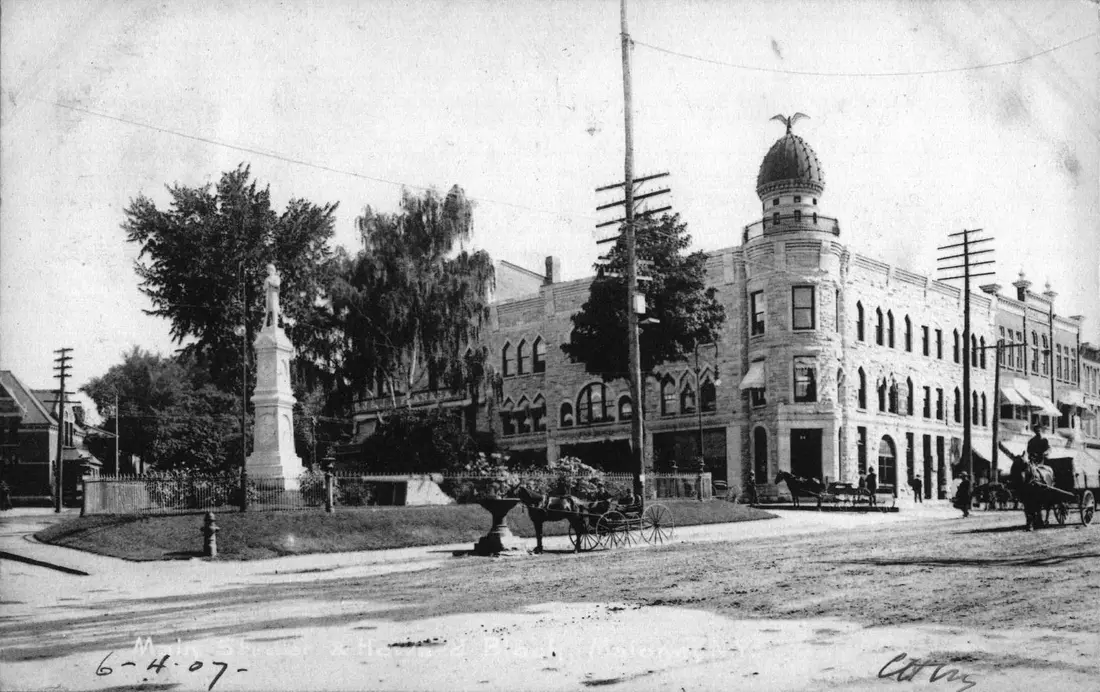
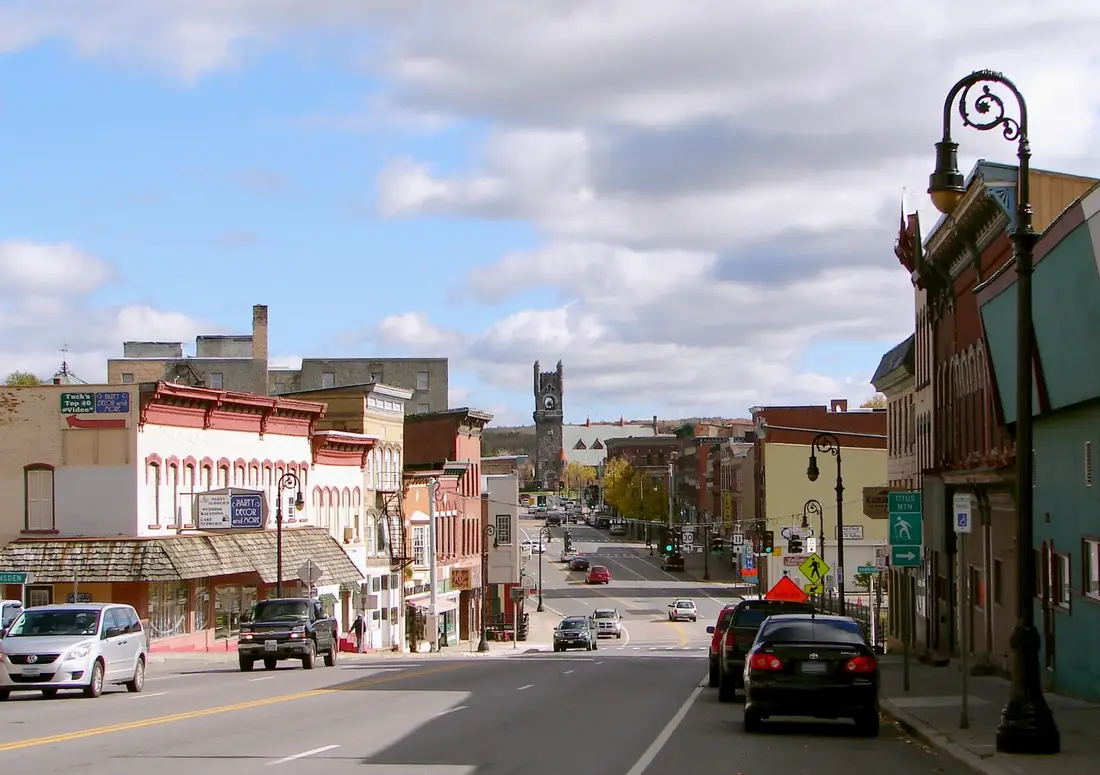
Town, in Farmer Boy, is Malone, about half an hour behind fast Morgan horses in the Wilders' day. In the 1860s it had more than three thousand people, two banks, mills, a tannery, an iron foundry, a woolen mill and a sandstone quarry. Several places there tie into the Wilder story.
- Franklin Academy. Royal, Eliza Jane and Alice went to school in the academy's three-story stone building of 1836; whether Almanzo did is not recorded, though it is likely. The Malone Academy that turns up in the chapters Birthday and Cobbler is this school. See Malone's history.
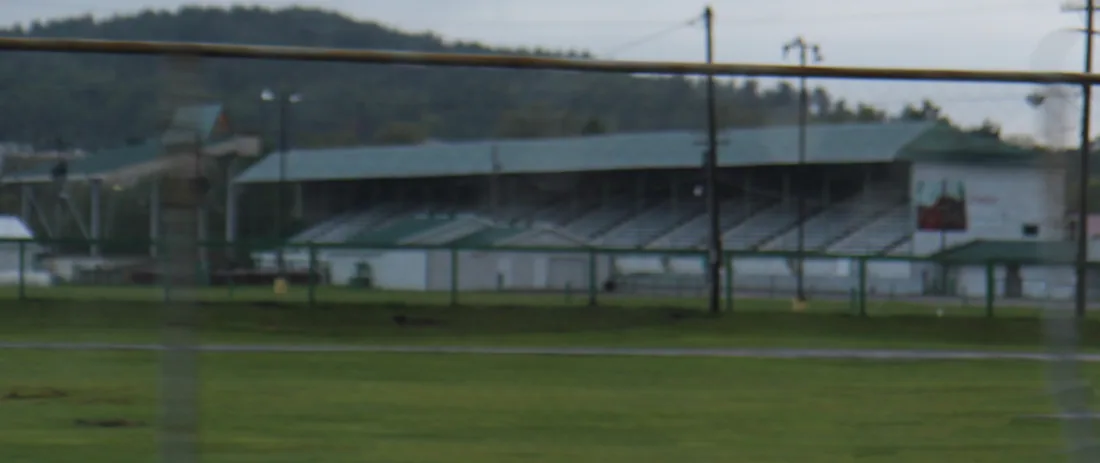
- The fairgrounds. The Wilders' county fair is the Franklin County Fair, held on the same grounds on East Main Street since 1852. The fair guide has its history.
- The House of History. The county historical society's museum on Milwaukee Street has held papers, letters and keepsakes of Laura Ingalls Wilder, and in 2026 it joined the farm for the fiddle concert that closed Wilder Weekend.
For lunch, groceries and the rest of the village, see the Malone town guide, and Farmer Boy country puts the farm, the village and the fair into one family day.
Getting there from the cabins
The farm is at 177 Stacy Road, in the Town of Burke with a Malone mailing address, about 13 road miles from the cabins; allow a little under half an hour. The quickest way skips the center of the village. Take County Route 25 north toward Malone for about four and a half miles, turn right on River Road, and follow it about two and a half miles until it becomes Andrus Street and ends at East Main Street beside the fairgrounds. Turn right onto Route 11 and drive east about a mile and three quarters, then turn right on County Route 23, right on Donohue Road after about a mile, and right again on Stacy Road; the farm is a third of a mile along. Going through the village center instead, on Duane Street and Main Street, adds about a mile.
Bokie's Drive-In, a Malone stop since 1956, sits on Route 11 between the fairgrounds and the County Route 23 turn, with burgers, hot dogs, fries, poutine and ice cream. In 2026 it opened at 11 a.m. every day but Monday. From the fairgrounds to the farm is about four road miles, which makes the two easy to pair in August.
Fitting the farm into a stay
The farm keeps no regular hours from mid-October to Memorial Day weekend, so plan it for a summer or early-fall stay; summer at the cabins and fall at the cabins list what else is open then. A morning tour leaves the afternoon free for the village, a lake or the hot tub. In August a 10 a.m. tour and an evening at the fair make one full day. Each of the three cabins has a main bedroom and a bunk room and sleeps four, which suits a family with children 10 and up; see family trips.
Questions
Is the Almanzo Wilder Farm Laura Ingalls Wilder's childhood home?
No. It is the boyhood home of her husband, Almanzo Wilder, and the setting of Farmer Boy. Laura grew up farther west and never visited the farm; she wrote the book from Almanzo's memories, stories and sketches. The farmhouse is the only home from the Little House books still standing on its original site, which is why so many readers make the trip.
When is the Almanzo Wilder Farm open?
Guided tours start on Memorial Day weekend. In 2026 the farm opened May 24 and was open Wednesday to Sunday through August 30, with tours at 10 a.m., noon and 2 p.m., then on Saturdays and Sundays in September. October tours are by appointment through mid-month, plus an open Indigenous Peoples' Day weekend, October 10 to 12. The 2027 schedule had not been posted in early October 2026, so check the farm's tours page before you go.
How much does a tour of the Wilder farm cost?
In 2026 tours cost $16 for adults, $15 for seniors and $9 for ages 6 to 16, and children 5 and under went free, as did active-duty military with ID; their families paid half price. The visitor center, with its museum and gift shop, is free during open hours. The house, the barns and the schoolhouse are open only on a guided tour.
Do we need to reserve a tour?
No, though for 2026 the farm encouraged visitors to reserve ahead; otherwise arrive in time for one of the scheduled tour times on an open day. Groups of ten or more should call (518) 483-1207 or email the farm ahead, and fall appointment tours need at least two weeks' notice by email. For lunch and errands on the same day, see the Malone town guide.
Can we bring our dog to the Almanzo Wilder Farm?
No. Pets are not allowed on the farm grounds, so plan to leave the dog at the cabin. All three cabins allow pets for a fee; pet-friendly cabins and bringing your dog have the details for the rest of your stay.
How far is the Wilder farm from the cabins?
About 13 road miles, a little under half an hour: County Route 25 north, River Road and Andrus Street to Route 11 in Malone, then east and down County Route 23, Donohue Road and Stacy Road to number 177. The farm is about four road miles past the Franklin County Fair grounds, so the two pair well in August.
Sources
Facts on this page were checked against these sources in October 2026. Hours, fees and schedules change; confirm before you go.
- Almanzo & Laura Ingalls Wilder Association almanzowilderfarm.com/
- Almanzo & Laura Ingalls Wilder Association almanzowilderfarm.com/tours
- Almanzo & Laura Ingalls Wilder Association almanzowilderfarm.com/homestead
- Almanzo & Laura Ingalls Wilder Association almanzowilderfarm.com/about
- Almanzo & Laura Ingalls Wilder Association almanzowilderfarm.com/contact
- Almanzo & Laura Ingalls Wilder Association almanzowilderfarm.com/s-projects-side-by-side
- Almanzo & Laura Ingalls Wilder Association almanzowilderfarm.com/post/fun-on-the-farm-2026
- Almanzo & Laura Ingalls Wilder Association almanzowilderfarm.com/post/reliving-the-magic-from-homeschool-days-to-
- Almanzo & Laura Ingalls Wilder Association almanzowilderfarm.com/about-5
- npgallery.nps.gov npgallery.nps.gov/NRHP/GetAsset/NRHP/09000720_text
- nps.gov nps.gov/subjects/nationalregister/upload/weekly-list-2014-national-reg
- ala.org ala.org/united/products_services/literarylandmarks/landmarksbyyear/201
- yahoo.com yahoo.com/entertainment/tv/articles/wilder-weekend-2026-set-july-11320
- pioneergirl.com pioneergirl.com/blog/archives/5068
- pioneergirl.com pioneergirl.com/blog/archives/8286
- pioneergirl.com pioneergirl.com/blog/archives/12225
- pioneergirl.com pioneergirl.com/blog/archives/12426
- pioneergirl.com pioneergirl.com/blog/archives/4528
- pioneergirl.com pioneergirl.com/blog/archives/9141
- fenimorefarm.org fenimorefarm.org/wp-content/uploads/2024/10/FarmerBoyEducatorsGuide.pd
- archive.org archive.org/details/historicalsketch00seav
- Visit Malone visitmalone.com/blog/2016/05/house-where-history-lives
- Visit Malone visitmalone.com/blog/2016/07/fair-food-delicious-history
- bokiesdrivein.com bokiesdrivein.com/
- router.project-osrm.org router.project-osrm.org/route/v1/driving/-74.192,44.769;-74.2153607,44
- router.project-osrm.org router.project-osrm.org/route/v1/driving/-74.2788176,44.8500672;-74.21
- sdhspress.com sdhspress.com/books/pioneer-girl-the-annotated-autobiography
- pioneergirl.com pioneergirl.com/blog/archives/14356
- pioneergirl.com pioneergirl.com/blog/archives/11419
- pioneergirl.com pioneergirl.com/blog/archives/12333
- hmdb.org hmdb.org/m.asp?m=57179
In this guide
Stay nearby
The first of the cabins: a big stone fire pit you see as you walk up, a screened corner of the deck, direct trail access, and a short walk to an observation deck over the pond.
 The Modern Tiny HomeCabin 1 · 2 bd · 1 ba · sleeps 4
More in Towns & History
Sources
31 references, listed in full at the end of this guide: official park, state, tourism-office and business sources, checked October 2026.
Related guides


Photos on this page: Almanzo Wilder Farm house by Dclemens1971, CC BY 4.0; Malone NY by P199, CC BY-SA 3.0; Franklin County Fairgrounds Malone by Royalbroil, CC BY-SA 4.0; SaranacLakeIcePalace2020B by DanielPenfield, CC BY-SA 4.0. Resized and cropped for this site. All photo credits