
Ogdensburg and the Remington Museum
The Remington Museum of Art in Ogdensburg, the 1749 fort site, the riverfront and the bridge to Prescott, with hours, tickets and the drive from the cabins.
Ogdensburg is the old port city where the Oswegatchie River runs into the St. Lawrence, about 77 road miles west of the cabins. It holds the Remington Museum of Art, home of the largest collection of Frederic Remington's work anywhere, and a riverfront where the French built a mission fort in 1749. Give it a full day: the museum in the morning, the river and the fort site in the afternoon, and back to the hot tub by dark.
Ogdensburg at a glance
Ogdensburg sits on the south bank of the St. Lawrence River in St. Lawrence County, directly across the water from Prescott, Ontario. The city grew up at the mouth of the Oswegatchie, and that river mouth shaped everything that followed: a French mission and fort in 1749, a British post through the American Revolution, a seaport in the early 1800s, then a port of entry and railroad center that shipped lumber and grain. The St. Lawrence Seaway opened in 1959 and brought ocean shipping past the city's doorstep.
For a guest at the cabins, Ogdensburg is a museum day with a river walk attached. The art museum is downtown on Washington Street. The fort site, the lighthouse and the city's riverside parks are all within a few minutes of it, and the international bridge to Prescott is on the east edge of town. Everything on the day plan is on the U.S. side, so no passport is needed unless you decide to cross.
The drive west runs through two college towns on US 11, Potsdam and Canton, and Canton is where Remington was born.
Frederic Remington and the North Country
Frederic Remington was born on October 4, 1861, in Canton, New York, to Seth and Clara Sackrider Remington. He is remembered as the artist of the American West: cowboys, cavalry, horses and the frontier army. His roots were here in St. Lawrence County. He often set out from Canton with hunting parties into the Adirondacks, and from 1900 he spent his summers on the St. Lawrence.
In 1872 or 1873 his father was appointed U.S. Collector for the Port of Ogdensburg, and the family moved to Ogdensburg. A 1909 newspaper obituary also describes the elder Remington as a Civil War officer and at one time an editor in Ogdensburg. Young Frederic went to school at the Vermont Episcopal Institute in Burlington from 1875, then enrolled at the Yale College School of Art in September 1878 and stayed three semesters. His father died in February 1880.
The West came next. Remington made his first trip in August and September 1881, a vacation in Montana Territory. In 1883 he bought a sheep ranch near Peabody, Kansas, and in 1884 he moved to Kansas City. On October 1, 1884, he married Eva Caten in Gloversville, New York. Long trips followed: Arizona, Mexico and New Mexico in 1886; North Dakota, Montana, Wyoming and western Canada in 1887; Arizona, Texas and New Mexico in 1888. Those trips filled his sketchbooks for the rest of his career.
Illustrator, painter, sculptor
Harper's Weekly printed his first illustration on February 25, 1882, redrawn by staff artists. Over his career his work ran in Harper's Weekly, Harper's Monthly, Century, Outing, Cosmopolitan and Collier's. In May 1903 he signed a four-year contract with Collier's. Over his career he produced more than 3,000 signed paintings and drawings.
In 1895 he turned to sculpture with The Broncho Buster, a cowboy on a rearing horse that became his best-known piece. From March 1900 his bronzes were cast at Roman Bronze Works in New York, and he made 22 distinct bronze subjects in all. A 1909 obituary notes that he was a member of the National Academy of Design and the author of several books on Western life.
The island summers and the end
In May 1900 Remington bought Ingleneuk, an island summer place in the St. Lawrence, and spent summers on the river. In November 1908 he bought land for a new home and studio in Ridgefield, Connecticut, and he moved there in May 1909. That December he had an emergency operation for appendicitis and died at home on December 26, 1909, at 48. His body came home to Canton. The funeral was held at the Universalist Church there, and he was buried in the family lot in Evergreen Cemetery.
How the collection came to Ogdensburg
The museum building is older than the museum by more than a century. David Parish, a merchant and land developer, built the main house in 1810 and lived there until 1816, when he went back to Europe; members of the Parish family lived in it into the 1860s. It is still called the Parish Mansion.
Remington himself never lived in the house. After his death, his widow Eva moved to Ogdensburg, and from 1915 the mansion was her home. She lived there with her sister Emma until 1918. Eva and Emma are the reason the collection exists: their estates formed the original holdings, which included Frederic's sculptures, oil paintings, family possessions, the couple's personal art collection and the contents of his studio.
The museum was founded in 1923 as the Remington Art Memorial. For decades the collection was tied to the Ogdensburg Public Library. In 1981 it was separated from the library to become its own museum; the library still owns the collection, which is on permanent loan to the museum. Purchases and gifts have added to it since. Long known as the Frederic Remington Art Museum, it now calls itself the Remington Museum of Art, and it is accredited by the American Alliance of Museums.
Where the studio went
Do not expect a recreated Remington studio in Ogdensburg. In the early 1950s the museum sold the studio collection to M. Knoedler and Company, the New York art dealers. In 1958 the Coe Foundation bought it from Knoedler and gave it to the Buffalo Bill Historical Center in Cody, Wyoming, now the Buffalo Bill Center of the West, where an installation recreates his New Rochelle, New York, studio. Ogdensburg kept the art, the letters and the personal effects, and the museum still shows studio equipment among them.
What the museum holds
The museum describes its holdings as the world's largest and most comprehensive collection of works by Frederic Remington. The permanent collection covers every medium he worked in: oil paintings, bronze sculptures, drawings, watercolors, illustrations and pastels. Next to the art are the things he lived with: personal effects, studio equipment, letters and memorabilia.
The galleries
- The Albert Priest Newell Gallery shows many of Remington's best-known sculptures and oil paintings. This is the room for the bronzes.
- The Addie Priest Newell Gallery hosts changing exhibitions of North Country and Canadian watercolors, sketches and illustrations.
- The Parish Mansion rooms are the 1810 house that was Eva's home from 1915.
Exhibitions in 2026
The museum refreshed its galleries for 2026, added new interpretive displays and rebranded as part of the country's 250th anniversary. Its exhibits page lists two current shows: Remington's Impression on America, tied to the 250th, and an exhibit drawn from the Cowboy Artists of America. Shows change through the year, so look at the exhibits page the week you go.
The museum also runs talks and programs, including FREDTalks, a lecture series held at the museum, and the Remington Symposium, which ran October 4 to 6, 2026, with visiting scholars and regional historians. A virtual tour on the museum's website is a good preview the night before.
The gift shop
The shop sells sculpture reproductions, prints from Remington's Collier's work and apparel. If a bronze reproduction or a print catches your eye, the museum's website has a page that explains how to tell Remington originals from reproductions.
Sally James Farnham
The museum also tells the story of Sally James Farnham (1869 to 1943), a sculptor with childhood roots in Ogdensburg who kept ties to the area all her life; she was married at the city's St. John's Episcopal Church. She was self-taught and sought advice from established sculptors, starting with Remington. The two became close friends and wrote to each other about their work. Both had North Country roots, fathers who were Civil War officers and a love of horses.
After Remington died, Eva asked Farnham to oversee the production of his last two sculptures, The Stampede and the enlarged Broncho Buster. Her Cave Woman was made as a companion piece to his Paleolithic Man. The museum has a permanent exhibit on her.
Her first major public commission stands across the street. The Spirit of Liberty, a Civil War memorial, is in Library Park, opposite the museum. Look at it on your way in or out; it takes two minutes and connects the museum to the town around it.
Hours and tickets
The museum keeps two schedules. Check its Plan Your Visit page before you set out, since hours can change for holidays, events and programs.
| Season | Days and hours |
|---|---|
| Summer, May 15 to October 14 | Tuesday to Saturday 10 a.m. to 5 p.m.; Sunday noon to 4 p.m.; closed Monday |
| Winter, October 15 to May 14 | Wednesday to Saturday 11 a.m. to 4 p.m.; Sunday noon to 4 p.m.; closed Monday and Tuesday |
| Closed all month | January and February |
| Holiday closings | New Year's Day, Easter, Thanksgiving and Christmas Day |
Those January and February closings matter for winter guests. A ski week at Titus in January is a week without the Remington; plan the museum for a fall, spring or summer stay, or for a December day.
Ticket prices
The museum's posted prices in October 2026: adults 30 and over $16, seniors 65 and over $14, young adults 18 to 29 $12, students 10 to 17 $8, educators $8, active and retired military $5, children under 5 free. AAA members get $1 off. Prices change, so treat these as a guide and check before you go.
You can buy tickets online in advance or at the desk. There is no timed entry, so you can arrive whenever the drive allows. Some special programs and events need advance registration or their own tickets.
One useful extra: a ticket at the Remington gets you a pass to the Antique Boat Museum in Clayton, and a ticket at the boat museum gets you one for the Remington. The offer is in person only. If you are planning a Thousand Islands day later in the week, keep your receipt and ask at the desk.
Accessibility, parking and museum rules
Getting around inside
The entrance has a wheelchair ramp, an elevator reaches the second floor, and the restrooms are accessible. The museum keeps two wheelchairs for visitors to use. Allow at least an hour and a half to see the galleries.
Parking
About six free on-street spaces sit in front of the museum on Washington Street. When those are full, there is a large free lot behind the museum on State Street, and more free parking on the side streets.
Bags, food and animals
- Small purses and shoulder bags are fine. Large bags and backpacks stay out of the galleries. There are no lockers; the lobby desk will hold items.
- There is no cafe. Food is not allowed inside; water bottles are fine in the building but stay out of the galleries. In summer you can bring a lunch and eat it on the patio.
- Certified service animals are welcome. Other animals, emotional support animals included, are not. If your dog is along for the trip, plan a walk on the riverfront instead; the dog guide covers leaving a dog at the cabin and what each listing allows.
The museum's Kid's Place is closed for the foreseeable future. Students 10 to 17 have their own ticket price, which suits families with teenagers; the cabins' house rules are written for guests with children 10 and up.
Fort de La Présentation and the 1749 mission
Long before the museum, the city's story begins at the river mouth. Abbé François Picquet, a Sulpician priest, arrived on May 30, 1749, and built Fort de La Présentation at the mouth of the Oswegatchie, on the St. Lawrence. The city's own history notes that the site was the northern end of an old Native trail from the Mohawk Valley and the location of an Indian village called Swa-gatch.
Picquet's aim was to bring members of the Iroquois Confederacy to the Catholic faith and to the French side as war with Britain drew near. It worked. By 1755 the mission had drawn about 3,000 Onondagas, Cayugas and other Iroquois, at a time when Montreal itself had about 4,000 people. Warriors from the mission fought with the French through the French and Indian War, from the Ohio Valley in 1755 to the capture of Oswego in 1756.
The last French stand
In 1759 the French began pulling out of the fort and built Fort Lévis on Chimney Island, downriver. In 1760 about 300 French soldiers at Fort Lévis held off roughly 10,000 British and American troops under Sir Jeffery Amherst for five days and nights. On August 16, 1760, six British row galleys attacked the French ship L'Outaouaise near the fort, a scene painted in watercolor by Thomas Davies, who was on one of the galleys.
Fort Oswegatchie and the first settlers
The British took the post in 1760, renamed it Fort Oswegatchie and held it for 36 years. During the American Revolution it served as a British base for raids on American settlements as far as Little Falls, where a 1782 raid destroyed a mill and its stores of grain and flour. Even after the war ended, Britain kept Fort Oswegatchie as one of its frontier posts on American soil. Jay's Treaty, signed November 19, 1794, set June 1, 1796, as the date to hand the posts over.
On August 11, 1796, the first American settlers arrived, led by Nathan Ford, land agent for the proprietor Samuel Ogden. The city carries Ogden's name. The fort was abandoned, and its timber, metal and stone went into the new town. Later the point held a shipyard, a railroad yard and an oil tank farm.
The Battle of Ogdensburg
In the War of 1812 Ogdensburg was a frontier town facing British-held Prescott across the river. An American rifle company occupied what was left of the old fort, calling it Fort Presentation. In September 1812, a British naval attack on the town was driven off by General Jacob Brown and Captain Benjamin Forsyth.
That winter Forsyth went on the offensive. On February 7, 1813, he led about 300 men across to Brockville, in Upper Canada, to free American prisoners and seize military stores. The answer came two weeks later. On February 22, 1813, British troops under Lieutenant Colonel George "Red George" MacDonnell crossed the ice-covered St. Lawrence from Prescott and captured Ogdensburg.
The Fort de La Présentation Association stages a reenactment of the battle each February; the 2026 event was held February 21 and 22. If your stay falls on that weekend, it is a chance to see the battle told on the ground where it happened.
The fort site today
The fort stood on what is now called Lighthouse Point, also known as Van Rensselaer Point, at 22 Albany Avenue. Nothing of the original fort stands. The Fort de La Présentation Association, a volunteer group founded more than three decades ago, is working toward rebuilding the fort near its original site, with a welcome center planned.
What you can see now:
- The Abbé Picquet Walking Trail, with a new pavilion that opened with a ribbon-cutting on November 10, 2025.
- The Newell Family Archeological Park, dedicated in 2023.
- A Rotary community garden.
- A sign on Ogdensburg's history as a rail transportation hub.
The association's events run through the year. In 2026 the calendar ran from the battle reenactment in February to a primitive snowshoe biathlon on March 7 and 8, a maple sugaring demonstration on April 4 and the Skirmish on the Oswegatchie on July 18 and 19. Le Siège, a summer encampment that has drawn reenactors from across the United States and Canada, was held in 2025. Dates for 2027 go up on the association's website, fort1749.org.
The Ogdensburg riverfront
The Maple City Trail
The city's main walking path is the Maple City Trail, a paved rail-trail of about two miles on a former railroad line. It starts at the city's visitor center on Riverside Avenue, on the south bank of the St. Lawrence, and runs south along the Oswegatchie River. It is open to walkers, bikes, inline skates and wheelchairs, and there is parking at the visitor center at 100 Riverside Avenue. After a morning in the galleries, an hour on the trail is a good way to stretch before the drive back.
The boardwalk and the parks
The city's parks department, based at the Dobisky Center at 100 Riverside Avenue, runs the St. Lawrence River Boardwalk, Crescent Park, the Maple City Trail, the municipal marina, the Paterson Street boat launch, a splash pad and the U.S.S. Ogdensburg Playground. The parks office is open weekdays 8 a.m. to 4 p.m. at (315) 393-1980 if you have a question about a facility before you go.
The Ogdensburg Harbor Light
The lighthouse on Lighthouse Point marks the mouth of the Oswegatchie. The first light went up in 1834. Work on the present limestone house and tower, built of stone from the Kingston quarries, began in August 1870 and was finished on June 9, 1871, and brick added in 1900 raised the tower to 65 feet. The light was discontinued in 1961 and relit as an official aid to navigation on October 7, 2011.
The lighthouse is a private home, and the grounds, house and tower are closed to the public. The good view is from the park along Riverside Avenue, across the Oswegatchie.
The bridge to Prescott
The Ogdensburg-Prescott International Bridge crosses the St. Lawrence from the east side of the city to Johnstown, Ontario, just east of Prescott. It is run by the Ogdensburg Bridge and Port Authority, a New York State public benefit corporation with a seven-member board appointed by the governor. The authority also runs the Port of Ogdensburg, Ogdensburg International Airport and the New York and Ogdensburg Railway.
The posted car toll is US$3.25 or C$4.25 one way. In 2026 the bridge is under one-lane traffic control from March 25 to November 21 for maintenance, so allow time for a wait at the light. Wide and very heavy loads are barred until the work ends. Toll rates can change; the authority's toll page has the current schedule.
Crossing is your choice and is not part of the museum day. If you go, you need the documents for the border both ways, and the border crossing guide has the bridge, the booth and the documents in its Massena, Cornwall and Ogdensburg section.
Fort Wellington across the river
On the Prescott side, Fort Wellington National Historic Site, at 370 Vankoughnet Street, is a Parks Canada site and one of the best-preserved 19th-century forts in Canada; it tells the story of the river's importance before, during and after the War of 1812. It opens seasonally: in fall 2026 it ran Thursday to Monday, 10 a.m. to 5 p.m., through October 12, with regular fees. Check the Parks Canada page for the 2027 season. It pairs naturally with the Battle of Ogdensburg story, since the British attack of February 1813 set out from Prescott.
Food and fuel
The museum has no cafe, and its visitor page points to a diner within walking distance. Phillips Diner, at 415 Ford Street, is about two blocks from the museum. It began as the Theatre Dining Car in 1930, was moved in the 1940s and bought by the Phillips family, who still own and run it. A July 2026 feature on old North Country diners singled out its full breakfast menu. It is the natural first stop on a museum morning.
The museum's visit page also mentions other restaurants nearby; small-town places change hours with the seasons, so check before you count on one. A craft brewery, Small City Brewing Company, is under construction at 110 Lake Street, with a taproom planned; the state expects it to open in spring or summer 2027.
For fuel, there is a Stewart's Shop at 703 Ford Street. On the way home, Potsdam and Canton have more choices on US 11, and Malone, about ten road miles from the cabins, has groceries and fuel for the last leg; the Malone town guide has the stores.
A picnic is a good plan in summer. Pack lunch at the cabin, eat on the museum patio, and save dinner for the hot tub evening.
The drive from the cabins
The museum is about 77 road miles from the cabins. Allow about an hour and three-quarters each way, a little more in snow or behind farm traffic.
- Take County Route 25 north into Malone, about 8.5 miles.
- Pick up US 11 in Malone and follow it west through Potsdam to Canton, about 50 miles.
- In Canton, turn north on NY 68 for the last 16 or 17 miles into Ogdensburg.
The other way follows the river: US 11 west to NY 420, north on NY 420 to Massena, then NY 37 west along the St. Lawrence to Ogdensburg. It runs about 83 miles and takes a little longer. It makes sense if you are combining the day with Massena and the Eisenhower Lock.
In winter, the winter driving guide has what to carry, and the directions page has the last turns back to the cabins after dark.
When to go
- Summer is the easiest: the longest museum hours, Tuesday through Sunday, the patio open for lunch, and the riverfront at its best.
- Fall is a good time for the drive, and the foliage guide has peak timing. The museum switches to winter hours on October 15, and it is closed Mondays and Tuesdays from then on.
- December is open, Wednesday through Sunday, and makes a good indoor day between ski runs at Titus Mountain.
- January and February the museum is closed. The February battle reenactment at the fort site is the one reason to come then.
- March to mid-May the museum is open on winter hours, Wednesday through Sunday, until summer hours start on May 15.
A day plan from the cabins
This plan fits a Tuesday through Saturday on summer hours, May 15 to October 14. On winter hours the museum opens at 11 a.m., Wednesday through Saturday, so shift the morning an hour later.
| Time | Plan |
|---|---|
| 7:30 a.m. | Leave the cabins; County Route 25 to Malone, then US 11 west. |
| 9:15 a.m. | Breakfast at Phillips Diner on Ford Street (check its hours before you go). |
| 10:00 a.m. | The Remington Museum opens. Start with the bronzes in the Albert Priest Newell Gallery, then the Parish Mansion rooms and the changing shows. |
| 12:00 p.m. | Look at Farnham's Spirit of Liberty in Library Park across the street; picnic on the museum patio in summer. |
| 1:00 p.m. | Drive to Lighthouse Point, walk the Abbé Picquet Trail and the archeological park at the fort site. |
| 2:00 p.m. | Walk part of the Maple City Trail from the visitor center on Riverside Avenue, with the lighthouse across the Oswegatchie. |
| 3:30 p.m. | Fuel up and head home on US 11, or stop in Canton or Potsdam on the way. |
| 5:30 p.m. | Back at the cabins for the fire pit and the hot tub. |
Pairing it with other trips
Ogdensburg works well as half of a river week. Massena and the Eisenhower Lock are on the NY 37 route, about 30 road miles closer to the cabins. The Thousand Islands and Clayton's Antique Boat Museum are farther upriver, and the shared ticket offer makes them a natural pair. If history is your theme, the House of History in Malone is Franklin County's own history museum, and the Almanzo Wilder Farm near Burke is the boyhood farm behind Farmer Boy.
All three cabins make a good base for a day like this. The Aviator's large open deck and The Modern Pine's screened room are both good places to sit after a long drive; see the cabins to pick one.
Questions
How far is the Remington Museum from the cabins?
The museum in Ogdensburg is about 77 road miles from the cabins. Allow about an hour and three-quarters each way: County Route 25 into Malone, US 11 west through Potsdam to Canton, then NY 68 north. The directions page has the last turns home.
Is the Remington Museum open in winter?
Yes, from October 15 to May 14 it keeps winter hours, Wednesday to Saturday 11 a.m. to 4 p.m. and Sunday noon to 4 p.m. It is closed all of January and February, so plan the museum for a fall, spring, summer or December stay. Check the museum's visit page before you go.
Do I need a passport for an Ogdensburg day trip?
No. The museum, the fort site, the lighthouse view and the riverfront are all in New York. You only need border documents if you choose to cross the bridge to Prescott; the border crossing guide lists them.
How much are tickets?
In October 2026 the museum posted $16 for adults 30 and over, $14 for seniors, $12 for ages 18 to 29 and $8 for students 10 to 17, with children under 5 free. There is no timed entry. Prices change, so check the museum's website before you go.
Can I bring my dog to the museum?
Only certified service animals are allowed inside. A dog can enjoy the Maple City Trail and the riverfront parks instead; the dog guide has the cabins' pet rules.
Can I see Fort de La Présentation?
The original fort is gone, but its site on Lighthouse Point at 22 Albany Avenue has the Abbé Picquet Walking Trail, a pavilion and an archeological park. The Fort de La Présentation Association holds events there through the year, including a February battle reenactment.
Does the museum have Remington's studio?
No recreated studio is in Ogdensburg. The museum sold the studio collection in the early 1950s, and it is now at the Buffalo Bill Center of the West in Cody, Wyoming, which recreates his New Rochelle studio. The Remington Museum of Art still shows studio equipment, letters and personal effects alongside the paintings and bronzes.
Sources
Facts on this page were checked against these sources in October 2026. Hours, fees and schedules change; confirm before you go.
- fredericremington.org fredericremington.org/
- fredericremington.org fredericremington.org/plan-your-visit/
- fredericremington.org fredericremington.org/about-the-remington/
- fredericremington.org fredericremington.org/frederic-remington/
- fredericremington.org fredericremington.org/about-the-remington/museum-history/
- fredericremington.org fredericremington.org/exhibits/
- fredericremington.org fredericremington.org/sally-james-farnham/
- nyscu.org nyscu.org/Archives/Universalist%20Memory%20Garden/Universalist%20Memor
- fort1749.org fort1749.org/
- fort1749.org fort1749.org/fort-history/
- ogdensburgny.gov ogdensburgny.gov/282/Early-History
- ogdensburgny.gov ogdensburgny.gov/245
- ogdensburgny.gov ogdensburgny.gov/9/Tourism-History
- ogdensport.com ogdensport.com/
- ogdensport.com ogdensport.com/?page_id=199
- lighthousefriends.com lighthousefriends.com/light.asp?ID=321
- traillink.com traillink.com/trail/maple-city-trail
- parks.canada.ca parks.canada.ca/lhn-nhs/on/wellington
- thisiscny.com thisiscny.com/explore-upstate/2026/07/the-charming-adirondack-diners-w
- esd.ny.gov esd.ny.gov/esd-media-center/press-releases/esd-and-city-ogdensburg-ann
- test.gasbuddy.com test.gasbuddy.com/station/92039
- ezbordercrossing.com ezbordercrossing.com/travel-resources/international-bridge-tolls/ogden
- northcountrynow.com northcountrynow.com/featured_events/lesiege-du-fort-de-la-presentation
- centerofthewest.org centerofthewest.org/?p=66590
In this guide
Stay nearby
The aviation cabin: flight-themed décor, a Jøtul gas stove, a large open deck with its own hot tub, and a smokeless fire pit on the lawn.
 The AviatorCabin 3 · 2 bd · 1 ba · sleeps 4
More in Day Trips
Sources
24 references, listed in full at the end of this guide: official park, state, tourism-office and business sources, checked October 2026.
Related guides
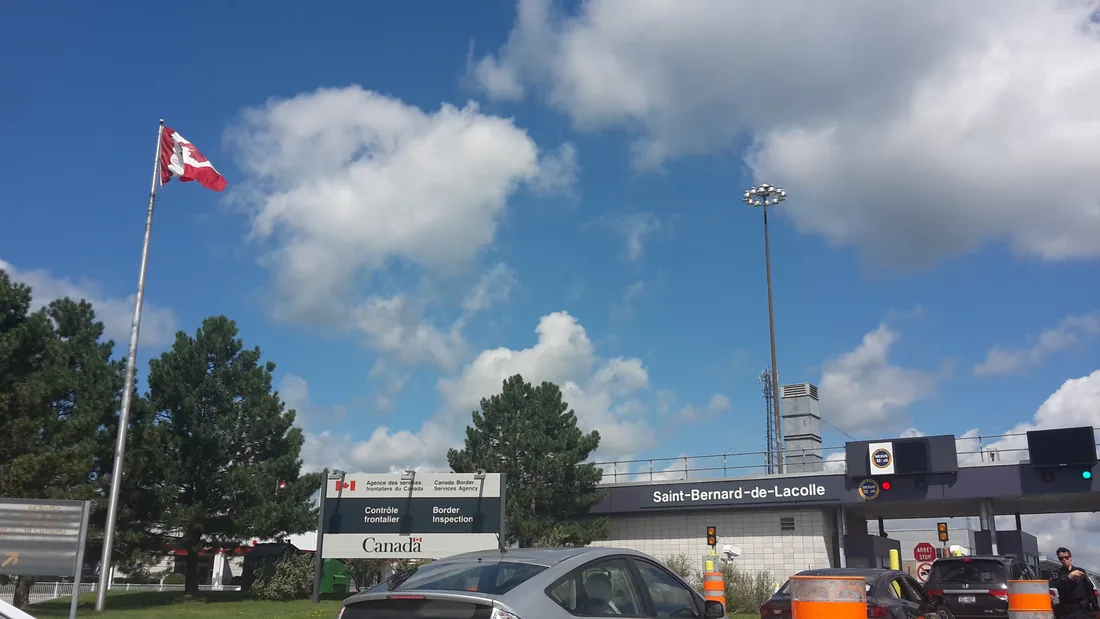


Photos on this page: 20170809-Saint-Bernard-de-Lacolle US-Canada (NY-Quebec) border crossing by Aude, CC BY-SA 4.0. Resized and cropped for this site. All photo credits