
Massena and the Eisenhower Lock
Watch freighters rise in the Eisenhower Lock from the free Seaway Visitor Center in Massena, with the ship schedule, the state park and the drive.
The Eisenhower Lock in Massena is where ocean-going freighters climb 38 feet on their way between the Atlantic and the Great Lakes, and the free Seaway Visitor Center beside it puts you on a deck above the chamber as they pass. It is about 47 road miles west of the cabins, about an hour and a quarter by NY 37. Add Robert Moses State Park on Barnhart Island, the power dam overlook at Hawkins Point and a meal in Massena, and you have a full day that stays on the U.S. side of the river.
The lock and who runs it
The Eisenhower Lock is one of the two American locks on the St. Lawrence Seaway, the deep-water route that carries ships from the Atlantic Ocean to the Great Lakes. The other is the Snell Lock, a little downstream. Together they sit on the Wiley-Dondero Canal, a channel about eight nautical miles long on the New York shore that gives ships access to Lake St. Lawrence above the power dam. Of the 15 locks between Montreal and Lake Erie, 13 are Canadian; these two are the only ones in the United States.
Both locks are operated by the Great Lakes St. Lawrence Seaway Development Corporation, a federal agency within the U.S. Department of Transportation, known by its initials, GLS. The same agency runs the visitor center, so the information desk sits with the same people who move the ships.
The Snell Lock lifts upbound ships 45 feet. The Eisenhower Lock, at the upper end of the canal, lifts them another 38. Going downstream it works in reverse: a ship rides the water down in the chamber and sails out the lower gates toward Montreal.
The Seaway Visitor Center
The visitor center stands at 76 Barnhart Island Road in Massena, on the mainland side of the lock. The GLS opened the current building on May 13, 2024, on the 70th anniversary of the law that created the Seaway, after the Department of Transportation awarded $6 million to replace the old one. It is an all-electric building that runs on hydropower from the nearby Moses-Saunders Power Dam. There has been a visitor center at the lock since 1961, two years after the Seaway opened, and the new one is the first to stay open all year.
What is inside
- An observation deck over the U.S. lock, where you watch pilots bring the ships into the chamber below you.
- An interactive ship simulator, where you try steering a vessel into the lock yourself.
- A theater with a film on the story of the Seaway.
- Exhibits on the Seaway's past, its present traffic and its role in moving cargo.
Hours and admission
Admission is free. The GLS lists the average visit at about an hour and a half, longer if a ship is due and you wait for it. Outside summer the center opens Wednesday through Sunday, 9 a.m. to 5 p.m., so plan this trip for a day other than Monday or Tuesday between Labor Day and Memorial Day weekend. In summer it has opened every day in recent years, with hours that change from season to season; in 2024 it ran from 10 a.m. to 8 p.m. The center's own line is 315-764-3208, and it posts news on Facebook and Instagram under @SeawayVisitorCenter. Check before you go, because the agency can close the building; after a storm on June 6, 2024 it closed for repairs.
House rules on federal property
The center sits on federal land, so firearms and other weapons are not allowed anywhere on the property, and anyone who arrives with one is asked to leave. A sign at the entrance lists the other prohibited items. Pets and emotional support animals are not allowed on the premises; trained service dogs are welcome. If you bring a dog on this trip, plan for it to wait at the cabins or spend the visit in the state park, where leashed dogs are allowed in the day-use areas.
Accessibility
The building is fully accessible, with family and accessible restrooms, and the information desk lends listening devices with audio descriptions of every exhibit. The GLS asks visitors with specific needs to contact the center before the trip.
How to know when a ship is coming
A lock with no ship in it is a concrete box of water, so the one thing that makes or breaks the visit is timing. The Seaway gives you three ways to check, and the first is the easiest.
- The recorded line. Call 315-769-2422 for a voice recording of the day's projected lockage schedule at the Eisenhower Lock. Call it from the cabins before you leave, and again from Massena if you stop for lunch first.
- The Seaway map. The binational Great Lakes-Seaway website keeps a map of the ships now in transit in the system, refreshed every 15 minutes. It shows which vessels are coming up from Montreal or down from Lake Ontario, so you can see a freighter long before it reaches Massena.
- Order of Turn by Lock. On the same site, the Vessel Transit Information page has a tab called Order of Turn by Lock, which lists the vessels lined up for each lock in the order they will enter.
A passage through a single lock takes about 45 minutes from the moment the ship eases into the chamber until it clears the far gates. Filling or emptying the chamber takes only 7 to 10 minutes of that; the rest is the slow work of bringing a long hull into a space with very little room to spare. If the schedule says a ship is due at 11, being on the deck by 10:45 lets you watch the approach, the tie-up, the rise or fall and the departure.
If you arrive between ships, ask at the information desk, or open the map on your phone on the deck. Upbound ships come from the Snell Lock below and rise in the chamber; downbound ships come from Lake St. Lawrence above and sink.
Watching a ship lock through
The Seaway's locks are all built to the same size: 766 feet long, 80 feet wide and 30 feet deep over the sill. The largest ships the system routinely handles are about 740 feet long and 78 feet wide, which leaves roughly a foot of water on each side of the hull. That narrow margin is what makes the pilots' work worth watching from above.
The locks fill and empty by gravity, taking water from the upper level or letting it out to the lower one, about 24 million gallons each time. From the deck you see the water line creep up or down the chamber walls, and the whole ship rise or sink with it, deckhouse, cranes and all.
The ships themselves vary. A freighter in the lock may carry grain, iron ore, coal, steel, stone, salt, cement or petroleum products, and some carry oversized loads such as windmill components. About a quarter of Seaway traffic comes from or goes to overseas ports, so you may see a flag and a home port from the far side of the world on the stern. A ship of the largest size carries the equivalent of about 30,000 metric tons.
The trip a ship is making is long. From the Atlantic to Duluth, Minnesota, at the western tip of Lake Superior, is about 2,342 statute miles, roughly eight and a half sailing days, and the Massena locks are a small step in it. Between Montreal and Lake Ontario, seven locks raise a ship about 246 feet; the two in Massena do 83 feet of that between them.
When the Seaway is open
The Seaway is a seasonal waterway. The navigation season usually runs from about the third week of March to late December, when ice closes the river. In 2026 the Montreal to Lake Ontario section opened on March 22 at 8 a.m., and its target closing date is January 5, 2027, the third year of a pilot program for a later closing. The actual last day depends on weather and ice.
From mid-January to late March, then, the visitor center is open on its winter schedule with no ships in the lock. The simulator, the theater and the exhibits still make a good stop on a gray day. For ships, come between late March and Christmas. Summer brings the longest daily hours at the center; fall brings the foliage and quieter decks.
The north overlook parking lot at the Eisenhower Lock is a second viewing spot. The GLS kept it open for ship watching when the building was closed in 2024, so it is the place to try if you arrive outside the center's hours.
The St. Lawrence Seaway story
People talked about a deep-water route from the Atlantic to the Great Lakes from the late 1800s on, and it took more than half a century to happen.
The American side moved on May 13, 1954, when President Dwight D. Eisenhower signed the Wiley-Dondero Act, named for Senator Alexander Wiley and Congressman George Dondero. The law set up the Saint Lawrence Seaway Development Corporation, the agency that runs the U.S. locks to this day under its newer name, and authorized a deep-water channel between Montreal and Ogdensburg. Canada and the United States built the Montreal to Lake Ontario section between 1954 and 1959, the two U.S. locks among it.
The first ship through was the icebreaker D'Iberville, which began the first full transit on April 25, 1959. Queen Elizabeth II and President Eisenhower officially opened the Seaway on June 26, 1959. The upper lock in Massena carries Eisenhower's name, the canal carries the names of the two lawmakers, and the lower lock is the Bertrand H. Snell Lock.
The Seaway was built together with the power project, and the two changed the river for good. The dam created Lake St. Lawrence, about 15,400 hectares of water, some 38,000 acres, and on the Ontario shore it flooded nine communities, the Lost Villages. About 6,500 people and more than 500 buildings were moved, and the villagers resettled in two new towns, today's Ingleside and Long Sault. The flooding began with a blast at 8:01 a.m. on July 1, 1958, and took about four days. The Lost Villages Historical Society keeps a museum just east of Long Sault, and one of the moved houses stands at Upper Canada Village in Morrisburg, Ontario. Our Akwesasne Cultural Center guide covers what the river and its name mean to the Mohawk community just east of Massena.
A 2023 economic study counted about 135.7 million metric tons of cargo on the Great Lakes-Seaway system in 2022, supporting more than 241,000 jobs in the two countries.
The tunnel under the lock and Barnhart Island
One of the odd pleasures of this trip is the road to Robert Moses State Park. The park lies partly on the mainland and partly on Barnhart Island, and the road onto the island runs through a tunnel under the Eisenhower Lock. You drive beneath the chamber that ships are riding in overhead. If you time the visitor center for a lockage first and then drive to the beach, you may pass under a ship without knowing it.
Barnhart Island is also where New York's power plant stands, and one of the park's two camping areas carries the island's name. Once you are through the tunnel, the island is open for exploring.
The power dam and the Hawkins Point overlook
The great dam across the St. Lawrence at Massena is the Robert Moses-Robert H. Saunders Power Dam, shared by New York and Ontario. The New York Power Authority's half is the St. Lawrence-Franklin D. Roosevelt Power Project on Barnhart Island, which opened in 1958 as the Authority's first power plant. The dam is more than half a mile long and holds 32 turbines, split evenly between the two countries, each side running its own. NYPA's 16 units produce 820,800 kilowatts, which the Authority says is enough to light a city the size of Washington, D.C. Two more structures upstream, the Iroquois and Long Sault control dams, help manage the river, and the whole project stretches about 37 miles.
The Hawkins Point Visitors Center
NYPA's public window on the dam is the Frank S. McCullough, Jr. Hawkins Point Visitors Center at 21 Hawkins Point Road in Massena. Admission is free. Inside are hands-on exhibits on electricity, energy, the environment and local history: a bicycle generator that turns pedaling into power, a Van de Graaff generator for static electricity, an audio-visual terrain map of the St. Lawrence between Ogdensburg and Massena, and a wood-carved map of Jacques Cartier's exploration of the river. Outside is an overlook with a wide view of the power dam.
The center is running in 2026: NYPA held a free Earth Day event there on April 22, 2026. In 2025 it opened daily from 9 a.m. to 5 p.m. for the summer season, with movie afternoons, science programs and reptile shows. NYPA has not posted a 2026 schedule we could find, so call 315-764-0226 before you plan on it, especially outside summer.
Robert Moses State Park
Robert Moses State Park covers 2,322 acres of forest, fields, wetlands, shoreline and open water on the mainland and Barnhart Island. It is open all year, and parking and the beach are free. The park office is at 32 Beach Marina Road, Massena, and the phone is 315-769-8663.
The beach
The park's swimming beach on the river opens for a short summer season. In 2026 swimming ran from June 27 to August 29, 11 a.m. to 7 p.m.; the 2027 dates go up on the park page in spring, and the park office at 315-769-8663 can tell you whether lifeguards are on duty. There is a beach picnic shelter you can reserve with a permit. Leave dogs off the swimming beach. The swimming guide compares this beach with the lakes closer to the cabins.
Trails
Hiking trails wind through fields, forests and wetlands with overlooks along the way, and the same trails serve cross-country skiers and snowshoers in winter. The trail system around the nature center runs about six miles, with the ski trails groomed when there is snow. Biking is on the park's list of activities, and snowmobilers are welcome in winter. The park posts a trail map as a PDF and in the Avenza map app; pick up a copy or ask at the nature center before you set out.
Wildlife and fishing
The DEC lists the park as a wildlife viewing site. Look for white-tailed deer, woodchucks, raccoons, red squirrels and beavers, and on the water for mallards, wood ducks, hooded mergansers, American wigeons, Canada geese and snow geese. Anglers fish the river here for perch, pike and largemouth bass. Our wildlife guide has the animals closer to the cabins, and the fishing trips page covers licenses and the waters nearer home.
The marina and boats
The park has a boat launch, a marina with transient dockage and boat rentals; the 2026 rental and dockage season ran from May 15 to October 11. The fleet includes 14-foot and 16-foot outboard boats, rented by the hour, the day or the week, and an 18-foot pontoon by the day or the week. Reserve a boat through the marina at 315-764-0022.
Camping and cabins
The campground has two areas, Long Sault and Barnhart. In 2026 the Long Sault loops ran from May 15 to October 11 and the Barnhart loops from May 15 to September 6, and the park notes that some loops open later or close earlier. There are wooded campsites and rental cabins, all booked through ReserveAmerica. On a day trip from the cabins you will not need them; the hot tub is waiting back at the cabin.
Other things in the park
A playground, playing fields, picnic areas with grills and reservable pavilions round out the day-use side. Leashed dogs are welcome in day-use areas and campsites, at most two per party, on a leash no longer than six feet; they are not allowed in playgrounds, buildings, on boardwalks or on a guarded beach. The park has four pavilions for groups of 50 to 300.
The Nicandri Nature Center
The Eugene L. Nicandri Nature Center, at 19 Robinson Bay Road inside the park, opened in May 2017. The New York Power Authority owns and funds it, and the Friends of the Robert Moses State Park Nature Center run it. Because the park sits on NYPA land, there is no entrance fee.
The indoor exhibits cover North Country habitats, with large tanks of native fish and turtles and hands-on displays, and the Nature Trail starts outside the door. The center runs public programs most open days; its October 2026 calendar lists sessions such as Skulls and Furs, Fish Feeding, Meet the Insects and Campfire Cooking, each about an hour.
The state park page gives the summer schedule as Memorial Day through Labor Day, 9 a.m. to 5 p.m., closed Mondays and Tuesdays, and the center's own site lists Wednesday through Sunday, 9 to 5. In practice, plan on Wednesday to Sunday, the same days as the Seaway Visitor Center's off-season schedule. The phone is 315-705-5022. There is no food or drink for sale, so bring water and snacks; there are picnic tables and a bottle-filling station.
Massena itself
Massena sits on the St. Lawrence between the Grasse and Raquette rivers, and fishing leads the town's tourism site. It lists bass, walleye, carp, musky, northern pike and panfish, and the town hosts bass tournaments, among them the Big Bass Blowout on an August weekend at the Massena Intake. The Massena Town Beach on the St. Lawrence hosts summer concerts such as Rockin' the River.
In fall, downtown Massena holds a harvest festival, Pumpkinpalooza, set for October 17, 2026 at the Town Hall. Dates move from year to year, so check the town's event listings before you build a trip around one.
If you came for apples, Kaneb Orchards in Massena has its own section in our apple guide.
Food in Massena
The lock and the park sit a few minutes from the village, so lunch in Massena is easy to fit between a lockage and the beach.
- An Italian Affair, 339 East Orvis Street, serves Italian pizza and pasta, and posts its current hours on its Google listing. The phone is 315-764-9829.
- Stewart's Shops opened a larger store at 20 Maple Street in October 2025, with sandwiches, pizza, ice cream, diesel and non-ethanol premium fuel, and keeps a second shop on North Main Street. It is the quick stop for a sandwich, ice cream and fuel.
- A picnic. The state park has picnic areas with grills, and the nature center has tables. Stocking up in Malone on the way out is the simplest plan; our groceries guide lists the stores.
Massena has more diners and cafes along Main Street. Small-town restaurants change hours with the season, so check a place's current listing before you drive to it. For dinner on the way home, where to eat covers Malone, about 37 road miles back east.
The drive from the cabins
The Seaway Visitor Center is about 47 road miles from the cabins, the village of Massena about the same, and the state park beach about 48. Allow about an hour and a quarter each way, a little more for the beach.
The route is simple. Take County Route 25 north into Malone, pick up NY 37 on Fort Covington Street, and follow it northwest to Fort Covington, then west through the Town of Bombay and Akwesasne toward Massena. Near Massena, turn north on NY 131 and then onto Barnhart Island Road, which leads to the visitor center on the near side of the lock; the tunnel and the park are beyond it.
The whole trip stays in the United States, so no passport is needed for the lock, the park or Massena. If you plan to cross the Three Nations Crossing to Cornwall while you are out here, the border guide's section on Massena, Cornwall and Ogdensburg has the bridge, the toll and the documents.
Fuel up in Malone or Massena. In winter, read the winter driving guide before you go, and for the last miles back after dark, the directions page has the turns.
Who this day suits
Anyone who likes big machines will enjoy the lock, and the simulator and the deck suit children 10 and up and teenagers as well as adults. The cabins' house rules welcome guests 10 and older, so this is a good outing for a family with older children or a group of friends. Ship fans will want the full lockage from approach to departure, and guests in The Aviator, with its aviation decor, may enjoy a day of watching a different kind of pilot at work.
The visitor center is a strong rainy-day choice because most of it is indoors; our rainy days guide lists others. A hot summer day suits the park's beach after a morning at the lock. In winter, combine the center with a ski on the park's groomed trails; the cross-country skiing guide has the trails nearer the cabins.
A day plan from the cabins
- 8:15 a.m. Call the lockage line, 315-769-2422, from the cabins. If a ship is projected for late morning, you are set.
- 8:30 a.m. Leave the cabins with water and a picnic packed. Fuel in Malone if you need it and follow NY 37 west.
- About 9:45 a.m. Arrive at the Seaway Visitor Center. See the film and try the simulator while you wait, then go out on the deck 15 minutes before the ship is due and watch the whole lockage, about 45 minutes.
- Noon. Lunch in Massena, or drive through the tunnel to the park and picnic by the river.
- 1:30 p.m. The Nicandri Nature Center and a walk on the trails, or a swim at the beach in midsummer. Add the Hawkins Point overlook for the dam if NYPA's center is open that day.
- 4 p.m. Check the Seaway map for a second ship before you leave. If one is close, stop at the north overlook lot on the way out.
- 5 p.m. Head east on NY 37. On a weekday you can still reach the Akwesasne Cultural Center before it closes, or carry on to Malone for dinner and the hot tub at the cabins after dark.
On a Monday or Tuesday outside summer the visitor center and the nature center are closed, so choose another day of your stay for this trip. For more outings in this direction, see the day trips list, and when you are ready to book, compare the three cabins.
Questions
How do I find out when a ship will be in the Eisenhower Lock?
Call 315-769-2422 for a recording of the day's projected lockage schedule. The binational Great Lakes-Seaway website also shows ships in transit, refreshed every 15 minutes, and its Order of Turn by Lock tab lists the vessels lined up for each lock. The staff at the visitor center desk can tell you what is due next.
Is the Seaway Visitor Center free, and when is it open?
Admission is free. Outside summer the center opens Wednesday to Sunday, 9 a.m. to 5 p.m.; in summer it has opened every day in recent years, with hours that change by season. Call 315-764-3208 or check the center's page before you go, because the agency can close it.
Can I see ships in winter?
Only until the Seaway closes for ice. In 2026 the section through Massena opened on March 22 and aims to close on January 5, 2027. From mid-January to late March there are no ships, though the visitor center stays open Wednesday to Sunday with its simulator and film.
Can I bring my dog?
Not into the visitor center grounds: pets and emotional support animals are not allowed there, only service dogs. Robert Moses State Park allows up to two leashed dogs in its day-use areas, though not on the swimming beach. See bringing your dog for more.
How far is Massena from the cabins?
The visitor center at the Eisenhower Lock is about 47 road miles from the cabins, about an hour and a quarter by County Route 25 to Malone and NY 37 west. The drive stays in the United States, so no passport is needed. Getting to the cabins has the last miles home.
What else is near the lock?
Robert Moses State Park, reached through a tunnel under the lock, has a beach, trails and the Nicandri Nature Center. NYPA's Hawkins Point Visitors Center overlooks the power dam. The Akwesasne Cultural Center is on NY 37 on the way back.
Sources
Facts on this page were checked against these sources in October 2026. Hours, fees and schedules change; confirm before you go.
- seaway.dot.gov seaway.dot.gov/explore/seaway-visitor-center
- seaway.dot.gov seaway.dot.gov/explore/media-advisory-new-seaway-visitor-center-eisenh
- greatlakes-seaway.com greatlakes-seaway.com/en/the-seaway/
- greatlakes-seaway.com greatlakes-seaway.com/the-seaway/our-locks-and-channels/
- americancanalsociety.org americancanalsociety.org/wp-content/uploads/2019/08/Wiley-Dondero-Cana
- eisenhowerlibrary.gov eisenhowerlibrary.gov/research/online-documents/st-lawrence-seaway
- ajot.com ajot.com/news/great-lakes-st-lawrence-seaway-opening-closing-dates-of-
- seaway-greatlakes.com seaway-greatlakes.com/vessel-transit?culture=en-US
- nypa.gov nypa.gov/power/generation/st-lawrence-fdr-power-project
- hydroreform.org hydroreform.org/hydro-project/robert-moses-st-lawrence-p-2000/
- nypa.gov nypa.gov/News/Press-Releases/2026/20260410-hawkins
- nypa.gov nypa.gov/News/Press-Releases/2025/20250519-open
- New York State Parks parks.ny.gov/parks/51/details.aspx
- New York State Parks parks.ny.gov/visit/nature-centers/nicandri-nature-center-robert-moses-
- massenanaturecenter.com massenanaturecenter.com/
- New York State Department of Environmental Conservation dec.ny.gov/things-to-do/watchable-wildlife/sites/robert-moses-state-pa
- exploremassena.com exploremassena.com/
- anitalianaffair.com anitalianaffair.com/location-hours/
- stewartsshops.com stewartsshops.com/news/stewarts-celebrates-opening-of-new-larger-masse
- thecanadianencyclopedia.ca thecanadianencyclopedia.ca/en/article/the-lost-villages
- greatlakes-seaway.com greatlakes-seaway.com/wp-content/uploads/2024/06/slsdc_pr20240613.pdf
- greatlakes-seaway.com greatlakes-seaway.com/wp-content/uploads/2024/08/gls_pr20240827.pdf
- schumer.senate.gov schumer.senate.gov/newsroom/press-releases/schumer-statement-on-6-mill
- seaway.dot.gov seaway.dot.gov/publications/economic-impact-study
- greatlakes-seaway.com greatlakes-seaway.com/en/news-and-information/notices/page/6/
- transportation.gov transportation.gov/briefing-room/gls-celebrates-70th-anniversary-grand
In this guide
Stay nearby
The aviation cabin: flight-themed décor, a Jøtul gas stove, a large open deck with its own hot tub, and a smokeless fire pit on the lawn.
 The AviatorCabin 3 · 2 bd · 1 ba · sleeps 4
More in Day Trips
Sources
26 references, listed in full at the end of this guide: official park, state, tourism-office and business sources, checked October 2026.
Related guides
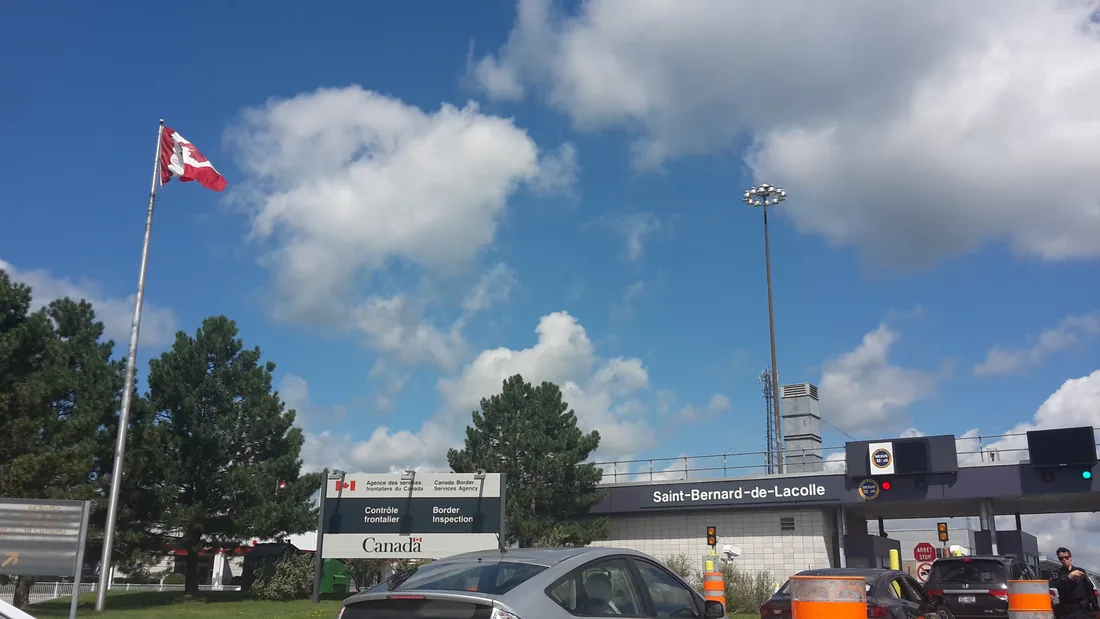


Photos on this page: 20170809-Saint-Bernard-de-Lacolle US-Canada (NY-Quebec) border crossing by Aude, CC BY-SA 4.0. Resized and cropped for this site. All photo credits