
Twice in four years, in June 1866 and May 1870, Malone filled with Irish-American Civil War veterans who meant to march north and take Canada. The village is about ten road miles from the cabins, the 1870 camp at Trout River is about 20, and the hill in Quebec where the second raid broke is a long day's drive east. This is the story as Malone saw it, and a plan for seeing what is left of it.
An army that wanted Ireland and marched on Canada
The movement started in Dublin. On St. Patrick's Day 1858, James Stephens founded a secret society to end British rule and make Ireland a republic. A year later John O'Mahony, who led its American branch, gave that branch the name Fenian Brotherhood, after the bands of warriors in old Irish legend. Frederick J. Seaver, who grew up in Malone and wrote the county's 1918 history, traced the word to the Irish "Feinne," the band led by Find MacCumail.
The Civil War gave the Brotherhood something it had never had: Irish veterans who had learned to drill, march and fight in the war. When the war ended in 1865, the American Fenians split. O'Mahony's wing wanted to send money and men to a rising in Ireland. William Randall Roberts's wing had a bolder idea. Britain's nearest possession was British North America, right across the border. Take it, or enough of it, and London might trade Ireland to get it back.
It sounds mad now. In 1866 it did not sound so mad to the men in the Fenian circles that had sprung up in every corner of the country. Many Americans were still angry about British help to the Confederacy, and the Fenians counted on Washington looking the other way. Seaver wrote that drilling, buying arms and raising money went on in the open with no warning from the federal government, and that money came in from servant girls and day laborers as well as from politicians who wanted the Irish vote. The Brotherhood even sold bonds in the name of an Irish Republic, payable when Ireland was free.
Why Malone
Look at a railroad map of 1866 and the answer jumps out. Malone sat on the Northern Railroad, which ran across the top of New York from Ogdensburg to Rouses Point; the first passenger train reached the village on September 19, 1850. The border at Trout River is about eleven miles north. Men could ride in from Boston, New York or Buffalo in small groups, unarmed, and gather in a village close enough to the border to cross on foot in a morning. Due north lay the Trout River road to Huntingdon, and beyond it the Chateauguay valley led toward Montreal. Northwest lay Cornwall, with its canal locks on the St. Lawrence.
The Fenian generals wanted those canals. John A. Macdonald, a Canadian who wrote an early history of the raids in 1910, says the Malone column of 1866 was meant for Cornwall, where the canal around the rapids was one of the Fenians' chief prizes. In 1870 the plan was to rush men across from Malone and from Franklin, Vermont, dig in, and cut the canals and the railway between Montreal and the west so that Canadian troops could not move.
The first days of June 1866
Malone had been warned. In March 1866, word went around the village that Edward J. Mannix of Malone, a Civil War captain, had been commissioned a Fenian colonel and had signed up forty or fifty local men. A subscription was started to buy his company a flag. Two thousand muskets packed in boxes marked "machinery" and addressed to a Dennis F. Mannix were seized by federal officers at Rouses Point. Seaver believed they came back to him later, because after the trouble was over "Colonel" Mannix advertised 1,280 Springfield rifles for sale.
Then the trains came. On the first and second of June, Seaver remembered, two thousand to twenty-five hundred Fenians poured into Malone by rail. Their commander was General Michael J. Heffernan, whom Seaver called a physical giant, with Generals Murphy and O'Reilly beside him, both Civil War veterans. O'Reilly had once clerked in a store in Fort Covington. The count depends on who was counting: the county history of 1880 put the crowd at about a thousand, and the Canadian estimate, quoted by Macdonald, allowed three thousand for Malone, Potsdam and the surrounding counties together.
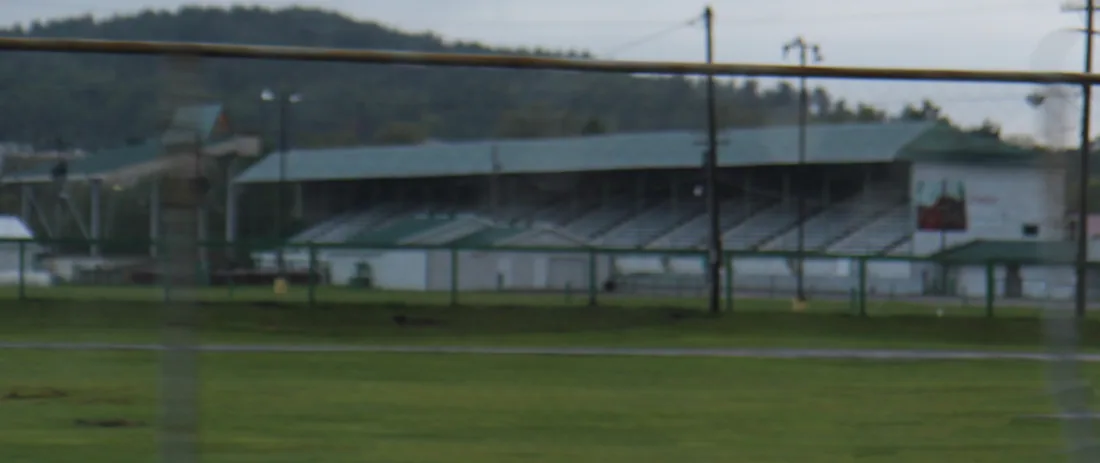
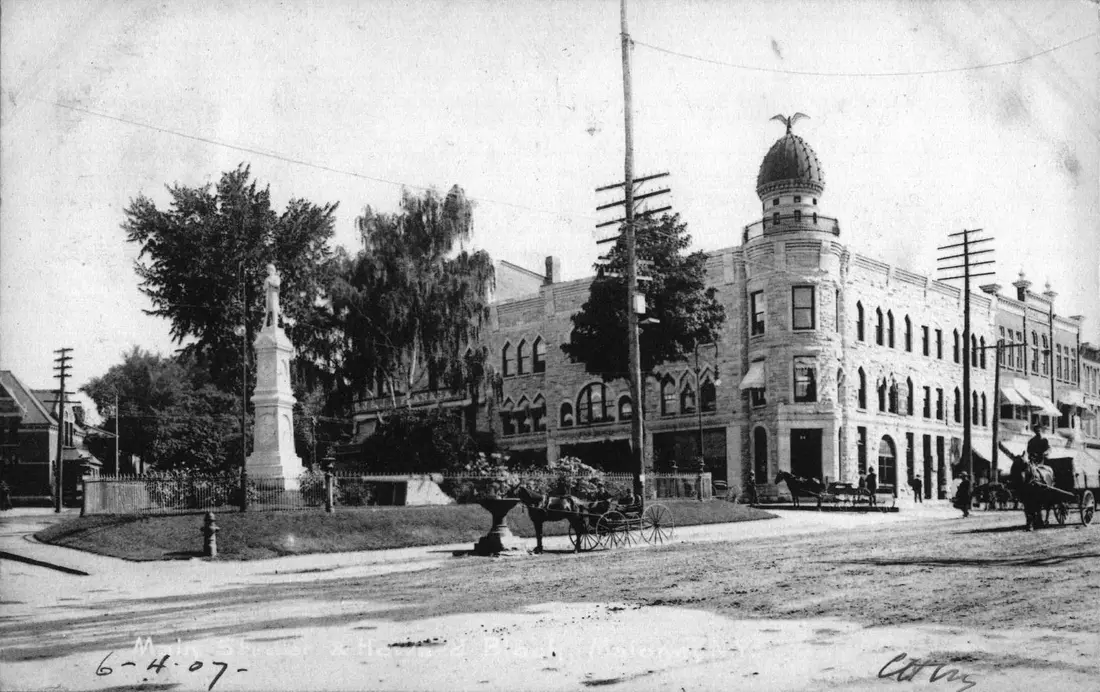
They came without guns, expecting the arms to be waiting. They camped as a body on the fairgrounds on East Main Street, the same ground where the county fair still runs every August, and the overflow slept in barns. They had little food of their own and lived largely on what the people of Malone gave them. Seaver, a boy at the time, slept several nights in a building on Main Street at the corner of Catherine as a guard against fire. He wrote that so large a body of men without real discipline had seldom behaved so well.
There was one ugly exception. Three Canadians, William C. Sylvester, N. J. McGillivray and a Dr. Macintosh from the Cornwall area, drove down to look at the army. The crowd took them for spies, and hundreds of men went after them in front of the Miller House, the hotel that served as Fenian headquarters. Fenian officers waded in to pull them out. McGillivray was hidden in the attic of the south tower of the new passenger station until midnight, then taken to Colonel Joel J. Seaver's house on Pearl Street, where his wounds were dressed. The next morning the colonel and his wife drove the two Canadians out the Constable road, screened behind the carriage curtains, to where their own team was waiting.
Waiting in Huntingdon
On the other side of the line, the mood was close to panic. Canada had called out ten thousand volunteers in March 1866 and fourteen thousand came, but nothing happened and they were sent home in April. On the morning of June 2 a rider came into Huntingdon from Chateaugay with the news that Friday evening's trains had passed loaded with Fenians bound for Malone. The volunteers turned out at once, with no rifles to hand.
Huntingdon put guards on its bridges, patrolled the roads, and built a fortification with cannon covering the Trout River road, the direct route from Malone. Lieutenant-Colonel William Osborne Smith marched a column of Montreal volunteers from Hemmingford to the Huntingdon frontier in a single day of steady rain, 37 miles by Macdonald's count, and put a line of breastworks across that road. Farm families moved into camps in the woods, and some crossed into New York to stay with American friends until it was over. A local woman's sketch quoted by Seaver said that for twelve miles on the Canadian side every family but one fled to the States.
At Cornwall, more than two thousand troops had gathered by June 4 under Colonel Pakenham of the British 30th Regiment. The Malone column never came.
Ridgeway and Pigeon Hill
The real fighting of 1866 happened far to the west. On June 1, John O'Neill, an Irish-born Union cavalry officer, crossed the Niagara River from Buffalo, took Fort Erie, and the next day beat a Canadian column under Lieutenant-Colonel Alfred Booker at Ridgeway. With no reinforcements coming, he took his men back across the river that night, and an American gunboat on patrol arrested them. Ridgeway, across the river from Buffalo, is about 340 road miles from the cabins.
Days later a second column crossed from Vermont into the township of St. Armand in Quebec and raised a green flag on Pigeon Hill. Macdonald counted about a thousand men under a General Spier. When the reinforcements they had been promised never came, they marched back across the line on the morning of June 9, carrying what they had taken from the farms. Spier surrendered to the U.S. Army on the Vermont side. The Dictionary of Canadian Biography sums it up in a line: driven back at the border.
General Meade in Malone
What stopped the Malone column was the federal government. Major-General George G. Meade commanded the army's Military Division of the Atlantic, and he had orders to stop the expedition. His officers seized Fenian arms at Rouses Point, Malone, Potsdam, Ogdensburg, Watertown and St. Albans. On June 4 Meade had the federal marshal at Watertown hold two carloads of arms bound for Malone. That evening Fenians who had come in on the same train took the cars back and ran them north themselves, but they were stopped at De Kalb and the guns were seized a second time.
On June 6, President Andrew Johnson issued his proclamation. It called the expedition against the British colonies a high misdemeanor and gave Meade the power to use the army, the navy and the militia to stop it. Orders to stop the raids had already gone out to federal officers before it was signed.
Meade came to Malone himself. The county history of 1880 has him reaching the village on June 8, with about a thousand regular soldiers there, and his order to the Fenians is dated at Malone the next day. Macdonald records a meeting at Malone between Meade and Generals Heffernan and Murphy. The Fenians complained they had been encouraged by the government and then stopped, and said they would fight the regulars if they had to. Meade answered that he had orders too, "and I shall fight you to enforce the neutrality laws."
On June 9 he issued his order from Malone. Everyone gathered for the invasion was to disband. Men who could not pay their own way would get transportation home after giving their names and addresses, junior officers would give their parole, and senior officers would post bonds. Most took the offer. For a day or two the trains out of Malone were full, and Seaver wrote that the village soon became as quiet and as empty of strangers as it had been a month before.
Between the raids
Canada did not forget. On July 1, 1867, the British North America Act created the Dominion of Canada. Historians generally agree that the raids of 1866 helped get there: the failed Fenian move on Campobello Island in April helped swing New Brunswick toward Confederation, and the fighting at Ridgeway built up the national feeling that carried the union. In April 1868 Thomas D'Arcy McGee, a former Irish rebel who had become the Fenians' loudest Canadian enemy, was shot dead in Ottawa.
The border counties got ready on their own. On June 20, 1868, thirty men signed the founding agreement of the Missisquoi Home Guard at the Seeley Hotel in Dunham, Quebec. Their captain from April 1870 was Asa Westover, a farmer whose place had been looted by Fenians in 1866, and they wore red sashes.
The Fenians had a problem they did not know about. Thomas Billis Beach, an Englishman who had served in the Union army under the name Henri Le Caron, rose high in the Brotherhood as a military organizer and was in charge of Fenian munitions for the next raid. He was a British agent. In February 1870 he met the Canadian official Gilbert McMicken near the frontier and warned him that a raid was coming.
The plan for 1870
John O'Neill, the Fenian commander at Ridgeway, led the 1870 raid, and he had learned from 1866. This time the arms went first. Seaver describes rifles, ammunition, axes, picks and entrenching tools sent to Franklin County weeks or months ahead and hidden in the barns and sheds of friendly farmers. Young Irish lads hauled them from the railway to the hiding places. After Malone, the main places for gathering arms were Chateaugay, Fort Covington and Hogansburg, and when the time came the guns were hauled to Trout River by night. The Fenian inspector-general of 1870, who Seaver says was secretly a British agent, claimed that fifteen thousand stand of arms and almost three million rounds had been placed along the frontier between Ogdensburg and St. Albans.
The men did not camp in Malone this time. Seaver wrote that as each group stepped off the train they went straight on to Trout River, eleven miles north on the border, where their gear was waiting. They pitched camp on the Lahey farm, half a mile south of the hamlet. The Vermont column gathered at Franklin, with a camp on Hubbard's farm outside the village.
Washington moved faster than in 1866. On May 24, 1870, President Ulysses S. Grant issued a proclamation warning everyone against taking part in illegal military enterprises against the Dominion of Canada.
Eccles Hill, May 25, 1870
O'Neill had hoped for two or three thousand men at Franklin. By May 24 only about 800 had come, and on the morning of May 25 he decided not to wait. George P. Foster, the U.S. marshal for Vermont, found him at Franklin, read him Grant's proclamation and told him not to go. O'Neill refused. Foster had no troops, so he crossed the line and told the Canadian commander what was coming.
The Canadians were waiting on Eccles Hill, a rocky rise just north of the border in St. Armand. The Home Guard held the hill, and before dawn about forty militiamen from Dunham and Stanbridge came in to join them. Lieutenant-Colonel Brown Chamberlin had the line that morning, and Lieutenant-Colonel Osborne Smith rode back from Stanbridge to take command after the first attack. O'Neill made a speech to his men, and about 11 o'clock the column started for the line, with his headquarters in the Richards farmhouse just south of it.
The first Canadian volley killed John Rowe, a Fenian from Burlington, Vermont. The advance company broke and fell back to the farm buildings. Through the afternoon the two sides traded long-range shots, and in the evening Smith's men came off the hill and drove the Fenians out of their cover. No Canadian was hurt. The Fenian toll differs from account to account: Macdonald gives four or five killed and fifteen to eighteen wounded, while other accounts name two dead. Among the wounded was General J. J. Donnelly. The Fenians left behind a breech-loading field gun, which the Home Guard kept as a trophy.
O'Neill did not see the end of it. He had been watching from the Richards house, and when the owner told him to leave because Canadian bullets were hitting the building, Marshal Foster was waiting outside. Foster arrested him at gunpoint and sent him to jail in St. Albans in a closed carriage.
Trout River, May 27, 1870
On the same day, May 25, the Malone column went north. Seaver puts it at three hundred men with fifty rounds each. They followed the Trout River road into Quebec, a mile and a half by Macdonald's account and about three miles by Seaver's, and dug in at a strong spot on the Donnelly farm, about a mile north of Holbrook's Corners, using a drainage ditch as a rifle pit and building breastworks of rails and logs. Some of them stopped at the store at Holbrook's and settled for forty pounds of tobacco instead of looting it. A farmer was made to serve breakfast to eighteen of them.
Huntingdon was almost empty of soldiers that day. Canada had called out about five thousand militia, but none reached the village before May 26. That day the Fenians at Trout River walked back to the Lahey farm, discouraged, both Seaver and Macdonald thought, by the news of O'Neill's defeat. Then about five hundred more men arrived, and early on Friday, May 27, they marched north again and took up their old works.
The Canadian force under Colonel George Bagot of the British 69th Regiment began leaving Huntingdon village at 3 that morning: the 69th, the 50th Battalion, known as the Huntingdon Borderers, and the Montreal Garrison Artillery. They marched up the road toward Holbrook's Corners and by 8 o'clock had reached Hendersonville, two miles from Holbrook's, where they could see Fenian bayonets in the sun in a field ahead.
The Fenian position was good. Their trench ran in front of a hop field, with a barricade across the road, the river on one flank and thick woods on the other. Macdonald counted about 150 Fenian skirmishers in front with three or four hundred more behind. The Borderers led the advance in a skirmish line, with a company of the 69th close behind. The Fenians fired, the Canadians kept coming, and at about a hundred yards the Fenians fell back through the hop poles. Bagot sent a company of the 69th in with bayonets, and the retreat became a run for the border. Seaver wrote that the Fenian shots went so high they clipped the tops of the hop poles.
At the line, Bagot had the bugles sound cease fire and held his men back from crossing into New York. No Canadian was hurt, and one Fenian was taken prisoner. The Fenian dead are less certain. Macdonald counts three killed and several wounded; Seaver, writing from Malone, mentions three or four wounded and no dead; and Constable's town historian says the reports of even one death conflict. The fighting at Trout River lasted only minutes.
The beaten men ran through the hamlet of Trout River to their camp and kept going toward Malone, throwing away rifles, belts and coats or trading their guns for food at farmhouses. For years afterward, Seaver wrote, anyone in the town who wanted a Fenian gun or bayonet as a keepsake had one. In the hamlet, people who wanted to watch the battle in safety packed into the old stone gristmill until it could hold no more.
The end of it in Malone
On May 28 the men who came back were camped on the Malone fairgrounds again, and two of their officers made speeches urging another try. The men were tired and hungry and did not want one. The next morning about a thousand U.S. regulars arrived. Seaver put the Fenians in Malone that spring at probably no more than a thousand and wrote that they behaved well in town. The Miller House was once again headquarters for both sides, the Fenians and then the federal generals.
Generals Starr and Gleason, who led the Trout River column, were arrested. Several Fenian officers, Captain Mannix of Malone among them, were tried and convicted at Canandaigua and sent to prison, then pardoned by the President a few months later. O'Neill was sentenced at the end of July 1870 to two years, and Grant pardoned him with the other Fenian prisoners that October. This time the government did not pay fares home. Many men paid reduced fares themselves, and Seaver wrote that New York State paid for others.
There was one more attempt. In October 1871 O'Neill and about 35 men crossed into Manitoba and seized the Hudson's Bay Company post at Pembina, and U.S. troops arrested him. After that the invasions stopped. Seaver, looking back from 1918, wrote that the Fenian organization had faded away within twenty-five years of its founding.
The medals
For the men who held the border, the reward came late. The Canada General Service Medal was authorized in January 1899, 29 years after the last fight it marked. It came only on application, to men who had been on active service in the field, detailed for a specific duty, or posted as guards where an attack was expected. Library and Archives Canada notes that only veterans still alive in 1899 could apply.
The medal is silver, 1.42 inches across, on a red, white and red ribbon. One side shows Queen Victoria. The other shows the Canadian red ensign in a wreath of maple leaves under the word CANADA. It came with clasps: Fenian Raid 1866, Fenian Raid 1870 and Red River 1870. Veterans Affairs Canada puts the total at 16,668 medals, 15,300 of them to Canadian units. The registers are at Library and Archives Canada, and a family historian can search them by name.
What you can see in Malone
Start at the fairgrounds on East Main Street, where both armies of 1866 and 1870 camped. A historic marker at East Main and Raymond streets, put up by the county historical society, names the grounds as the marshalling site for two Fenian invasions of Canada. The Franklin County Fair guide has the grounds and the August fair.
The Franklin County Historical and Museum Society keeps the county's papers and objects at the House of History, 51 Milwaukee Street, about 10 road miles from the cabins. The office is open Tuesday to Thursday afternoons, the Schryer Center for research is open Tuesday and Thursday, and museum tours are by appointment, so call ahead and ask what they can show you from the Fenian years. Check the society's hours before you go. The Malone history museum guide covers the house and the rest of the village's past, and the town guide has lunch and errands.
The Miller House, the Fenian headquarters, is gone. Seaver placed it on the site of the later Hotel Flanagan.
The Fenian Campsite marker at Trout River
The best single stop is 20 road miles from the cabins on NY 30 north of Malone, in the town of Constable. A state historic marker from the William G. Pomeroy Foundation stands at 16902 NY 30. It reads that Irish Fenian Brotherhood soldiers launched a futile invasion of Canada from this site on May 27, 1870, in hope of liberating Ireland. The Town of Constable applied for it, and the marker is dated 2020. Constable's town historian, Martha Gardner, applied for it in the battle's 150th year because so few people knew the story, and partly for the Canadian travelers who came through there.
The marker is on the American side, so you can drive up, read it and turn around without crossing the border. The ground where the Fenians dug in lies across the line in Quebec, and we know of no marker on that side. The Trout River port on NY 30 is closed to U.S.-bound traffic until about May 2028 while the station is rebuilt, though northbound traffic into Canada still crosses there. Our post on the Trout River closure has the schedule and the station's own history.
Huntingdon and the Eccles Hill monument
Huntingdon, Quebec, is about 32 road miles from the cabins by way of Trout River. You can go north there, but you have to come back through another port. Fort Covington is open around the clock, and Chateaugay keeps daytime hours. The border crossing guide lists every port, its hours and the documents you need.
Eccles Hill is a bigger trip, about 96 road miles from the cabins, near Frelighsburg, Quebec, just north of Franklin, Vermont. Canada recognized the Battle of Eccles Hill as a national historic site on May 25, 1923. The site is a fenced plot of more than 3,000 square metres on the hilltop, beside a road, overlooking the battlefield to the south. It holds a granite monument put up in 1902 by the Dominion government under the Missisquoi Historical Society, a cannon from the battle, and a newer Parks Canada information panel on Eccles Hill Road. The inscription reads: "The Canadian volunteers and home guards here repulsed the Fenian invaders on the 25th May 1870."
The Missisquoi Historical Society runs the Missisquoi Museum at 2 River Street in Stanbridge East, about 92 road miles from the cabins and close to the hill. Its Cornell Mill building has objects and information on the Fenian crossings into Missisquoi County. The museum keeps a summer season, from late May to mid-October, and has been closed on Mondays in recent years; check its current hours before you plan a fall trip. In May 2022 the society held a ceremony at the memorial for the battle's 152nd anniversary, put off from the 150th in 2020.
A Fenian day from the cabins
Here is how we would do it. Have breakfast at the cabin and drive the ten miles into Malone. If you have booked a visit at the House of History, start there. Then drive out East Main Street to the fairgrounds marker and picture the Fenian army of June 1866 camped on that ground, fed largely by the townspeople.
From the fairgrounds, take NY 30 north toward the border. The Fenian Campsite marker is about ten miles past Malone, just short of the line. Stop, read it, and look north over the fields toward Holbrook's Corners. Then turn back to Malone for lunch; the where to eat page has the places that are open. If you have passports and a full day, go north into Quebec at Trout River, drive the road the Borderers marched from Huntingdon, and come home through Fort Covington.
Eccles Hill makes a separate day. Go in summer when the Missisquoi Museum is open, pair the hill with the museum at Stanbridge East, and plan the return crossing before you leave. Back at the cabin, the hot tub and the fire pit are waiting.
Reading before you come
Two old books do most of the work, and both are free online. John A. Macdonald's Troublous Times in Canada, from 1910, tells the raids from the Canadian side, with the units, orders and reports, and gives Meade's Malone order of June 9, 1866, in full. Frederick J. Seaver's Historical Sketches of Franklin County, from 1918, has a chapter on the raids written by a man who watched the 1866 army fill his village as a boy. Read them knowing that both men took sides and that their numbers do not always agree. For the people, the Dictionary of Canadian Biography has the lives of John O'Neill and Thomas Billis Beach.
The raids changed little at Malone, which was quiet again within days each time. For Canada, they helped push the colonies together. Standing at the Trout River marker with the border station under reconstruction up the road, it is easy to see why a village this close to the line kept getting pulled into other people's quarrels. For more of that, from the War of 1812 to the 1935 Dutch Schultz trial, see the House of History guide, and when you are ready to book, the cabins page has all three.
Questions
Who were the Fenians?
Irish nationalists, most of them in the United States, organized as the Fenian Brotherhood from 1859. After the Civil War one wing, led by William Randall Roberts, planned to seize British North America and use it to pressure Britain over Ireland. Many of their men and officers were Civil War veterans.
Did the Fenians fight in Malone?
No. Malone was a gathering place. In June 1866 somewhere between one and two and a half thousand men, by different counts, camped on the fairgrounds and went home after General Meade ordered them to disband. In May 1870 the Malone column crossed into Quebec from Trout River and was beaten near Holbrook's Corners on May 27. The Malone history guide has the village's other stories.
Where is the Fenian marker near the cabins?
A William G. Pomeroy Foundation marker titled Fenian Campsite stands at 16902 NY 30 in the town of Constable, just south of the Trout River border crossing, about 20 road miles from the cabins. It is on the American side, so you can visit without crossing. The Trout River port is closed to U.S.-bound traffic until about May 2028; see the closure post.
Can you visit the Eccles Hill battlefield?
Yes. The Battle of Eccles Hill national historic site is a small fenced plot on Eccles Hill Road near Frelighsburg, Quebec, with a 1902 granite monument, a captured three-pound cannon and a Parks Canada panel. It is about 96 road miles from the cabins. Bring passports and plan your return crossing with the border guide.
How many people died in the 1870 raids?
No Canadian was killed or wounded at Eccles Hill or Trout River. Fenian losses are uncertain. At Eccles Hill, accounts give between two and five Fenian dead; at Trout River, Macdonald's 1910 history counts three killed, while the Malone account of 1918 mentions only three or four wounded and one prisoner.
What was the Fenian Raid medal?
The Canada General Service Medal, authorized in January 1899 for men who served against the Fenian raids of 1866 and 1870 or on the Red River Expedition. It was given only on application, with clasps reading Fenian Raid 1866, Fenian Raid 1870 and Red River 1870. Library and Archives Canada holds the registers.
Sources
Facts on this page were checked against these sources in October 2026. Hours, fees and schedules change; confirm before you go.
- gutenberg.org gutenberg.org/ebooks/19599
- archive.org archive.org/details/historicalsketch00seav
- archive.org archive.org/details/historyofclinton00hurd
- biographi.ca biographi.ca/en/theme_fenians.html
- biographi.ca biographi.ca/en/bio/o_neill_john_10E.html
- biographi.ca biographi.ca/en/bio/beach_thomas_billis_12E.html
- presidency.ucsb.edu presidency.ucsb.edu/documents/proclamation-155-warning-against-partici
- wgpfoundation.org wgpfoundation.org/historic-markers/fenian-campsite
- wamcpodcasts.org wamcpodcasts.org/podcast/the-fenian-invasion-of-canada-a-new-york-minu
- canadashistory.ca canadashistory.ca/explore/military-war/war-at-the-border
- historicplaces.ca historicplaces.ca/en/rep-reg/place-lieu.aspx?id=15783
- veterans.gc.ca veterans.gc.ca/en/node/151685
- veterans.gc.ca veterans.gc.ca/en/node/115766
- canada.ca canada.ca/en/library-archives/collection/research-help/military-histor
- passageport.org passageport.org/places-to-go/missisquoi-museum/
- sherbrookerecord.com sherbrookerecord.com/?p=27742
- franklinhistory.org franklinhistory.org/
- canada.ca canada.ca/en/canadian-heritage/services/canada-day-history.html
- hmdb.org hmdb.org/m.asp?m=57179
- stanbridgeeast.ca stanbridgeeast.ca/en/art_culture.php


