
Fly Fishing the West Branch of the Ausable
Fly fishing the West Branch of the Ausable by Lake Placid and Wilmington: DEC rules by section, hatches, access, shops and guides, 57 miles from the cabins.
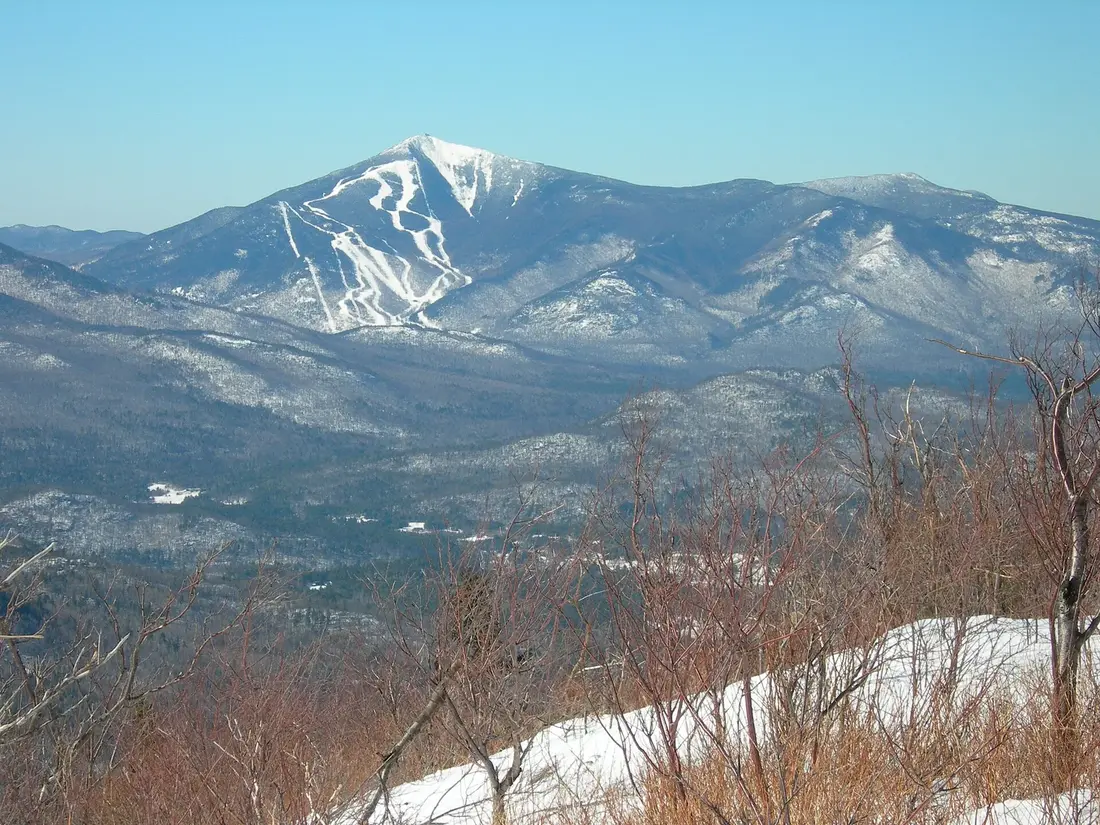
The West Branch of the Ausable River runs from the edge of Lake Placid village through Wilmington Notch, at the foot of Whiteface Mountain, to Wilmington, and fly anglers know it well beyond the Adirondacks: boulder pocket water, long stretches of public bank, catch-and-release water open all year, and flies first tied in a shop on its banks. Monument Falls, near the top of the best-known water, is about 57 road miles from the cabins, roughly an hour and a quarter by Saranac Lake and Lake Placid, and Wilmington is about an hour and a half. This guide covers the stretches, DEC's rules for each one, the hatches through the season, access and parking, wading and fish care, and how to build a day on the river from the cabins.
The river from Lake Placid to Wilmington
On the edge of Lake Placid the West Branch passes under NY 73 by the Olympic ski jumps, winds past the Lake Placid airport, where the Chubb River joins it, and turns northeast. River Road follows it through state Forest Preserve land to NY 86 near Connery Pond, and Monument Falls is a short way below. From there NY 86 and the river run side by side through Wilmington Notch, past High Falls Gorge and the Whiteface ski area, to the Flume, a short way upstream of the hamlet of Wilmington. Below Wilmington the river goes on past Haselton to Au Sable Forks and its junction with the East Branch.
DEC's public fishing maps divide the river into four sections: River Road, Wilmington Notch-Whiteface, Wilmington, and Ausable Acres below the town. The upper two are mostly state land, which is open to fishing. The lower two are a mix of private land and strips of bank where the state has bought permanent fishing rights.
The West Branch is a steep freestone river. Its signature is pocket water, the slots and eddies behind boulders where tumbling water carries oxygen, the trout find cover and food, and the best fish hold. Between the rapids are slower, deeper runs with undercut banks, and pools where trout rise to hatches. The water carries a tea color from tannins, and late in summer the slow stretches run low and quiet. Brown, brook and rainbow trout all live here: DEC stocks the river, and it also holds wild brown trout and brook trout.
The stretches anglers name
The Ausable Freshwater Center, the Wilmington river group known until 2024 as the Ausable River Association, puts wader wash stations at the river's popular access points, and its station map lists them from upstream to down: Iron Bridge, Holcomb Brook, the Connery Pond pullout, Monument Falls, Basset Flats, Whiteface, the Hungry Trout, the Flume and the Two Fly in Wilmington. They make a good outline of the river.
River Road
From the ski jumps past the airport, DEC holds public fishing rights along both banks, and along the lower Chubb River too. Downstream the river enters Forest Preserve land along River Road, with parking areas marked on DEC's map near Holcomb Pond and at several bends between Little Cherrypatch Pond and Monument Falls. Iron Bridge and Holcomb Brook are the upper access points. The first catch-and-release section starts at the mouth of the Holcomb Pond Outlet. River Road comes out on NY 86 at the Connery Pond pullout.
Monument Falls and Basset Flats
Monument Falls is the easiest place to start. The pull-off on NY 86 has two large rocks with metal plaques marking the 50th and 100th anniversaries of the Adirondack Park, 4.5 miles from the Sentinel Road junction in Lake Placid and 8 miles from the bridge in Wilmington. A short path leads down to the river and along it. The catch-and-release water runs on below the falls to a DEC sign 2.2 miles downstream. Basset Flats is the next named access point down the road.
Wilmington Notch and Whiteface
Through the Notch the river runs beside NY 86 with Forest Preserve on both sides, and DEC's map shows three parking areas along the highway near Copperas and Owen ponds. Below the Notch the river passes High Falls Gorge and the state's Wilmington Notch campground, and reaches the Whiteface ski area, where DEC's map shows parking at the ski center. The bridge at the ski center starts the second catch-and-release section.
The Hungry Trout and the Flume
The Hungry Trout resort sits on this catch-and-release water, with about 1,500 feet of its own river frontage and its fly shop beside the highway. The section ends at the NY 86 bridge at the Flume, where the river drops over a series of falls into a narrow gorge.
Wilmington and below
From the Flume down, DEC's maps show public fishing rights on the right bank above the hamlet, a wheelchair access site by the river at Wilmington, and a long strip on the left bank below town toward Haselton, with parking areas marked along the way. Farther down, in the Ausable Acres section, patches of state land reach the river near the mouth of Black Brook, at the Clinton County line.
One quiet way in starts on Haselton Road, about a mile from the hamlet of Black Brook and about 5.7 miles from Wilmington. Coming from Wilmington, park at the pullout on the left; a small sign across the road marks a trail of about 0.8 mile to the river. The first half mile is level through red pines, then a steep 50-yard drop through a swale leads to an old road and a blue DEC marker pointing down the bank. Stocked Black Brook runs just below the pullout. The round trip to the river is about 1.6 miles, and in summer tall grass hides the footing along the bank downstream, so spring is the easiest time to explore it.
DEC's rules by section
Since April 1, 2021, New York has managed its trout streams by category, and DEC lists the West Branch in four reaches. Two are Catch and Release water, open every day of the year. The other two are Stocked-Extended, the category for streams that support some wild trout without an abundant population. DEC lists each reach from the downstream end up; here they run from Lake Placid down, in DEC's words, with the statewide default first for the water above the listed reaches.
| Reach | Category | Rules |
|---|---|---|
| Above the mouth of the Holcomb Pond Outlet (Lake Placid and upper River Road; no special listing) | Statewide trout stream rules | April 1 to October 15, daily limit 5, only 2 over 12 inches; October 16 to March 31, Catch and Release only, Artificial lures only |
| From DEC sign 2.2 miles downstream of Monument Falls upstream to confluence with Holcomb Pond Outlet | Catch and Release | All year, Catch and Release only, Artificial lures only |
| From the Whiteface Ski Center Bridge upstream to the DEC sign 2.2 miles downstream of Monument Falls | Stocked-Extended | April 1-October 15, Daily Limit-3 with no more than 1 longer than 12"; October 16-March 31, Catch and Release only, Artificial lures only |
| From the Route 86 bridge at The Flume upstream to the Whiteface Ski Center bridge | Catch and Release | All year, Catch and Release only, Artificial lures only |
| From confluence with East Branch Ausable River upstream to the Route 86 bridge at the Flume | Stocked-Extended | April 1-October 15, Daily Limit-3 with no more than 1 longer than 12"; October 16-March 31, Catch and Release only, Artificial lures only |
In practice: the trout season on most of the river opens on April 1, and the keeping season ends on October 15. In the Stocked-Extended reaches, through Wilmington Notch and from the Flume down, you may keep three trout a day, with no more than one longer than 12 inches. From October 16 to March 31 every reach is catch and release with artificial lures, so the whole river stays open through the fall and winter. The two Catch and Release reaches, from the Holcomb Pond Outlet to 2.2 miles below Monument Falls and from the Whiteface ski center bridge to the Flume bridge, never allow keeping a fish.
Regulations change, and the boundaries on the ground are DEC signs and bridges. Check DEC's inland trout stream regulations and its interactive Trout Stream Fishing Map before each trip. The lakes nearby have their own rules: on Lake Placid and Mirror Lake, for example, lake trout have an April 1 to October 15 season with a 15-inch minimum and three a day.
What catch and release with artificial lures means
DEC defines catch and release as catching and immediately releasing the caught fish without harm. Artificial lures are man-made imitations of natural bait: flies, spinners, spoons, plugs and jigs. In the Catch and Release reaches, and everywhere on the river from October 16 to March 31, that rules out worms, minnows and other natural bait, and every trout goes back at once.
The general limits still apply: no more than three lines, and no more than 15 hook points on a line. The local best-practice guides ask anglers to use barbless hooks, and the Ausable River Two-Fly Challenge, the river's May tournament, allows each angler only two barbless flies; lose both and you are out for the day.
Stocked trout and wild trout
DEC's spring 2026 stocking list for the West Branch came to about 20,000 trout. By town: about 6,670 in North Elba, the Lake Placid end, including 770 brook trout; about 10,240 in Wilmington; and about 3,120 in Jay, below Wilmington. All the rest were brown trout. Most were 9 to 10 inches long, and about 2,280 were bigger fish of 12 to 15 inches. The fish went in from the second week of April to the first week of June. DEC gives these as planned numbers that can change with fish supply and weather.
Wild fish live here too. DEC's map notes wild brown trout and brook trout in the river, and the Whiteface Region's fishing page calls the brook trout what brings many anglers to the West Branch. The river group's biologists find wild brook trout thriving in the colder, rocky tributaries that feed both branches; young fish reach 3 to 4 inches by the end of their first summer, and adults in those streams run 6 to 14 inches. Native brook trout spawn in October, so tread lightly on the gravel in the fall.
Licenses
Anyone 16 or older needs a New York fishing license, and children under 16 fish free. DEC sells licenses online, and many sporting shops sell them too. On New York's free fishing days the license is waived, and the last one in 2026 is November 11, Veterans Day; every other rule still applies that day. The fishing trips page has the license prices, the short-term options and the full list of free fishing days. Guided trips need your own license as well.
The fishing year on the West Branch
April. The season opens on April 1, and in many years the water is still too cold for trout to be active. April is when the river runs highest; see the wading section below. Stocking starts in the second week of April.
May and June. In many Adirondack streams the prime spring fishing runs from about Mother's Day to Father's Day. On the West Branch the first hatches, grannom caddis, blue-winged olives, Quill Gordons and Hendricksons, come off between the first and second week of May. Sulphurs, March Browns and Cahills follow, along with the big stoneflies that bring trout up to large attractor flies. June brings the Green Drake and cool water from the snowmelt.
July and August. The water warms, and fishing is best early and late in the day. Ants, beetles and grasshoppers matter more, and big attractor dry flies bring fish up. From late July, trico mayflies hatch each morning as the sun reaches the water; the fish rise to them in slow, flat water, and the action is usually over by about 11 a.m. Cool August nights bring morning water temperatures back into a safe range for trout. Black flies are out from mid-May to late June; the bug guide has what works.
September and October. Blue-winged olives and Isonychia, the slate drakes, carry much of September, and October caddis show in late September and early October. The river is less crowded and the hills are in color; the fall foliage guide has the timing. In 2026 the Hungry Trout's reports from late September into October gave morning water temperatures of 47 to 56 degrees and low, clear water, with blue-winged olives on the cloudy days.
October 16 to March 31. The whole river turns catch and release with artificial lures, and the two Catch and Release reaches carry on as they do all year. Late in the fall the trout tend to rise only in the slow pools, and the blue-winged olive is usually the last hatch to bring them up. Long Adirondack winters make stream fishing hard into late March or April, so ask the shop before you plan a winter trip around it.
The hatch chart
This is the Ausable hatch chart published by the Whiteface Region visitors bureau. Treat the dates as windows: hatches come early or late with the spring, and the Green Drake in particular is hit-or-miss. The shop's reports tell you what is on the water this week.
| Insect | Dates |
|---|---|
| Hendrickson | May 1 to May 31 |
| Blue-winged olive | May 1 to July 15 |
| Caddis | May 1 to October 30 |
| March Brown | May 10 to June 15 |
| Blue Dun | May 15 to October 15 |
| Grey Fox | May 15 to June 25 |
| Stonefly | May 20 to September 30 |
| Light Cahill | June 1 to July 15 |
| Green Drake | June 1 to June 20 |
| Drake Fly | June 1 to June 30 |
| Sulphur | June 5 to July 31 |
| Trico | June 15 to October 15 |
| Hexagenia | June 20 to July 15 |
| Golden Drake | July 1 to July 31 |
| Mahogany Dun | August 15 to October 15 |
| Isonychia | September 1 to October 30 |
The Hungry Trout's owner wrote in 2024 that the tricos, once a staple of early August mornings, have dropped off sharply in recent years, so treat that line of the chart as a maybe.
Flies, rods and rigs
A 4- or 5-weight rod suits the West Branch. Nymphing matters most in the pocket water, and the standard nymphs here are the Hare's Ear, the Ausable Ugly, the Pheasant Tail and the Copper John in sizes 8 to 14. Late in the fall most anglers fish nymphs or streamers on leaders of 7.5 to 9 feet. In the slow water, dry flies and careful wading take over.
The local patterns started in Wilmington. Fran Betters, who ran a fly shop on the banks of the West Branch in Wilmington for many years, tied flies for fast, broken Adirondack water: heavy hackle, durable fur and hair, and orange and rust colors for the tea-stained river. His best known are the Usual, the Haystack and the Ausable Wulff, named for Lee Wulff. He also created the Ausable Bomber in the 1950s: two hackles wrapped the full length of the hook, a rusty orange body and a white calf-hair wing you can see in rough water. Tie it in size 12 and larger and cast it into the heaviest water you can find, or use it as the top fly of a dry-dropper; it holds up all but the heaviest beadhead nymphs.
Other flies to have:
- Summer attractors. Large attractor dries such as Chubby Chernobyls and Fat Alberts, for the stonefly and terrestrial season.
- Tricos. Spinners in sizes 20 to 26, size 24 most of all, on a leader of 12 to 14 feet tapered to 6X or 7X. Cast about six feet above a rising fish so the fly drifts down to it with no drag.
- Fall. Small blue-winged olives for the slow pools, and Isonychia patterns for September.
- Classic dries. The Ausable Wulff, the Usual and caddis patterns.
Fly shops and guides in 2026
Hours and trips change from season to season, so call or check the website before you go, and confirm that an independent guide is booking this season before you plan a trip around one.
- The Hungry Trout Fly Shop, 5239 NY 86, Wilmington, (518) 946-2117. The shop sits on the catch-and-release water between the Whiteface ski area and the Flume, and its listed hours are 9 a.m. to 5 p.m. daily. Its owner has run it since 2011. Its guides run a two-hour first lesson, half- and full-day beginner trips with all equipment and flies provided, walk-and-wade trips, half and full days on two miles of private river for the resort's guests, brook trout trips into backcountry streams, raft floats for smallmouth bass and pike in summer, and boat trips on Lake Placid and the Saranac lakes. Beginner trips take anglers from age 8, so a teenager can learn alongside a parent. The shop posts stream reports with flow, morning water temperature and clarity through the season, and the resort has a restaurant and a tavern.
- Ken Kalil, listed by Orvis as an endorsed guide based in Lake Placid, (518) 524-2697. Most of his trips are on the Ausable and Saranac rivers and smaller streams nearby, half and full days, with up to three anglers per guide. His listed season is March 15 to November 30. Flies, leaders and tippet are extra, rods and waders can be rented, and you bring your own license. His listing gives rates starting between $200 and $450, depending on the size of the party.
- Fly Fish the Adirondacks, based in Wilmington, (518) 637-2124, run by Richard Garfield, a New York licensed guide since 1992: wading trips on the West Branch and other rivers of the region for beginners and experienced anglers, small mountain streams, and a learn-to-fly-fish trip with all gear included.
Adirondack guides are licensed by the state and certified in first aid, CPR and water safety. The Ausable River Two Fly Shop, still a name on the river group's wader-wash map, was listed as closed by the Whiteface Region visitors bureau in 2022, so plan on the Hungry Trout for flies and a report.
Each May the Ausable River Two-Fly Challenge brings anglers to Wilmington for two days of catch-and-release fishing. Partners record the length of every fish released, the highest total length wins, and there are junior, men's, women's and professional divisions. The 2026 edition was set for Thursday, May 14, with an opening party at the Wilmington town beach, through an awards banquet at the Hungry Trout on Saturday, May 16. Check the visitors bureau's events page for next year's dates if you want to fish that weekend or avoid it.
Public access and parking
The upper river runs through the Forest Preserve or along private land with public fishing access. DEC has bought those public fishing rights from willing landowners: permanent easements, usually a strip 33 feet wide on one or both banks, that let anglers fish and walk along the bank. The right is for fishing only and no other purpose. Yellow DEC signs reading Public Fishing Stream mark the strips, and DEC's maps are not survey quality, so trust the signs on the ground. Anywhere else the bank is private, and fishing there needs the owner's permission. For a missing sign or a map question, DEC's Region 5 fisheries office is at (518) 897-1333.
On River Road and NY 86 there are DEC parking areas and many roadside pull-offs; the Monument Falls pull-off and the Connery Pond pullout are the best known. In Wilmington, DEC's map shows parking by the public stretches above and below the hamlet. Pull fully off the road, keep the shoulders of NY 86 clear, and watch for traffic when you cross to the river.
From Memorial Day to Labor Day the river group sets out wader wash stations at the main access points. Use them every time you go in; the fish care section below explains why.
Wading and high water
The West Branch is a boulder river, and the footing is uneven. Snowmelt makes April its highest month: at the USGS gauge on the West Branch near Lake Placid, averaged over more than 50 years of records between 1916 and 2022, the river carried about 545 cubic feet per second in April and 450 in May, against about 200 in June and 100 in August.
- Check the flow before you leave. The Hungry Trout's stream reports give the flow and the morning water temperature, often for that day. USGS posts live readings for the Ausable near Au Sable Forks, below the junction of the two branches; the West Branch gauge near Lake Placid has records back to 1916, though its live readings had stopped when we checked in October 2026.
- Save high water for another day. In spring, heed high-water warnings and expect high water and swift currents; pick a calmer stretch or come back when the river drops. Watch for rapidly rising water after rain, and head for the bank at the first sign of it.
- Footing. Spiked wading boots and a wading staff make the boulders far easier. Polarized glasses help you see the bottom and the drop-offs.
- Flotation. Wear a wader belt or a flotation vest; DEC's advice to river anglers is to wear a life preserver.
- Crossing. If you are unsure of the depth or the speed of the current, stay on your side and walk to the next riffle.
- Company. Fish with a buddy, and tell someone where you parked.
Water temperature and fish care
Trout are cold-water fish. Skip catch-and-release fishing once the water is above 68 degrees Fahrenheit; trout become stressed when the water reaches the upper 60s. In July and August, carry a stream thermometer, fish the early morning, and quit when the river warms. The cold tributaries are the brook trout's nurseries; go easy on them in the heat.
The practices the local guides and the river group ask of every angler:
- Use barbless hooks and carry a hook remover.
- Wet your hands and your net before you touch a fish.
- Keep the time a fish spends out of the water short.
- Revive the fish in the current before you let it go.
- Stay off spawning beds, especially in October when the brook trout spawn.
- Use lead-free weights and materials.
- Protect the stream banks.
The wader wash stations are there to stop invasive species such as didymo, the alga anglers call rock snot, and the New Zealand mud snail from riding into the river on boots and waders. Soak your waders for 60 seconds in the station's salt solution, then let them dry. Each cabin has a washer and dryer, which helps with the rest of your wet gear.
The drive from the cabins
The river is a Lake Placid drive with a few extra miles. County Route 25 takes you out to NY 30; turn south past Meacham Lake to Paul Smiths, about 31 road miles, then follow NY 86 through Saranac Lake, about 43, to Lake Placid at 52.
| From the cabins to | Road miles | Time |
|---|---|---|
| Lake Placid village | About 52 | About an hour and a quarter |
| Monument Falls pull-off, NY 86 | About 57 | About an hour and a quarter |
| Wilmington Notch campground | About 61 | About an hour and a half |
| The Hungry Trout and the Flume | About 62 | About an hour and a half |
| Wilmington | About 65 | About an hour and a half |
| Haselton Road, below Wilmington | About 68 | About an hour and a half or a little more |
For the upper river, River Road leaves NY 73 by the Olympic ski jumps on the edge of Lake Placid and follows the river to NY 86. For Monument Falls, stay on NY 86 east out of Lake Placid; the pull-off is 4.5 miles from Sentinel Road. Wilmington is 8 miles farther along NY 86, through the Notch. After an evening on the water, the directions page covers the last miles home in the dark.
A day on the river from the cabins
A plan for a June or September day, wading the upper river in the morning and the catch-and-release water near Whiteface in the afternoon.
| Time | Plan |
|---|---|
| 5:45 a.m. | Leave the cabins with coffee, lunch and your license. |
| 7:00 a.m. | Park at Monument Falls or a River Road pull-off and fish the morning in the upper catch-and-release water. |
| 11:00 a.m. | Drive about six miles through the Notch to the Hungry Trout for flies and the day's report. |
| Noon | Lunch by the river, or in Wilmington. |
| 1:00 p.m. | Fish the catch-and-release stretch between the Whiteface ski area and the Flume, or rest through the heat and come back for the evening. |
| Evening | The evening rise, then dinner in Wilmington or Lake Placid and about an hour and a half home to the hot tub. |
In July and August, flip the day: fish from first light until mid-morning, spend the warm hours off the water, and check the water temperature before an evening session. For a first day with a fly rod, book a half-day lesson with the shop and spend the afternoon in Lake Placid.
Wilmington and Lake Placid off the water
The river runs past enough to fill the hours between hatches. High Falls Gorge, on NY 86 between the Notch and the ski area, is a privately run park where walkways and bridges cross four waterfalls on the same river. The Lake Placid and Whiteface day trip covers Main Street, Mirror Lake, the Whiteface summit road and the ski area, and the Olympic sites guide covers the ski jumps you pass on River Road. For an afternoon drive, the 54-mile Ausable River Loop, a road loop with many pull-offs, follows the West Branch from Wilmington up to Lake Placid, crosses to Keene on NY 73, and comes back down the East Branch on NY 9N through Jay. If someone in the group would rather climb a mountain, see the Cascade Mountain guide.
Closer to the cabins, the Salmon River in Malone is stocked trout water with its own catch-and-release stretch; the Salmon River guide covers it. The fishing trips page covers the lakes, the launches, ice fishing and the fishing year around the cabins. To plan the stay, see the cabins.
Questions
Can I fish the West Branch of the Ausable after October 15?
Yes. From October 16 to March 31 the whole river is open for catch and release with artificial lures only. The two Catch and Release reaches, from the Holcomb Pond Outlet to a DEC sign 2.2 miles below Monument Falls and from the Whiteface ski center bridge to the NY 86 bridge at the Flume, are open all year under the same rules. Check DEC's current trout stream regulations before you go.
Where are the catch-and-release sections on the West Branch?
There are two. The upper one runs from the mouth of the Holcomb Pond Outlet, along River Road, past Monument Falls to a DEC sign 2.2 miles downstream. The lower one runs from the bridge at the Whiteface ski center down to the NY 86 bridge at the Flume, past the Hungry Trout. Both are catch and release with artificial lures only, all year.
How far is the West Branch of the Ausable from the cabins?
Monument Falls, near the top of the best-known water, is about 57 road miles from the cabins, roughly an hour and a quarter by NY 30, Saranac Lake and Lake Placid. The Hungry Trout and the Flume are about 62 miles, and Wilmington about 65, roughly an hour and a half. The directions page covers the last miles home.
Do I need a fishing license for the Ausable?
Yes, if you are 16 or older; children under 16 fish free. Licenses are sold online through DEC and at many sporting shops, and guided trips need your own license too. New York waives the license on its free fishing days; the last one in 2026 is November 11. The fishing trips page has the prices and options.
When is the best time to fly fish the West Branch?
Late spring is the peak: the first big hatches come off in early to mid May, and the stretch from about Mother's Day to Father's Day is prime Adirondack stream fishing. June brings Green Drakes and Sulphurs. In July and August fish early and late in the day. September and October bring blue-winged olives, Isonychia, fewer anglers and fall color.
Where can I buy flies or hire a guide near the Ausable?
The Hungry Trout Fly Shop on NY 86 in Wilmington sells flies, posts stream reports and runs guided trips, from a two-hour first outing to full days. Independent guides include Ken Kalil in Lake Placid, listed by Orvis as an endorsed guide, and Fly Fish the Adirondacks in Wilmington. Call ahead, since trips and hours change by season.
Is it safe to fish the West Branch in summer heat?
Watch the water temperature. Skip catch-and-release fishing once the river is above 68 degrees Fahrenheit, because trout are stressed in warm water. Carry a stream thermometer, fish from first light into mid-morning, and stop when the water warms. Cool August nights usually bring morning temperatures back into a safe range.
Sources
Facts on this page were checked against these sources in October 2026. Hours, fees and schedules change; confirm before you go.
- New York State Department of Environmental Conservation dec.ny.gov/things-to-do/freshwater-fishing/regulations/inland-trout-st
- New York State Department of Environmental Conservation extapps.dec.ny.gov/docs/regions_pdf/wbranch.pdf
- Lake Placid tourism (ROOST) cdn.lakeplacid.com/f/72/729c4f5b5617abf1eb7e244f9e6a43e9/ausablerivera
- New York State Department of Environmental Conservation dec.ny.gov/things-to-do/freshwater-fishing/stocking/spring-trout-stock
- New York State Department of Environmental Conservation dec.ny.gov/things-to-do/freshwater-fishing/regulations/region-5-specia
- New York State Department of Environmental Conservation dec.ny.gov/things-to-do/freshwater-fishing/regulations/general
- New York State Department of Environmental Conservation dec.ny.gov/regulatory/permits-licenses/sporting-and-use/sporting/fishi
- New York State Department of Environmental Conservation dec.ny.gov/news/press-releases/2026/2/governor-hochul-and-dec-announce
- New York State Department of Environmental Conservation dec.ny.gov/things-to-do/freshwater-fishing/places-to-fish/great-lakes-
- New York State Department of Environmental Conservation dec.ny.gov/things-to-do/hiking/spring-recreation-tips
- New York State Department of Environmental Conservation dec.ny.gov/things-to-do/freshwater-fishing/places-to-fish/great-lakes-
- ausableriver.org ausableriver.org/explore/fishing
- ausableriver.org ausableriver.org/sites/default/files/wwsmap_0.pdf
- ausableriver.org ausableriver.org/blog/search-cold-loving-trout
- ausableriver.org ausableriver.org/explore/fishing/special-fishing-regulations
- ausableriver.org ausableriver.org/about-us/ausable-freshwater-center
- whitefaceregion.com whitefaceregion.com/recreation/fishing
- whitefaceregion.com whitefaceregion.com/recreation/fishing/fly-fishing
- whitefaceregion.com whitefaceregion.com/recreation/fishing/hatch-schedule
- whitefaceregion.com whitefaceregion.com/story/2021/fly-fishing-best-practices
- whitefaceregion.com whitefaceregion.com/story/2014/11/late-fall-fly-fishing
- whitefaceregion.com whitefaceregion.com/story/2013/06/green-drakes-hatch-dreams
- whitefaceregion.com whitefaceregion.com/fishing/fly-fish-the-adirondacks
- hungrytrout.com hungrytrout.com/
- hungrytroutflyshop.com hungrytroutflyshop.com/adirondack-guide-trips/
- hungrytroutflyshop.com hungrytroutflyshop.com/adirondack-fishing-reports/
- flyfisherman.com flyfisherman.com/editorial/fishing-new-yorks-ausable-river/507328
- orvis.com orvis.com/ken-kalil/2BBF.html
- lakechamplainregion.com lakechamplainregion.com/node/86224
- Adirondack Explorer adirondackexplorer.org/recreation/hiking/west-branch-ausable-fishing-s
- Adirondack Explorer adirondackexplorer.org/recreation/fishing/new-trout-fishing-regulation
- Adirondack Explorer adirondackexplorer.org/recreation/fishing/fly-of-the-week-ausable-bomb
- Adirondack Explorer adirondackexplorer.org/adirondacks-almanack/trico-mayfly-hatch-brings-
- Lake Placid tourism (ROOST) lakeplacid.com/hiking/monument-falls
- Lake Placid tourism (ROOST) lakeplacid.com/cycling/ausable-river-loop
- Lake Placid tourism (ROOST) lakeplacid.com/do/outdoors/guides
- waterdata.usgs.gov waterdata.usgs.gov/monitoring-location/04274000/
- waterservices.usgs.gov waterservices.usgs.gov/nwis/stat/?format=rdb&sites=04274000&statReport
- waterdata.usgs.gov waterdata.usgs.gov/monitoring-location/04275500/
- Lake Placid tourism (ROOST) lakeplacid.com/events/ausable-river-twofly-challenge
- dailygazette.com dailygazette.com/ade/26th-ausable-two-fly-challenge-registration-open/
- whitefaceregion.com whitefaceregion.com/story/2017/04/women-are-hooked-fly-fishing
- flyfishtheadirondacks.com flyfishtheadirondacks.com/
- ausableriver.org ausableriver.org/explore/waterfalls/high-falls-gorge
- web.archive.org web.archive.org/web/20260710201101/https://highfallsgorge.com/
- waterservices.usgs.gov waterservices.usgs.gov/nwis/iv/?format=json&sites=04274000,04275500&pa
- nnywaterfalls.com nnywaterfalls.com/ausableriver/wilmingtonflume
In this guide
Stay nearby
The après-ski cabin: a Jøtul gas stove between two picture windows, a large screened room on the deck, a hot tub open all year, and Titus Mountain minutes away.
 The Modern PineCabin 2 · 2 bd · 1 ba · sleeps 4
More in Lakes & Paddling
Sources
47 references, listed in full at the end of this guide: official park, state, tourism-office and business sources, checked October 2026.
Related guides


Photos on this page: Ruins of Horton Grist Mill, Malone, NY Front View by OneEagle, CC BY-SA 4.0. Resized and cropped for this site. All photo credits