
Wildlife Watching around the Cabins
What guests have seen at the cabins, where to find loons, moose, beavers, northern birds and Malone's snow geese, when to look, and how to stay bear-safe.
The cabins stand in wooded country at the northern edge of the Adirondack Park, about ten road miles south of Malone, and the animals come with the setting. Guests have watched deer from the windows and a fawn from the hot tub, and one family counted 50 kinds of birds in a single summer around The Modern Tiny Home, whose pond has an observation deck. Within an hour's drive are lakes with nesting loons, a bog known for northern birds, a marsh boardwalk where otters turn up, and a lake in Malone where thousands of snow geese come down at dusk each fall. This guide covers what lives here, where and when to look, and how to keep the animals, and yourself, out of trouble.
What guests have seen at the cabins
The reviews make a good field list. A family who spent eight weeks at The Modern Tiny Home in the summer of 2020 kept count:
"We saw 50 different species of birds on the property (including 10 different kinds of Warbler)"
The same family called the pond "the beaver pond" and wrote of being "serenaded by wrens and thrushes." Later guests at the Tiny Home "enjoyed watching birds and deer from the living room windows and observation deck," found the big windows "great for watching the wildlife come and go," and were "lucky to watch deer through the massive windows." At The Aviator, on the other property, one couple wrote, "For hours all we could hear were birds!", and a guest in September 2026 spent a last morning in the hot tub with a fawn nearby, one "who both welcomed us and sent us off."
Deer, songbirds and the beaver pond are the everyday sightings. The rest of this page covers the animals you go looking for, from moose and loons to the snow geese in Malone.
The pond and the observation deck
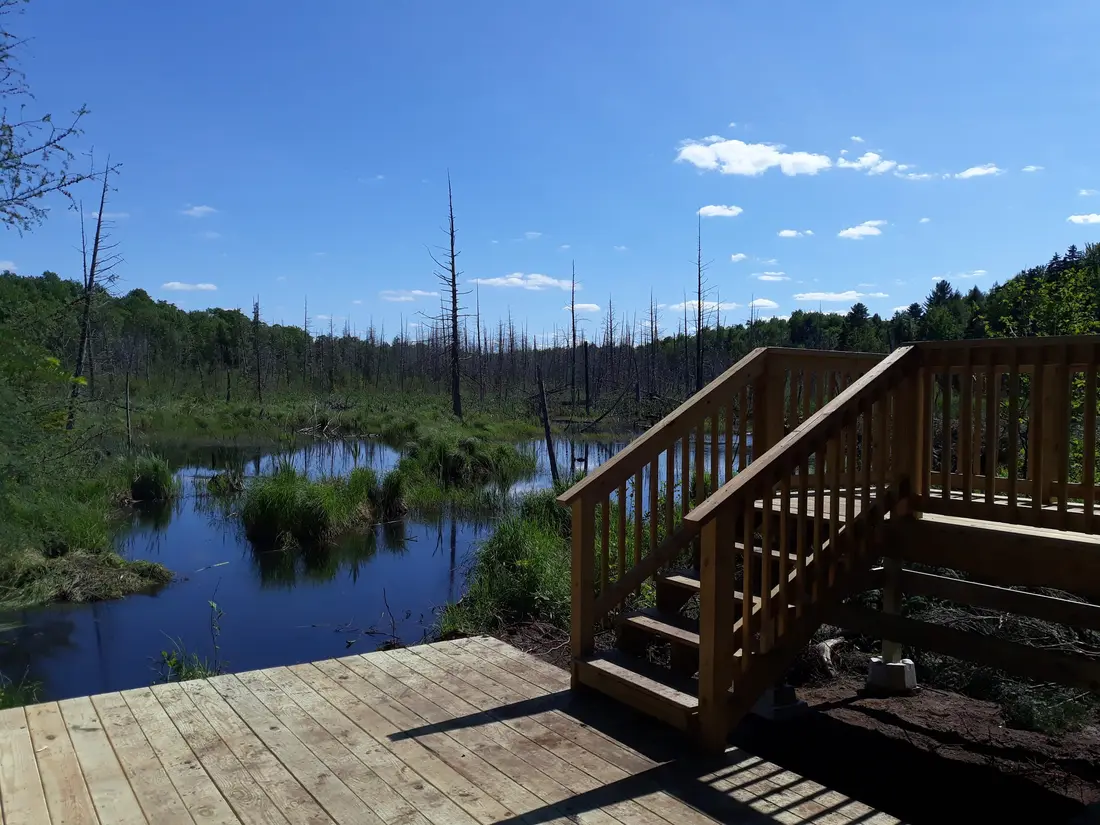
The Tiny Home's listing calls its observation deck "perfect for wildlife watching, from birds to beavers," a short hike from the cabin. When the one other cabin on that land is booked, the trail and the deck are shared. The Modern Pine and The Aviator share a separate property, and their listings mention no pond. See The Modern Tiny Home for the cabin itself.
Beavers are the animal to wait for. New York's largest rodent weighs 26 to 65 pounds and carries a broad, flat tail 9 to 10 inches long and 6 wide. Beavers are active all year and mostly at night, so the likeliest times to see one are early morning and dusk. Look for the lodge, a dome of sticks and mud five to six feet high and 20 to 30 feet across near an active dam, and watch the water around it as the light fades. In mid-August the sun sets at the cabins a little after 8 p.m.; settle on the deck by 7:30, sit still, keep voices low, and stay until dark. In June, the black flies and mosquitoes at dusk make a head net worth packing; see black flies, mosquitoes and ticks.
How beavers came back
Beavers were nearly wiped out here. By 1860 trapping had cut New York's population to perhaps 50 animals, in seven or eight families along the St. Regis and Raquette rivers, and by 1900 only one or two families were left, near Saranac Inn. Then private landowners and the state brought them back: about 20 beavers from Ontario between 1901 and 1906, seven of them bought by the state from the Canadians at the 1904 Louisiana Purchase Exposition in St. Louis and released near Old Forge, and later 14 light-colored beavers from Yellowstone National Park. By 1915 the state estimated it had 15,000 beavers. The beaver is now New York's state mammal.
White-tailed deer
Deer are the animal guests see most, from the windows, the decks and the hot tubs, usually early or late in the day. Most fawns are born in late May or early June and weigh three to six pounds. For their first days they lie still in tall grass or leaf litter while the doe feeds elsewhere, and a fawn on its own is usually not abandoned. DEC's yearly message is "If You Care, Leave It There": never touch or pick up a fawn, and move off so the doe will come back to nurse it.
The deer breeding season peaks around November 10, and deer crashes on New York roads peak in November too; the road section below has the numbers. When the snow reaches about 15 inches, usually in late November or December, Adirondack deer leave their summer range and travel up to 12 miles, often in less than a day, to winter yards under continuous conifer cover. A yard can hold 100 to 125 deer per square mile, against 4 to 25 in summer, and the deer drift back once the snow drops below about 15 inches, usually in March or April.
Black bears
Black bears live in these woods. New York has at least 6,000 to 8,000 of them in the parts of the state open to hunting, and half or more live in the Adirondacks. They are intelligent and curious, spend much of the day looking for food, and repeat whatever works. A bear that learns to get food from people grows bold, and if it becomes a danger, DEC may have to put it down; the agency's reminder is blunt: a fed bear is a dead bear. Bears leave their dens hungry in spring, before natural foods are plentiful, and go looking for easier meals around houses and camps.
At the cabins
- Keep garbage and recycling inside until it goes out.
- Clean the grill after every use, grease trap included, before dark.
- Feed pets indoors and bring their bowls in.
- Do not put out bird feeders; from spring through fall DEC asks people in bear country to let nature feed the birds.
- Never leave food, coolers or garbage on the deck or at the fire pit.
Feeding bears on purpose is illegal in New York, and once DEC has issued a written warning, feeding them by accident with garbage or seed is illegal too.
On the trail and in camp
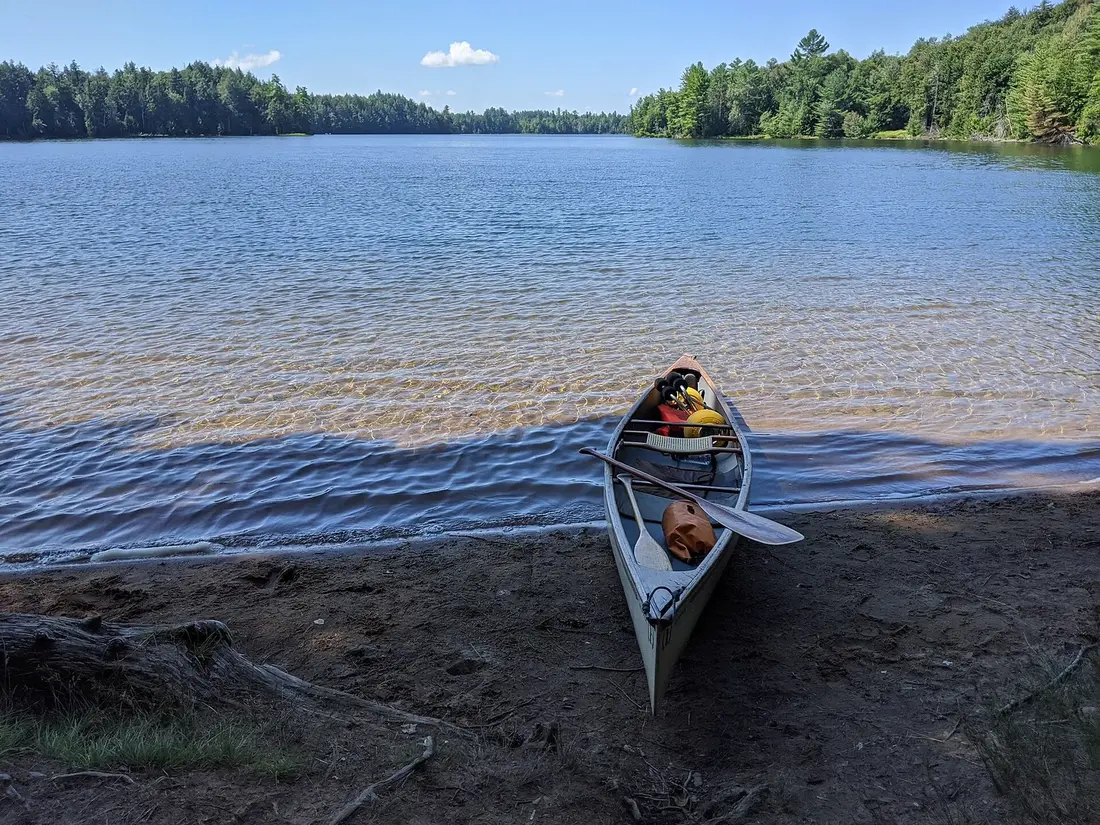
If you meet a bear, give it room: never approach or surround one, and be most careful around a mother with cubs. Do not run. Yell or clap, speak in a loud, calm voice and back away slowly. Never throw your pack or food toward a bear; that only teaches bears to bully people for food. Campers should cook before 5 p.m., at least 100 feet from the tent, since bears grow active in the evening, and keep food, toiletries and trash in a bear-resistant canister. Canisters are required for overnight stays in the Eastern High Peaks Wilderness from April 1 to November 30 and recommended across the rest of the Adirondack backcountry, and DEC warns that bears in the Eastern High Peaks have learned to open the clear plastic kind. If you must hang food instead, use 75 feet of dark cord and hang the bag 15 feet up and 10 feet out from any tree. In July 2026 DEC closed paddle-in campsites on Long Pond in the Saint Regis Canoe Area after a bear began approaching campers for food; the canoe area guide has the story.
Moose
Moose vanished from New York in the 1860s, driven out by habitat change and unregulated hunting, and began wandering back in from neighboring states around 1980. DEC and the state DMV now put the Adirondack population at roughly 700. A bull stands about six feet at the shoulder and can weigh as much as 1,400 pounds; cows are smaller. Moose favor beaver flows, wetlands, brush and recently logged forest, and in summer they feed heavily on sodium-rich water plants. There is plenty of that country south and east of the cabins: the Sable Highlands, the working forest you look over from the Owls Head ledges, take in shoreline on 59 lakes and ponds and more than 400 miles of streams.
Seeing one still takes luck. In spring, most sightings in the central Adirondacks come along the main roads between about 6 and 9 a.m., with a second spike around 7 p.m., when moose come to the road edges for the salt left from winter and the first green growth. Calves are born in May or early June, and a cow with a calf is fiercely protective. The breeding season runs from mid-September to mid-October, when rutting bulls are unpredictable enough to charge people and even cars. Watch any moose from a distance, ideally from the car, and never get between a cow and her calf; moose give little warning before they charge.
A moose that will not move off a trail may be sick. In June 2025 DEC closed the Goodman Mountain trail near Tupper Lake after a bull stayed on or near it for weeks, unresponsive to efforts to move it; in August biologists found it badly emaciated and put it down. Since 2022, DEC and university researchers have fitted Adirondack moose with GPS collars to study parasites such as winter ticks, brainworm and giant liver fluke; heavy winter tick loads can kill many calves. A collared yearling found dead near Onchiota, about 40 road miles from the cabins, in April 2023 had most likely died of liver fluke. If you see a moose, DEC asks you to report it on its online Moose Sighting Report Form.
Otters and fishers
River otters stay in or close to the water. They are lighter brown than fishers, with short, sleek fur. At Paul Smith's College VIC, otters and muskrats are seen now and then all year along the Heron Marsh Trail, best early in the morning or late in the afternoon. Adirondack otters also restocked the rest of the state: from 1995 through 2000, 279 otters trapped mostly in the Adirondacks were released at 16 sites in western New York. For a close look, The Wild Center in Tupper Lake keeps otters at its Otter Falls exhibit; see The Wild Center.
Fishers are the darker, longer-furred relatives. When fishers vanished from most of New York, they held on in the Adirondacks; in the 1970s DEC reintroduced them to the Catskills, and with trapping rules and regrowing forests they have since spread across much of the state. Snowshoe hares, another animal of the northern woods, live along the Bloomingdale Bog Trail.
Loons
The common loon is a Species of Special Concern in New York, and the state's breeding loons are centered in the Adirondacks. Their numbers have grown: surveys in 1984 and 1985 put the park's population at 800 to 1,000 adults, and annual counts found 1,500 to 2,000 birds by 2010. Loons return within days of the ice going out, males first to claim a territory. Eggs hatch about 28 days after they are laid, and the parents tend the chicks for 11 to 12 weeks until they fledge. After that the adults gather on bigger lakes, and they winter on the Atlantic coast anywhere from Maine to Florida.
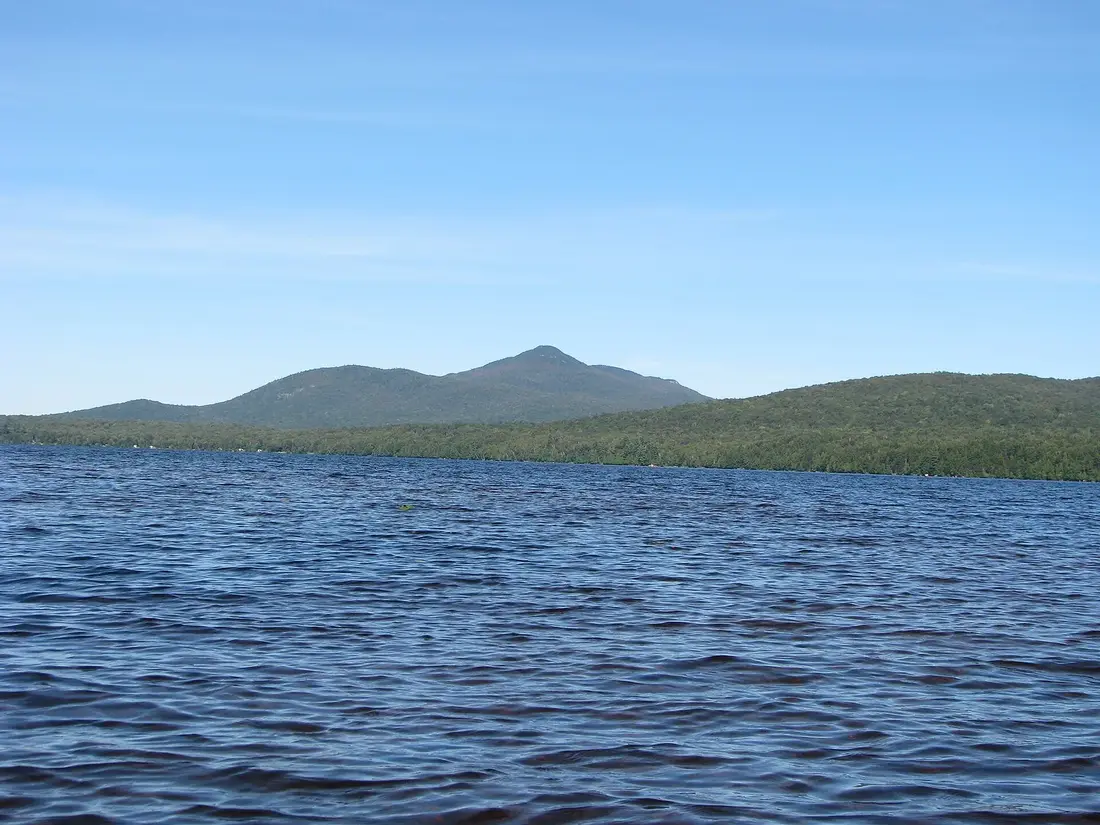
Listen for four calls: the wail, which pairs use to come closer together; the yodel, made only by males defending a territory; the soft hoot; and the tremolo, a laughing alarm call. If a loon gives the tremolo as you paddle nearer, turn away. The Meacham Lake guide covers loon etiquette for paddlers, including how far to stay back.
In Saranac Lake, the Adirondack Center for Loon Conservation keeps a free visitor center at 75 Main Street; check its hours before you go. It runs the New York Annual Loon Census each July, a one-hour count on a Saturday morning; in 2026 it was 8 to 9 a.m. on July 18, with registration due by July 1. In July 2026 the center also opened an online tool for anyone to report loons, nests, or a lake with no loons at all, which is useful data too.
Bald eagles
By 1970 New York had a single active bald eagle nest, and it produced no young. The state listed the eagle as endangered in 1971 and in 1976 began raising young eagles brought from elsewhere and releasing them. It worked: by the end of the 2023 breeding season DEC had recorded 841 territories and more than 1,000 nests in all. Eagles build big, heavy nests near water, often in tall pines or spruce, and feed where fish and waterfowl are plentiful. Near the cabins, paddlers pass a large eagle nest where the Osgood River enters Meacham Lake, and eagles come to Little Clear Pond to take fish from the state hatchery's waters. Give them room: DEC's advice for watching wintering eagles is to stay in or beside your car, which eagles fear less than people on foot, and to come no closer than a quarter mile.
Northern birds at Bloomingdale Bog and the VIC
The spruce and tamarack lowlands of the northern Adirondacks hold a set of northern, or boreal, birds that birders travel a long way to find, among them the Canada jay, the black-backed woodpecker and the boreal chickadee. Two of the best places to look are about an hour or less from the cabins.
Bloomingdale Bog
The north parking area on Bloomingdale-Gabriels Road, County Route 55, is about 38 road miles from the cabins, and the south one, off NY 86 near Saranac Lake, about 40. From the north lot, walk southwest for five to ten minutes and watch for Canada jays. For black-backed woodpeckers, cross Bloomingdale-Gabriels Road from the north lot and walk northeast to Bigelow Road, a dirt road closed to traffic that crosses the trail. The south end, with more open marsh, is the place for red-winged blackbirds, belted kingfishers and great blue herons. Warblers and snowshoe hares turn up along the way. The hiking guide covers the walk itself.
Paul Smith's College VIC
The college's Visitor Interpretive Center, about 30 road miles away on NY 30, has trails through every Adirondack habitat except the alpine zone. The Heron Marsh Trail crosses Heron Marsh and Barnum Brook on a 900-foot boardwalk with two viewing platforms and an observation tower; American bitterns and great blue herons are the regulars, with ring-necked and wood ducks, swamp sparrows and hermit thrushes, beaver lodges, and snapping and painted turtles. The Boreal Life Trail runs a 1,600-foot boardwalk through a black spruce swamp and bog where Lincoln's sparrows and palm warblers nest, and an overlook on Barnum Pond, where loons are sometimes seen or heard. Canada jays, boreal chickadees and black-backed woodpeckers turn up across the property. The trails are open dawn to dusk, staff lead nature walks, and the fall 2026 calendar has a Boreal Life Nature Walk on October 11. The Saranac Lake and Paul Smiths guide covers the area.
Spruce grouse
The rarest of these birds is the spruce grouse, listed as endangered in New York. It lives only in small patches of lowland spruce and tamarack forest near bogs and streams in Franklin and St. Lawrence counties. In 1987 the state held an estimated 175 to 315 spruce grouse, and by 2010 probably fewer than 100 adults. From 2013 DEC moved 363 adults and 711 chicks from Canada and Maine into those patches, finishing with a last 50 adults in summer 2025. The state now counts 21 small, scattered populations, seven of them on Forest Preserve land in the Raquette Boreal, Saranac Lakes and Debar Mountain units. Seeing one takes luck. The other prize for many birders is the Bicknell's thrush, a target of the spring birding festivals.
Snow geese at Rotary Lake
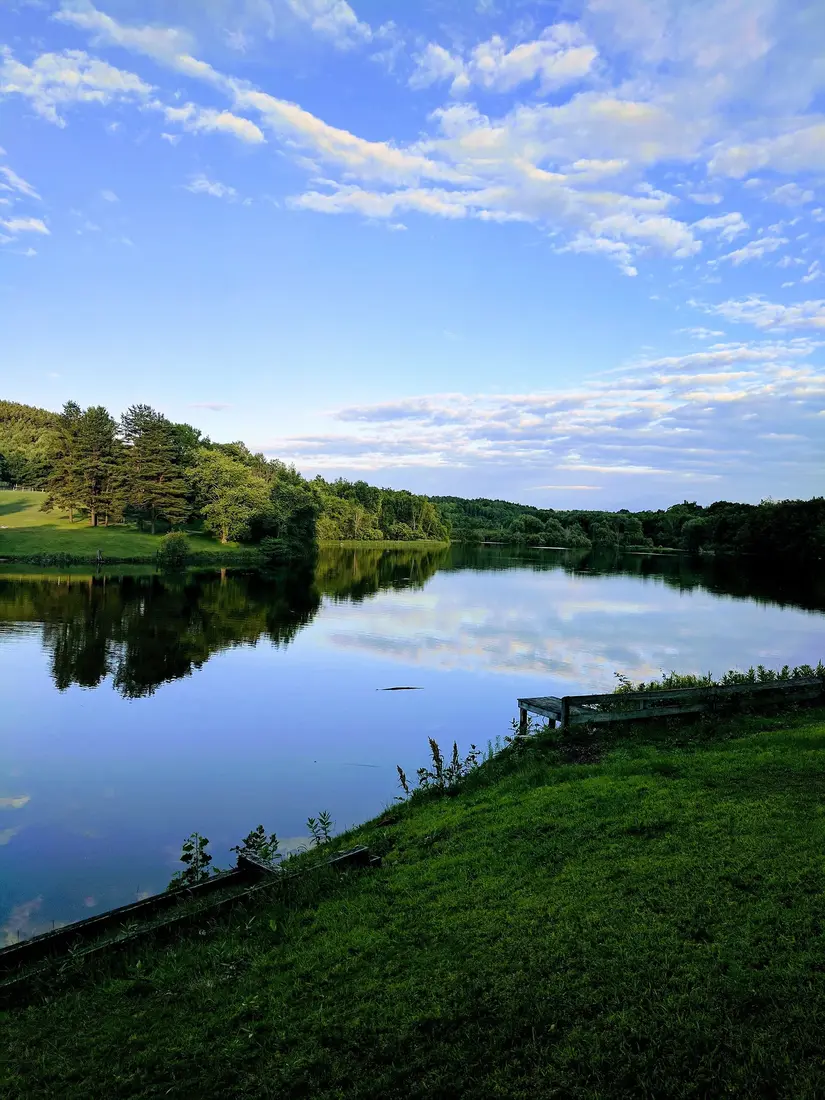
Each fall Malone gets a wildlife show of its own. Thousands of snow geese, which nest in the Arctic and subarctic, stop over on their way south. They start arriving in early October, peak from late October into early November, and leave by late November. By day they feed in the farm fields around town; just after sunset they come down to roost on Rotary Lake in Malone Memorial Recreation Park, on Duane Street, about ten road miles from the cabins on the way into town. Canada geese come with them, and the flocks often hide a few rarer geese, such as cackling, Ross's and greater white-fronted geese. Common and hooded mergansers use the lake in migration as well.
Arrive half an hour before sunset and stay until dark: in late October that means being there around 5:30 p.m., and after the clocks change on November 1, around 4:15 p.m. When a flock lifts off the water together, the wingbeats make a loud thrum. Bring binoculars, and a spotting scope if you have one, to sort through the flocks.
Northern New York Audubon holds a free Goose Migration Watch at the park's Duane Street entrance each fall, with members on hand with scopes to help pick out the rarer geese. In 2026 it is on Saturday, November 7, from 1 to 5 p.m.; check the club's events page before you go. About 60 people came to the 2025 watch, more than double the year before, and the count came to roughly 2,500 Canada geese, 1,200 snow geese, a snow and Ross's goose hybrid and a brant, the first one ever reported in Malone. See the Malone guide for the park.
Where to look near the cabins
| Place | From the cabins | What to look for |
|---|---|---|
| The Tiny Home's pond deck | On the property | Beavers, deer and songbirds |
| Elephant Head Road, Titusville Mountain State Forest | About 9 road miles to the gate | A large beaver pond and brooks along the road, trilliums in spring |
| Rotary Lake, Malone | About 10 road miles | Snow and Canada geese in October and November |
| Deer River Flow | About 17 road miles | Great blue herons, ducks and beaver lodges |
| Meacham Lake and the Osgood River | About 21 road miles | Nesting loons and an eagle nest |
| Paul Smith's College VIC | About 30 road miles | Marsh and boreal birds, otters, beaver lodges, turtles |
| Bloomingdale Bog | About 38 road miles | Canada jays, black-backed woodpeckers, boreal chickadees |
| Little Clear Pond | About 42 road miles | Loons, and eagles fishing |
| Adirondack Center for Loon Conservation, Saranac Lake | About 43 road miles | Exhibits and loon research |
| The Wild Center, Tupper Lake | About 57 road miles | Otters and other live animals indoors |
When to look
Most animals here move early and late in the day, and the afternoon is the slow time. Plan on first light and the last hour before dark, and use these times at the cabins:
| Date | Sunrise | Sunset |
|---|---|---|
| June 21 | 5:09 a.m. | 8:48 p.m. |
| August 15 | 5:57 a.m. | 8:04 p.m. |
| September 22 | 6:42 a.m. | 6:56 p.m. |
| October 15 | 7:11 a.m. | 6:13 p.m. |
| November 15 | 6:52 a.m. | 4:30 p.m. |
| December 21 | 7:29 a.m. | 4:20 p.m. |
Through the year:
- April and May. Loons are back within days of ice-out, bears are out of their dens and hungry, and moose come to the road edges at dawn.
- Late May and June. Fawns lie hidden in the grass, loons sit on their nests, and the birding festivals run around Saranac Lake and in Hamilton County. Black flies peak in late May and early June.
- July and August. Loon chicks stay close to their parents, warblers, wrens and thrushes sing around the Tiny Home, and beavers work the pond at dusk. The loon census is in mid-July.
- September and October. The moose breeding season runs from mid-September to mid-October, snow geese reach Malone in early October, and the fall hunting seasons open.
- November. The geese peak early in the month and leave by its end, the deer breeding season peaks, and deer crashes on New York roads hit their fall peak.
- December to March. Deer gather in their winter yards, tracks show in every snowfall, and the VIC's trails are groomed for skis and snowshoes.
Birding resources
- eBird. The free checklist site from the Cornell Lab of Ornithology lists more than 260 species for Franklin County, with hotspot pages for Malone Memorial Recreation Park, the Malone-Dufort Airport, Paul Smith's College VIC and the Bloomingdale Bog Trail that show what has been seen recently.
- Northern New York Audubon. The regional club runs the Great Adirondack Birding Celebration each spring, three days of field trips, workshops and talks; the 26th ran May 29 to 31, 2026, at Paul Smith's College VIC, and the club has posted June 4 to 6, 2027, at North Country Community College in Saranac Lake. It also holds the goose watch in Malone, on November 7 in 2026.
- Adirondack Boreal Birding Festival. Four days of guided hikes, paddles and driving trips in Hamilton County, farther south in the park, around Long Lake, Indian Lake, Speculator, Blue Mountain Lake and Inlet; the 2026 festival ran June 4 to 7, with registration and a fee for each outing.
- Reporting. Log loons with the Adirondack Center for Loon Conservation's online tool and moose with DEC's Moose Sighting Report Form; both go into ongoing research.
Moose and deer on the roads
New York had 32,287 crashes involving deer in 2024, and they bunch up in the fall: 4,050 in October, 5,854 in November and 3,624 in December. Moose are rarer and far more dangerous to hit. They are dark, they move most from dusk to dawn, and their heads and much of their bodies sit above the reach of headlights, so a car tends to pass under the body and the moose comes over the hood into the windshield.
The drives to and from the cabins run on rural county roads and on NY 30 through the wild forest, so plan to arrive in daylight when you can. The advice from DEC and the DMV: slow down at dawn and dusk and wherever deer-crossing signs stand; when one deer crosses, expect more, because deer travel in groups; flash your headlights to warn other drivers; honk if a deer or moose heads for the road; and if an animal is in the road, brake firmly and do not swerve. For snow and night driving, see winter driving.
Ethics and distance
- Never feed wildlife. From bears to birds at a trailhead, animals that learn people mean food get bolder, and for bears that ends badly.
- Leave young animals alone. Fawns and other young animals that look abandoned usually have a parent close by.
- Let the animal set the distance. If it stops feeding, stares or moves off because of you, back away. For eagles, DEC suggests a quarter mile; for loons, see the Meacham guide.
- Keep dogs leashed on the trails and on the walk to the pond deck, so they cannot chase deer or run into a bear; bringing your dog has the rest.
- Report trouble. For an injured or harassed animal, call the DEC wildlife office in Ray Brook at (518) 897-1291 on weekdays or (518) 897-1304 after hours.
The fall hunting seasons overlap with the best wildlife weeks of the year, so wear blaze orange or pink on any trail from mid-September to early December; the hiking guide has the 2026 dates.
Binoculars and cameras
The cabins do not list binoculars, so bring a pair, ideally one for each person; most of what this page describes is seen at a distance, and binoculars and scopes bring animals closer without disturbing them. A spotting scope earns its place at Rotary Lake, where birders use one to pick the rare geese out of the flocks, and on the big lakes for loons. For photographs, a long lens beats walking closer, and the car makes a good blind for geese and for roadside moose. At the cabins, try both the windows and the decks; guests have done well from each.
Questions
What wildlife will we see at the cabins?
Deer are the everyday sighting on both properties, along with plenty of songbirds; one family counted 50 kinds of birds, ten of them warblers, around The Modern Tiny Home in a single summer. The Tiny Home also has a short trail to an observation deck over a pond, which its listing recommends for watching everything from birds to beavers. Dawn and dusk are the best times, and binoculars help.
Are there bears near the cabins?
Yes, black bears live throughout the Adirondacks. Keep garbage indoors, clean the grill before dark, feed pets inside, and do not put out bird feeders. Feeding bears is illegal in New York. If you meet one on a trail, never approach it and never run: make noise, speak in a loud, calm voice and back away slowly.
Where can I see a moose near Malone?
There is no sure spot. Roughly 700 moose live in the Adirondack region, mostly in wet country such as beaver flows, wetlands and young forest. In spring they come to road edges for salt, and in the central Adirondacks most sightings come between about 6 and 9 a.m. Watch from the car, drive slowly at dawn and dusk, and report any sighting on DEC's Moose Sighting Report Form.
When do the snow geese come to Malone?
From early October to late November, with the biggest numbers from late October into early November. The geese feed in fields by day and come down to roost on Rotary Lake in Malone Memorial Recreation Park, on Duane Street, just after sunset. The park is about ten road miles from the cabins. Northern New York Audubon's free Goose Migration Watch there is on Saturday, November 7, 2026, from 1 to 5 p.m.
Where is the best birding near the cabins?
Start at home, on the Tiny Home's pond deck and around both properties. Then try Rotary Lake in Malone for fall geese, about 10 road miles away; Paul Smith's College VIC for marsh and northern birds, about 30; and Bloomingdale Bog for Canada jays and black-backed woodpeckers, about 38. eBird's hotspot pages show what others have seen recently.
Do the cabins have binoculars?
No. The cabins do not list binoculars, so bring your own, ideally a pair for each person. A spotting scope is worth packing in October and November for the geese at Rotary Lake, and for loons on the bigger lakes. Most animals here are seen at a distance, and good optics let you watch without disturbing them.
Where can we see loons?
On the bigger lakes and ponds south of the cabins: Meacham Lake, about 21 road miles away, and the ponds of the Saint Regis Canoe Area. Loons return within days of the ice going out, and chicks stay with their parents through the summer. In Saranac Lake, the Adirondack Center for Loon Conservation has a free visitor center. See the Meacham Lake guide for how close to paddle.
Sources
Facts on this page were checked against these sources in October 2026. Hours, fees and schedules change; confirm before you go.
- The cabin's Airbnb listing airbnb.com/rooms/41023086
- The cabin's Airbnb listing airbnb.com/rooms/1168252128174283244
- New York State Department of Environmental Conservation dec.ny.gov/nature/animals-fish-plants/beaver
- newyorkalmanack.com newyorkalmanack.com/2021/08/a-short-history-of-adirondack-beaver/
- New York State Department of Environmental Conservation extapps.dec.ny.gov/docs/administration_pdf/2005jrnat1.pdf
- esf.edu esf.edu/aec/adks/mammals/wtd.php
- New York State Department of Environmental Conservation dec.ny.gov/news/press-releases/2022/5/dec-urges-new-yorkers-to-leave-f
- New York State Department of Environmental Conservation dec.ny.gov/nature/animals-fish-plants/black-bear
- New York State Department of Environmental Conservation dec.ny.gov/nature/animals-fish-plants/black-bear/management/bearwise
- New York State Department of Environmental Conservation extapps.dec.ny.gov/docs/regions_pdf/bcbears.pdf
- post-journal.com post-journal.com/news/community/2025/04/dec-remove-bird-feeders-feed-p
- New York State Department of Environmental Conservation dec.ny.gov/nature/animals-fish-plants/black-bear/management/bear-resis
- Adirondack Explorer adirondackexplorer.org/recreation/dec-reminds-a-fed-bear-is-a-dead-bea
- New York State Department of Environmental Conservation extapps.dec.ny.gov/docs/wildlife_pdf/moose1.pdf
- New York State DMV dmv.ny.gov/news/dmv-and-dec-caution-drivers-to-be-aware-of-deer-and-mo
- New York State Department of Environmental Conservation extapps.dec.ny.gov/docs/wildlife_pdf/mooseresponse2011.pdf
- adirondackalmanack.com adirondackalmanack.com/2023/05/dec-invites-all-to-report-adk-moose-sig
- cbsnews.com cbsnews.com/news/new-york-hiking-trail-closed-moose-unusual-behaviors/
- New York State Department of Environmental Conservation dec.ny.gov/news/press-releases/2025/8/dec-update-on-goodman-mountain-t
- newyorkalmanack.com newyorkalmanack.com/2022/01/adirondack-moose-research-project-launched
- newyorkalmanack.com newyorkalmanack.com/2023/04/dead-adirondack-moose-recovered-by-researc
- New York State Department of Environmental Conservation dec.ny.gov/nature/animals-fish-plants/river-otter
- New York State Department of Environmental Conservation dec.ny.gov/nature/animals-fish-plants/fisher
- wildadirondacks.org wildadirondacks.org/heron-marsh-interpretive-trail.html
- New York State Department of Environmental Conservation extapps.dec.ny.gov/docs/wildlife_pdf/sgcncomloon.pdf
- adkloon.org adkloon.org/loon-facts
- adkloon.org adkloon.org/about
- Adirondack Explorer adirondackexplorer.org/environment/wildlife/registration-opens-for-202
- newyorkalmanack.com newyorkalmanack.com/2026/07/loon-sightings-reporting-tool/
- New York State Department of Environmental Conservation extapps.dec.ny.gov/fs/programs/dfw/SWAP2025/Birds/Bald%20eagle.pdf
- New York State Department of Environmental Conservation dec.ny.gov/nature/animals-fish-plants/bald-eagle/management/viewing
- wildadirondacks.org wildadirondacks.org/bloomingdale-bog-trail.html
- adirondackvic.org adirondackvic.org/Birding-the-VIC.html
- Paul Smith's College paulsmiths.edu/vic/
- New York State Department of Environmental Conservation dec.ny.gov/nature/animals-fish-plants/spruce-grouse
- New York State Department of Environmental Conservation dec.ny.gov/news/press-releases/2025/12/dec-announces-completion-of-spr
- nnya.org nnya.org/events/great-adirondack-birding-celebration-1
- ADK Taste adktaste.com/adirondack-events/adirondack-boreal-birding-festival-2026
- Visit Malone visitmalone.com/blog/2015/10/snow-geese-spectacle
- Visit Malone visitmalone.com/parks/malone-memorial-recreation-park
- natureupnorth.org natureupnorth.org/encounter/connie-jenkins/snow-geese-rise-rotary-lake
- nnya.org nnya.org/events/snow-goose-migration-watch
- nny360.com nny360.com/communitynews/communitynotes/goose-migration-watch-event-cr
- ebird.org ebird.org/region/US-NY-033
- fws.gov fws.gov/project/wildlife-watching-tips
- api.sunrise-sunset.org api.sunrise-sunset.org/json
- router.project-osrm.org router.project-osrm.org/
- nnya.org nnya.org/events/goose-migration-watch-malone-recreation-park
- nnya.org nnya.org/events
- New York State Department of Environmental Conservation extapps.dec.ny.gov/fs/programs/dfw/SWAP2025/Birds/Spruce%20grouse.pdf
- New York State Department of Environmental Conservation extapps.dec.ny.gov/fs/programs/dfw/SWAP2025/Birds/Common%20loon.pdf
- wildadirondacks.org wildadirondacks.org/boreal-life-interpretive-trail.html
- New York State Department of Environmental Conservation dec.ny.gov/news/press-releases/2026/5/dec-reminds-new-yorkers-to-help-
- New York State Department of Environmental Conservation dec.ny.gov/news/press-releases/2022/1/dec-and-partners-launch-adironda
- Adirondack Explorer adirondackexplorer.org/recreation/featured-area-paul-smiths-visitor-in
In this guide
Stay nearby
The first of the cabins: a big stone fire pit you see as you walk up, a screened corner of the deck, direct trail access, and a short walk to an observation deck over the pond.
 The Modern Tiny HomeCabin 1 · 2 bd · 1 ba · sleeps 4
More in Trails & Hiking
Sources
55 references, listed in full at the end of this guide: official park, state, tourism-office and business sources, checked October 2026.
Related guides


Photos on this page: Rotary Lake Malone NY 20170703 by DBull360, CC BY-SA 4.0; Meacham Lake Franklin County New York by Mwanner, CC BY-SA 3.0; St Regis Canoe Area by Marty Plante, CC BY-SA 4.0. Resized and cropped for this site. All photo credits