
In the summer of 1935 the New York beer baron Dutch Schultz stood trial for income-tax evasion in the Franklin County Courthouse in Malone, about ten road miles north of the cabins, and walked out a free man. This is the story of how the case came to a farm county on the Canadian border, what Arthur Flegenheimer did while he waited for it, why twelve local men acquitted him, and what you can still see in town.
Who Dutch Schultz was in 1935
Dutch Schultz was born Arthur Flegenheimer in Manhattan in 1902, the son of immigrant parents, Herman and Emma. By the early 1930s he had made his money in beer, and he was often called New York's "Public Enemy Number One." The Franklin County court history describes him at the time of the trial as a "notorious beer bootlegger," which is about as plain as the record gets.
Gangsters of that era were hard to convict of violence and much easier to convict of money. The Treasury had built an Intelligence Unit in 1919 under Elmer Irey, starting with six postal inspectors, and its agents, the "T-Men," made their name by tracing the incomes of men like Al Capone and Waxey Gordon. Schultz was on the same list. On January 25, 1933, he was indicted for evading $92,103.34 in income tax.
He did not wait around for a trial. He spent close to two years out of sight, much of it based in Newark, New Jersey, and then, on November 28, 1934, he surrendered in Albany. That choice of city mattered. Albany, Syracuse and Malone all sit in the federal Northern District of New York, and every step that followed happened upstate.
The case moves north
A copy of the docket card for the upstate case, number 26200, was on file at the Franklin County Courthouse when the state's court historians wrote up the case in 2014. It shows an indictment filed on February 14, 1935, charging three men with violating the income tax law. The first name on it is the one the newspapers already knew, followed by a string of aliases: Arthur Schultz, George Schultz, Charles Harmon, Joseph Harmon, Arthur New and Charles New. The other two defendants were Henry Margolis and Frank J. Ahearn, each with aliases of his own.
Schultz was arraigned on February 20 and released after posting a $75,000 bond, secured by U.S. Government bonds. From that day until July he was free to travel, and he used the time.
The first trial in Syracuse
The first trial opened in the federal court in Syracuse on April 15, 1935. The New York Times headline on April 16 read "7 COUNTS DROPPED IN SCHULTZ'S TRIAL," and the docket confirms the case went to the jury on the first four counts of the indictment. Twelve days later it was over without a verdict. The clerk's entry reads "Jury disagrees & is thereupon discharged. Defts bail continued."
A hung jury in a tax case against the best-known bootlegger in the state was an embarrassment for the government, and a second trial was certain. The question was where.
Why the retrial came to Malone
The judge was Frederick H. Bryant, and he is the simplest answer. Bryant was born in Lincoln, Vermont, in 1877, graduated from Middlebury College in 1900, and learned law in the Malone office of Gordon H. Main before he was admitted to the bar in 1903. He practiced in Malone for more than twenty years, first as Main & Bryant and then as Bryant & Lawrence. In 1907 he married Florence Boyce, then the only woman attorney in Franklin County. Calvin Coolidge gave him a recess appointment to a new judgeship in the Northern District on May 19, 1927, and the Senate confirmed him that December.
Bryant's regular court sat in Syracuse, but he often held his summer term at home in Malone. The court history of Franklin County gives that habit as the reason the Schultz retrial was heard in the county courthouse in July 1935. A federal judge moving his own summer calendar to his own hometown needed no special motion, and the record does not show one.
The defense later took some of the credit. A 2002 American History magazine profile of Thomas E. Dewey says Schultz's lawyer, J. Richard "Dixie" Davis, helped get the second trial moved to Malone. Popular retellings go further and say the defense argued Schultz could not get a fair trial in New York City, but the case had already left the city for Syracuse months before.
Our reading: the summer-court explanation is the one the paperwork supports, and the rest is what people said afterward to make sense of a verdict nobody in the government expected.
Schultz's week in town before the trial
Schultz came to Malone about a week before the trial opened and took a suite at the Flanagan, the best hotel in town. What he did next is the part of the story everyone in Malone still knows. He made the rounds of the restaurants and nightspots and picked up the bill for meals and drinks for everyone in the room. Visit Malone's history of the case adds that he tipped with $100 bills, bought rounds of drinks on the quiet, gave money to local churches, bought new jerseys for the town's semi-pro baseball team and brought toys to sick children. A 2002 magazine account puts the total in the thousands of dollars spent on parties for the town. One later account of the case says the townsfolk came to regard him as Robin Hood in a double-breasted suit.
The most personal detail comes from the defense table. Two Malone lawyers had joined the team: Harold W. "Bud" Main, a former district attorney, and George Moore. In the week before the trial, Main's teenage son took Schultz horseback riding on a bridle path along the Salmon River. That son, Robert G. Main, Sr., grew up to be a state Supreme Court justice, and in a 1997 A&E Biography film about Schultz he remembered the man as someone who "didn't fit the gangster-movie mold."
The church question follows Schultz out of Malone, too. The Encyclopaedia Judaica's entry on him says he was baptized a Catholic that summer, while he waited for the trial in Malone. Other accounts place the baptism three months later, in a Newark hospital, as he lay dying. We tell both below.
The Flanagan Hotel
The Flanagan was built in 1914 and stood downtown for more than a century. Over its life it put up Babe Ruth and Theodore Roosevelt as well as the Schultz party. A fire ended its working life, and the building stood empty for 29 years. Demolition of the hotel and the Lashomb building beside it started on April 13, 2026, as a $1.5 million project, and was finished by the end of that month. Malone's mayor has said she hopes to see the lot rebuilt with shops on the ground floor and housing above for seniors, veterans and working families, so for now the site is a cleared lot with plans attached.
The Malone history guide covers the trial in a short section alongside the rest of the town's past; this post is the long version.
The trial opens in the Franklin County Courthouse
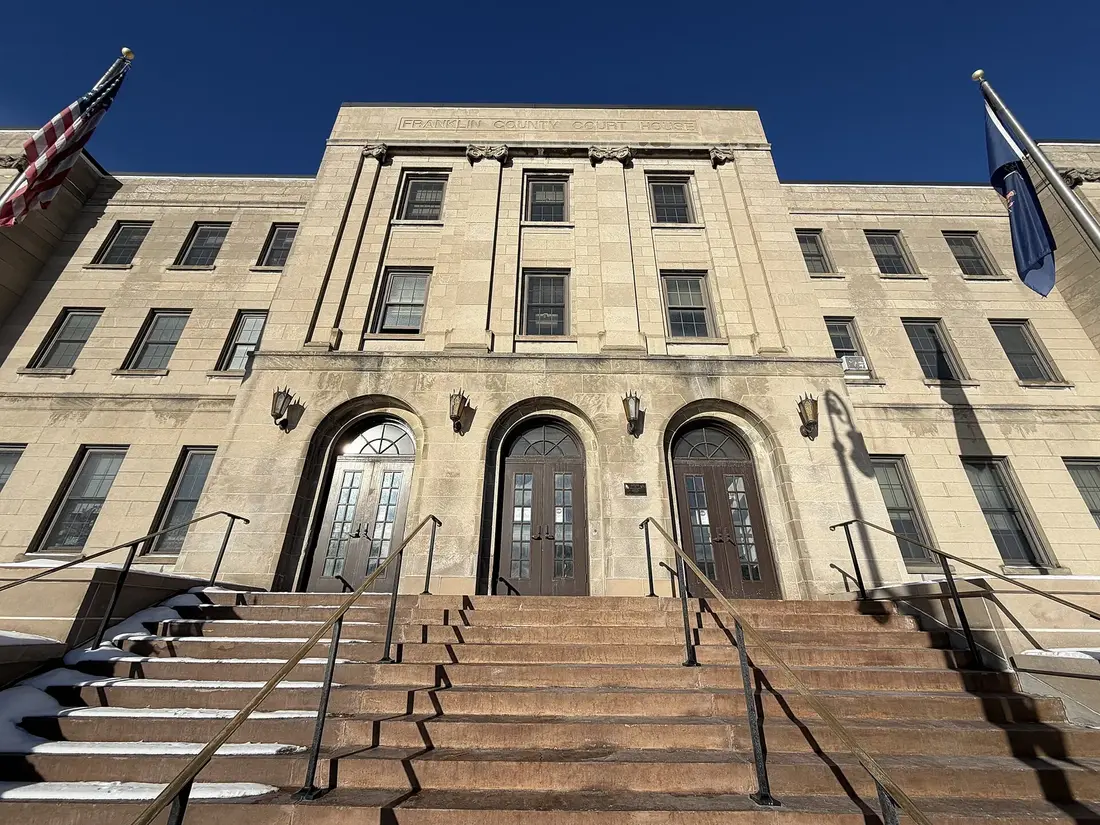
The courthouse where the case was heard was five years old in 1935. It is the fourth county courthouse on the same West Main Street site, paid for with $425,000 in bonds and finished in 1930. On July 23, 1935, a jury was drawn and sworn there, and in front of that jury Judge Bryant ordered Schultz "committed to the Marshal for the duration of the trial." The defendant who had spent the spring buying drinks spent the summer in federal custody.
The judge kept a firm hand on the witnesses, too. Two days into the trial he ordered four of them held by the Marshal for its duration, and the next day he set $10,000 bail for two of them. On July 30 a witness named Rocco DiLarmi refused to answer questions put to him by the U.S. Attorney, was held in contempt of court and was sent to the Franklin County Jail for six months.
The lawyers
The docket shows the U.S. Attorney's office questioning the government's witnesses. On the other side, Dixie Davis was still Schultz's lawyer, and the two Malone men, Bud Main and George Moore, had joined the defense. Hiring local counsel who knew every family in the county was a sensible move in any jury trial, and in this one it may have been the most important decision the defense made.
The jury
The twelve jurors came from around the county, and most accounts describe a jury of farmers. The foreman was Leon Chapin. The question in front of them was narrower than the headlines made it sound. In April the government had dropped seven counts at the start of the Syracuse trial, a move The New York Times reported cut the most Schultz could face to 16 years and a $40,000 fine, and the case that reached Malone came down to whether he had willfully evaded the tax on his income.
Twenty-eight hours in the jury room
The jury went out and stayed out through a night and most of the next day. At 8:55 p.m. on August 1, after 28 hours and 20 minutes of deliberation, it returned its verdict: not guilty. That time and date come from the court record and the state's court history; some later accounts give the date as August 2, when the verdict was already a night old. The Malone Evening Telegram reported that a cheer went up from the crowd of spectators, inside the courtroom and outside on the street.
Leon Chapin explained the verdict in words that are worth reading in full, because they are the jury's own case for itself: "I am sure that no man on the jury approves of racketeering or anyone connected with it. In fact, the jury considers Schultz to be a public enemy. But the fact that he was a racketeer and in the beer business could have no bearing on the case. We felt that the Government did not prove its case. The whole discussion centered around whether or not he was guilty of willfully evading tax payments. We were instructed to follow the evidence and that's what we did."
The judge rebukes the jury
Judge Bryant did not hide what he thought. The Malone Evening Telegram's headline read "Judge Rebukes Jurymen for 'Striking Blow to Law Enforcement.'" He told the twelve men that their verdict "shakes the confidence of law abiding people in the reliability of juries," and that anyone who had followed the evidence would see they had reached it "not on the evidence but on some other reason." He finished by telling them that others would probably commend them for it, and that he could not.
For a judge who had practiced law in that same town for more than twenty years, it was a hard thing to say in public. The Attorney General of the United States called the verdict a "terrible miscarriage of justice."
New York's answer
The reaction in New York City came quickly. Mayor Fiorello La Guardia let it be known that Schultz was not welcome back in the city, and wire reports that week had the mayor saying there was no place for him there. The front page of The New York Times on August 3, 1935, carried the headline "SCHULTZ 'EXILED,' DEFIES THE MAYOR; DEWEY WILL ACT."
The last three words of that headline pointed to the man who would shape the rest of the story. Thomas E. Dewey had served in the federal prosecutor's office in Manhattan in the early 1930s, including a short term as U.S. Attorney in 1933, and the American History profile of him places him behind the original tax indictment. In 1935 Governor Herbert Lehman appointed Dewey special prosecutor to break the rackets' hold on Manhattan. For Schultz, the acquittal ended one federal case and left him facing a prosecutor who had the state's full backing and meant to indict him again on heavier charges. He moved across the Hudson to New Jersey.
Newark, October 1935
Schultz lived less than three months after the verdict. He wanted Dewey killed and put the idea to the heads of the national crime syndicate, who voted it down because they feared the backlash.
At about 10:15 on the night of October 23, 1935, gunmen working for the syndicate shot Schultz and three of his men at the Palace Chop House in Newark, his headquarters. All three of his men died. Schultz was taken to a Newark hospital, where police posted a stenographer at his bedside to take down everything he said. Early the next morning he asked for a Catholic priest, Father Cornelius McInerney, who gave him the last rites. Accounts differ on the baptism: the National Catholic Register's telling has the priest baptizing him there in the hospital, while the Encyclopaedia Judaica dates it to the summer in Malone. He died at 8:35 p.m. on October 24, 1935, at 33, and was buried in a Catholic cemetery, which drew protests of its own.
In Malone the story had a quieter ending. Plenty of people in town had their own view of the case, and one local man put the question to a New York Times reporter: "If New York thinks he's so dangerous, why don't they get rid of him down there?" The gifts and favors of that July get added to in the retelling every few years, and we leave the new ones to the people telling them.
What the verdict says about Malone
It is easy to tell the Malone trial as the story of a gangster who bought a jury with jerseys and rounds of drinks. The record supports a more interesting version. The jury sat for 28 hours. The foreman said in plain words that the jurors thought Schultz was a public enemy and still found that the government had not proved willful tax evasion. A first jury in Syracuse, far from Malone's restaurants and ball field, had not been able to agree either. And the county sat on the Canadian border through Prohibition, so a tax case built on beer profits may have looked different from a Franklin County farm than it did from Washington.
None of that settles whether the verdict was right. Judge Bryant thought it was wrong and said so to the men's faces. What the trial does show is a small county seat doing its job under a national spotlight, with a hometown judge, hometown lawyers at the defense table, and a jury of farmers who took a day and a night to make up their minds. If the subject draws you in, the Trout River crossing post tells the story of the border station built north of Malone in 1931 and 1932, in the last years of Prohibition.
The courthouse today
The Franklin County Courthouse is still the county courthouse, at 355 West Main Street in Malone, about ten road miles from the cabins, or roughly twenty minutes. A four-story addition went on the north side in 1988, the court spaces were remodeled in 2007 and 2008, and in 2009 the main courtroom was restored to its original look, so the room is close to the one the jury sat in.
Inside, the county has hung a set of local-history paintings by Elvira Manning Hosson (1914-1988), whom the county legislature named Franklin County's Historical Folk Artist in 2008. One of them, "Prohibition Days: Troopers from Troop B Chasing Bootleggers," hangs in the District Attorney's hallway on the fourth floor (ask whether it can be seen), and it is the best picture you will find of the world Schultz's money came from. In 2014 the county's records office on the main floor held a copy of the docket card for case 26200.
A few tips for a visit:
- It is a working courthouse. Court business comes first, and the courtrooms are open to visitors only when the court allows it. A weekday, mid-morning, outside of busy court days, is the best time to ask politely about seeing the main courtroom.
- The outside of the building and the West Main Street block can be seen at any hour, and they make a good start to a walk downtown.
- If you want to see the docket card or other old records, ask at the records office and expect to come back by arrangement.
The House of History and the society's records
The Franklin County Historical & Museum Society runs the House of History at 51 Milwaukee Street, about half a mile from the courthouse and about ten road miles from the cabins. Its museum office is open Tuesday through Friday from 11 a.m. to 3 p.m., and museum tours are by appointment only, so call ahead at 518-483-2750 and check the current hours before you go. The society's research library, the Schryer Center, keeps its own hours, Tuesdays and Thursdays from 10 a.m. to 3 p.m. or by appointment.
The society has been publishing the Franklin Historical Review for decades, and its 1975 volume, volume 12, carried an account titled "The Dutch Schultz Trial," drawn from Maitland C. Desormo's book The Heydays of the Adirondacks. Much of the local detail in later retellings traces back to it. Ask at the Schryer Center whether a copy is available to read. The Malone history guide has the full picture of the museum and the rest of the town's story, from the War of 1812 to Vice President Wheeler.
Books and articles for further reading
If you want to read more before or after a visit, these are the works the local and court histories lean on:
- Kill the Dutchman! The Story of Dutch Schultz, by Paul Sann (1971), the full-length biography.
- The Heydays of the Adirondacks, by Maitland C. Desormo, the source of the society's account of the trial.
- "Bootleg Record: The Malone Trial of Dutch Schultz," by Maria Bucciferro, Adirondack Life, July/August 1991, pages 30 to 35.
- Gangster City: The History of the New York Underworld, 1900-1935, by Patrick Downey (2004), for Schultz's New York side.
- The Franklin County legal history published by the Historical Society of the New York Courts, which prints the docket entries and the courthouse's own history.
A Malone afternoon built around the trial
Here is how we would spend half a day on the story from the cabins:
- Early afternoon, the courthouse. Drive north into Malone, about twenty minutes, and park near West Main Street. Look at the 1930 building from the street, and on a weekday step inside to see whether the Hosson paintings and the main courtroom can be viewed.
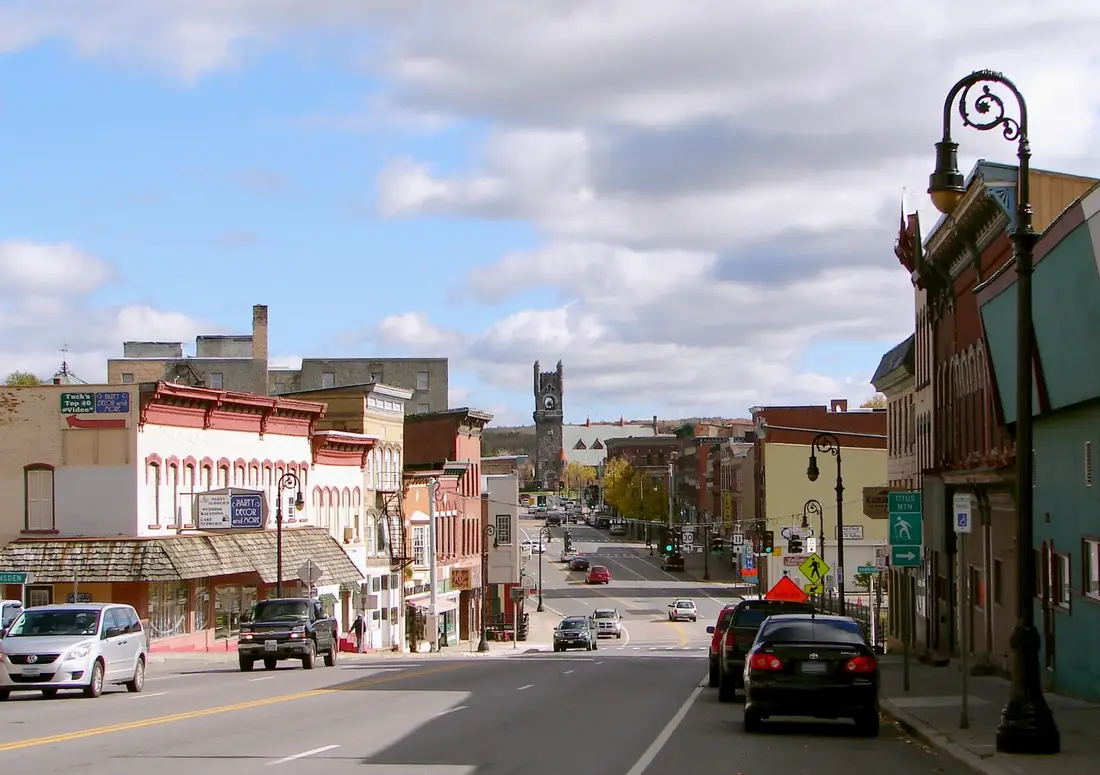
- The hotel site. Walk to the cleared Flanagan lot on Main Street, where the Schultz party had its rooms in July 1935.
- The river. The bridle path is long gone, but the Salmon River still runs through the middle of the village. The Salmon River guide has the walks and the falls.
- The House of History. If you booked a tour, go now, and ask about the society's trial article.
- Dinner. Malone has steakhouses, pubs and cafes; the Malone town guide lists them with their hours, and where to eat covers the wider area.
- Back to the cabins. Pick up groceries on the way out of town and finish the night in the hot tub, with the story fresh in your head.
In winter, start earlier for the daylight; the winter weekend plan has a day without skis and dinner in Malone. To book a stay, start with the three cabins.
Questions
Why was the Dutch Schultz trial held in Malone?
The federal judge, Frederick H. Bryant, had practiced law in Malone for more than twenty years and often held his summer term there instead of in Syracuse. After Schultz's first trial in Syracuse ended with a hung jury in April 1935, the retrial was heard in the Franklin County Courthouse that July. Schultz's lawyer, Dixie Davis, was later credited with helping get it moved.
When was Dutch Schultz acquitted?
At 8:55 p.m. on August 1, 1935, after 28 hours and 20 minutes of deliberation; that is the time in the court record. Some later accounts give August 2. Judge Bryant rebuked the jurors from the bench, and the U.S. Attorney General called the verdict a terrible miscarriage of justice.
Can you visit the courtroom where the trial was held?
The Franklin County Courthouse at 355 West Main Street in Malone is still the working county courthouse, and its main courtroom was restored to its original look in 2009. Court business comes first, so visit on a weekday and ask politely; the outside can be seen any time. It is about twenty minutes from the cabins. The Malone town guide covers the rest of downtown.
Is the Flanagan Hotel still standing?
No. The 1914 hotel where Schultz took a suite before the trial had stood empty for 29 years after a fire, and it was torn down in April 2026 together with the building beside it. Malone's mayor has said she hopes to see the lot rebuilt with shops and housing.
Where can I learn more about the trial in Malone?
The Franklin County Historical & Museum Society at 51 Milwaukee Street published a long account of the trial in its Franklin Historical Review in 1975. Its museum office keeps weekday hours and tours are by appointment, so call ahead. The Malone history guide has the museum's details.
What happened to Dutch Schultz after Malone?
Mayor La Guardia made it clear Schultz was not welcome back in New York City, and Thomas E. Dewey, appointed special prosecutor by Governor Lehman in 1935, meant to indict him again. Schultz moved to New Jersey. He was shot at the Palace Chop House in Newark on October 23, 1935, and died the next evening, aged 33.
Sources
Facts on this page were checked against these sources in October 2026. Hours, fees and schedules change; confirm before you go.
- history.nycourts.gov history.nycourts.gov/wp-content/uploads/2019/07/County-Legal-History_F
- fjc.gov fjc.gov/history/judges/bryant-frederick-howard
- nynd.uscourts.gov nynd.uscourts.gov/
- encyclopedia.com encyclopedia.com/religion/encyclopedias-almanacs-transcripts-and-maps/
- historynet.com historynet.com/thomas-e-dewey-defeats-dutch-schultz/
- ebsco.com ebsco.com/research-starters/biography/dutch-schultz
- themobmuseum.org themobmuseum.org/?p=11830
- rarenewspapers.com rarenewspapers.com/view/720588
- newspapers.digitalnc.org newspapers.digitalnc.org/lccn/sn92073191/1935-08-09/ed-1/seq-8/
- Visit Malone visitmalone.com/blog/2015/06/search-lost-treasure-dutch-schultz
- ncregister.com ncregister.com/blog/6-of-the-most-unexpected-converts
- wcax.com wcax.com/2026/04/13/demolition-starts-former-north-country-hotel-vacan
- northcountrypublicradio.org northcountrypublicradio.org/news/story/53361/20260429/demolition-of-fl
- franklinhistory.org franklinhistory.org/
- crimereads.com crimereads.com/the-strange-poetry-of-a-notorious-gangsters-last-words/


