
Paddling the Saranac Lakes
Paddling Upper, Middle and Lower Saranac Lake from the cabins: state launches and parking, the hand-operated Upper Locks, island camping, day routes and rules.
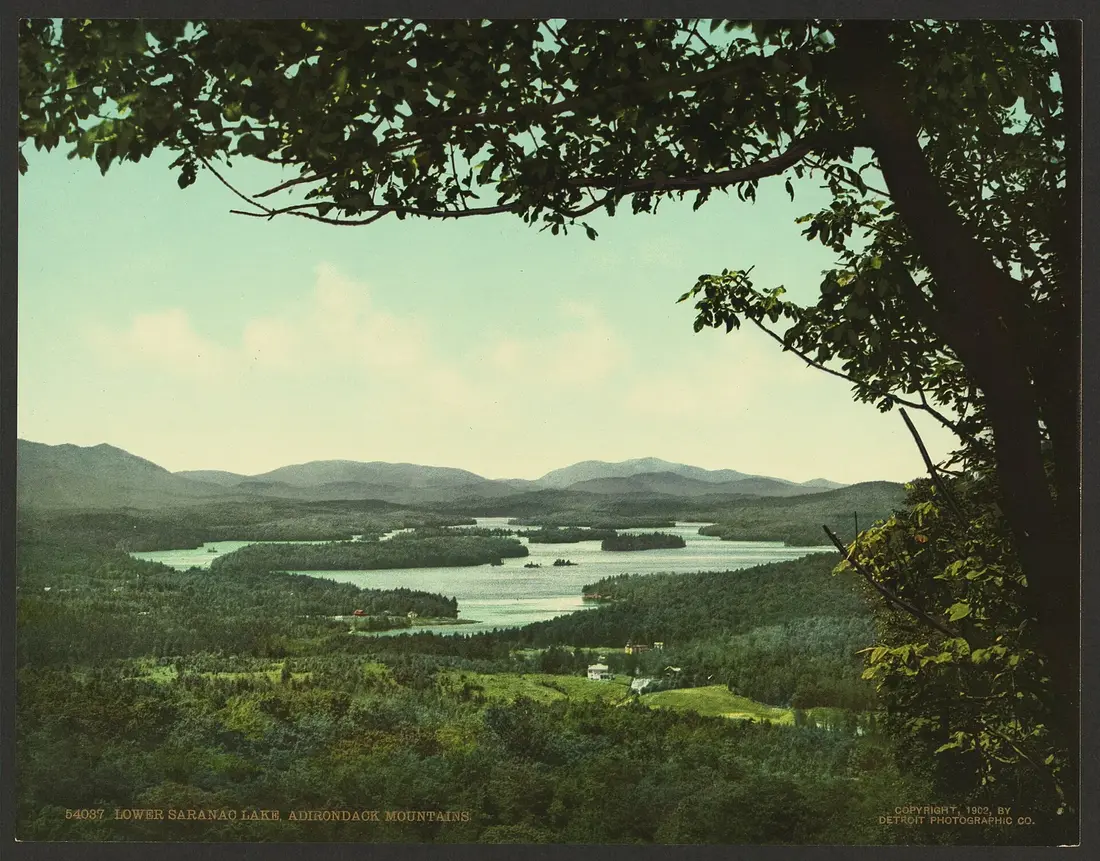
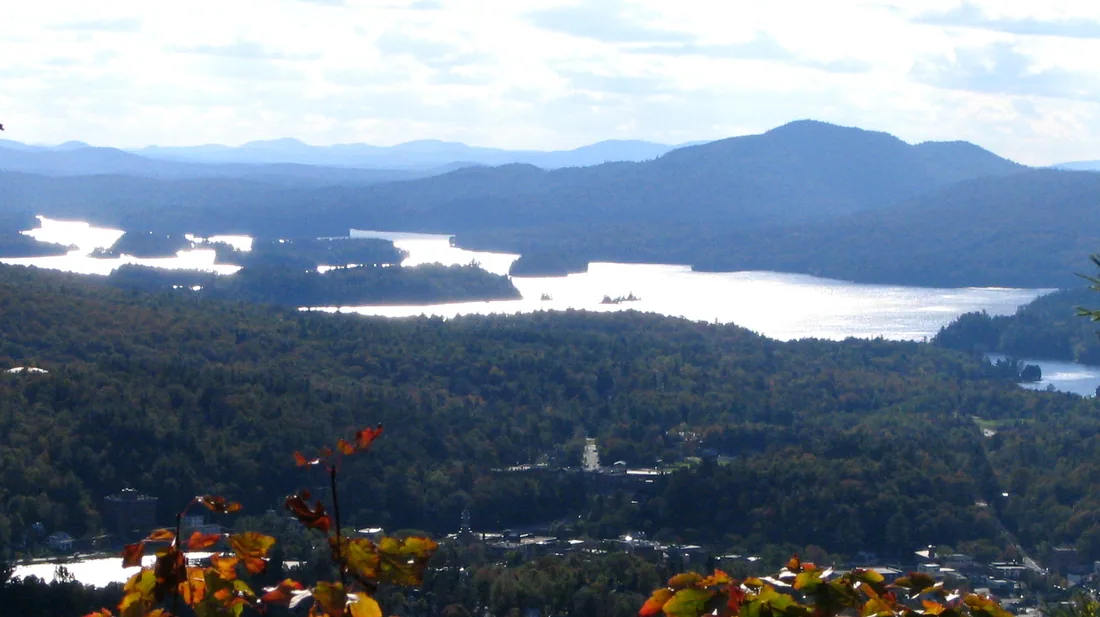
The Saranac Lakes are three big lakes strung along the Saranac River west of the village of Saranac Lake, linked by a short carry and a set of hand-operated locks, with a second set of locks leading down to the village. The closest state launches are about 43 road miles from the cabins, roughly an hour's drive down NY 30. A day here can mean islands and sandy beaches on Lower Saranac, a ride through the hand-operated Upper Locks into Middle Saranac, or eight miles of open water on Upper Saranac.
The three lakes and how they connect
Water runs downhill from Upper Saranac Lake to Middle Saranac Lake, then down the Saranac River to Lower Saranac Lake, through Oseetah Lake and into Lake Flower in the village. Paddlers can follow the same line, and every link in it is a little different. Between Upper and Middle you walk the Bartlett Carry, about four tenths of a mile, past rapids where the river drops thirty feet in two tenths of a mile. Between Middle and Lower the Upper Locks lift and lower boats around a stretch of rapids, so there is no carry at all. Below Lower Saranac the Lower Locks lead into Oseetah Lake and on to Lake Flower.
| Lake | Size | Mean depth | Fish the state lists |
|---|---|---|---|
| Upper Saranac Lake | 4,773 acres | 33 feet | Lake trout, brown and rainbow trout, rainbow smelt, smallmouth and largemouth bass, northern pike, yellow perch, brown bullhead |
| Middle Saranac Lake | 1,393 acres | 9 feet | Smallmouth and largemouth bass, northern pike, yellow perch, brown bullhead, pumpkinseed |
| Lower Saranac Lake | 2,214 acres | 28 feet | Smallmouth and largemouth bass, northern pike, yellow perch, rainbow smelt, lake whitefish (rare), pumpkinseed, brown bullhead |
| Lake Flower | 202 acres | 5 feet | Smallmouth and largemouth bass, lake trout, lake whitefish, cisco, rainbow smelt, yellow perch, brown bullhead, pumpkinseed |
Upper Saranac is the longest of the three: about eight miles from Indian Carry at its south end to Saranac Inn at its north end, past many islands, a good share of them privately owned. Middle Saranac is small and shallow, with white sand beaches, and about two-thirds of its shoreline is state land. Lower Saranac is the busy one, close to the village, with island after island and the boat-access campground. Motorboats can reach all three.
Getting there from the cabins
From the cabins, County Route 25 leads to NY 30. Turn south and stay on NY 30 past Meacham Lake to Paul Smiths. For Upper Saranac, keep going on NY 30: the Saranac Inn launch at the north end is about 43 road miles from the cabins, Fish Creek Pond is a few miles farther south on NY 30, and Indian Carry at the south end is reached by staying on NY 30 to NY 3 and turning east for a little under three miles. For Lower and Middle Saranac and Lake Flower, turn onto NY 86 at Paul Smiths and follow it into the village of Saranac Lake, then pick up NY 3 west, the road that runs past Lower and Middle Saranac toward Tupper Lake. The directions to the cabins cover the last miles in the other direction.
| Launch | Water | Road miles from the cabins | Drive |
|---|---|---|---|
| Saranac Inn | Upper Saranac, north end | About 43 | About an hour |
| Ampersand Bay | Lower Saranac | About 43.5 | About an hour |
| Lake Flower | Lake Flower, in the village | About 43.5 | About an hour |
| Second Pond (State Bridge) | Lower Saranac and the campground | About 47 | A little over an hour |
| Fish Creek Pond Campground | Fish Creek Ponds to Upper Saranac | About 47 | A little over an hour |
| South Creek | Middle Saranac | About 53 | About an hour and a quarter |
| Indian Carry | Upper Saranac, south end | About 55 | About an hour and a quarter |
Second Pond is on the south side of NY 3 about three and a half miles west of the village. The Ampersand Mountain trailhead lot, which also serves the walk to the Middle Saranac beach, is about eight miles west of downtown, and South Creek is a little farther on, about nine miles out. The Saranac Lake and Paul Smiths guide has the village itself, its history and places to eat.
The state launches
The Department of Environmental Conservation (DEC) runs seven launches on and around the chain. The table shows each one's ramp, parking and whether DEC rates it accessible.
| Launch | Ramp | Parking | Accessible |
|---|---|---|---|
| Second Pond, Lower Saranac | Hard surface | 75 cars and trailers | Yes |
| Ampersand Bay, Lower Saranac | Hand launch | 12 cars | No |
| Lake Flower | Hard surface | 20 cars and trailers | Yes |
| Middle Saranac (South Creek) | Hand launch | 20 cars | No |
| Upper Saranac, south (Indian Carry) | Hand launch | 18 cars | Yes |
| Upper Saranac, north (Saranac Inn) | Hard surface | 26 cars and trailers, plus 12 cars | Yes |
| Fish Creek Pond | Hard surface | 15 cars and trailers | No (accessible fishing pier) |
Fish Creek Pond is the one launch on the list with a fee: the campground's day-use charge in season, $8 a car in 2026. That launch is open all year. Fees and dates change, so check DEC's current campground schedule before you count on one.
Second Pond and the State Bridge
This is the main launch for Lower Saranac and the entrance to the island campground, with the campground's registration booth. Paddlers put in from the beach to the right of the motorboat ramp, pass under the State Bridge into First Pond and follow a curving channel out to the lake. Motorboats launch here too, and in 2025 it was one of the three busiest boat-steward stations in the Adirondacks.
Ampersand Bay
A hand launch on the village end of Lower Saranac with room for a dozen cars. It puts you a short paddle from Eagle Island, and it is the take-out for the classic one-way trip from Second Pond.
South Creek
The hand launch for Middle Saranac, off NY 3, has a sandy beach, a wooden dock and shallow water. South Creek winds through reeds and wetland for about half a mile before it opens onto the lake; watch for beavers and otters along it.
Indian Carry and Saranac Inn
Indian Carry, the hand launch at the south end of Upper Saranac, has a long history: Mohawk and Algonquin people camped here, and the carry has long linked Upper Saranac to Stony Creek and the Raquette River. Saranac Inn, half a mile in from NY 30 at the north end, is the trailer launch and the motorboat access for the upper lake.
Parking is limited at many of the launches. At the small ones, unload boats and gear first, then move the car to a marked space; a car parked outside an approved spot can be ticketed.
The Upper Locks
The Upper Locks sit on the Saranac River between Middle and Lower Saranac Lake, beside rapids that once forced a carry. There is no electricity at the site, so people work the gates with lever arms and push decks. Each end of the concrete chamber has a pair of gates, with small wicket gates, about a foot square, that let water in or out.
How a passage works
- Paddle into the chamber through the open gates on your side.
- Close those gates and their wickets behind you.
- Open the wickets in the far gates. Going downstream toward Lower Saranac, water drains out and the boat drops; going upstream toward Middle Saranac, water fills in and the boat rises.
- When the water inside matches the river ahead, push the far gates open and paddle out.
In summer a DEC lock tender works the gates. At other times boaters work the locks themselves, and the operating directions are posted at the site. A canoe or kayak can also be carried around on land.
The 2023 and 2024 rebuild
DEC closed the Upper Locks for a $1.6 million rehabilitation that began on September 18, 2023, with Kingsbury Companies of Middlesex, Vermont, doing the work. The project covered the upstream and downstream gates and the wicket gates, with new seals and bearings, new push-deck boards and lever arms, a new downstream dock and shelter, and repairs to the concrete deck, walls and floor. Paddlers carried around the site while it was fenced. In May 2024 DEC expected the work to finish that summer. St. Regis Canoe Outfitters lists the trip through the locks for its paddlers, with a tender on duty in season. DEC posts closures on its Saranac Lakes Wild Forest page, so look there before a trip that depends on the locks, and plan on the short carry if they are shut.
The Lower Locks and the way to Lake Flower
From the mouth of First Pond, past the Second Pond launch, the channel and the Saranac River wind about three and a half miles to the Lower Locks. They were built to pass boats up to 30 feet long, and in 1970 an underwater cable brought them electric power, with compressed air to work the gates and wickets. Go through the lock or carry around it. Below the locks the river opens onto Oseetah Lake, with a view of Baker, McKenzie and Scarface mountains and some of the High Peaks. Channel markers lead on into Lake Flower, and the village is straight ahead as you round the corner. The state launch is at the end of Lake Flower nearest town.
Lake Flower makes a short morning or afternoon outing on its own, and the village guide covers it along with Lower Saranac's history. Each February the Winter Carnival builds its ice palace beside the Lake Flower launch.
Routes for a day
Most of these routes are one way, so you need two cars or a shuttle. St. Regis Canoe Outfitters in the village sells day packages with the boat and the shuttle together. Distances are the published figures for each route.
| Route | Distance | Locks or carries |
|---|---|---|
| Second Pond to Ampersand Bay, Lower Saranac | About 4 miles one way | None |
| Second Pond to Lake Flower | About 6 miles one way | Lower Locks, or a carry around them |
| South Creek to Second Pond | About 7 miles one way | Upper Locks |
| South Creek to Weller Pond and back | About 5.5 miles, 7 with Little Weller | None |
| Ampersand Bay to Lake Flower | About 10 miles one way | Lower Locks, or a carry around them |
| Indian Carry to Saranac Inn, Upper Saranac | About 8 miles one way | None |
| Follensby Clear Pond to Saginaw Bay | About 3 miles round trip | None |
Lower Saranac, Second Pond to Ampersand Bay
The classic first trip, about four miles and three to five hours with stops. From Second Pond, follow First Pond's channel out to the lake and paddle east among the islands toward Ampersand Bay. Stay to the right, out of the way of motorboats and jet skis. Bluff Island is the popular stop.
Middle to Lower Saranac through the Upper Locks
Put in at South Creek, paddle out onto Middle Saranac and bear right toward the Saranac River; red and green buoys at Bull Rush Bay mark the river mouth. The river makes curve after curve down to the Upper Locks, and a side trip into Kelly Slough near the bottom is worth the extra paddling. Then cross Lower Saranac to Second Pond, about seven miles and four to five hours in all. St. Regis Canoe Outfitters lists a nine-mile version of this trip and notes that it is usually paddled from Middle toward Lower.
Weller Pond
From South Creek, paddle north across Middle Saranac to the channel into Weller Pond. A couple hundred yards before Weller, a smaller channel on the right loops around Little Weller Pond. The round trip runs about five and a half miles, closer to seven with the Little Weller loop, and takes about three hours with lunch. Both ponds are quiet, with plenty of wildlife.
Second Pond to Lake Flower
Six miles of river and open lake that end downtown: the river to the Lower Locks, Oseetah Lake, then the channel into Lake Flower. Leave a second car at the Lake Flower launch.
Ampersand Bay to Lake Flower
The Northern Forest Canoe Trail rates this ten-mile trip, which it calls 'Round the Mountain, suitable for all skill levels. Paddle south from Ampersand Bay toward Eagle Island along the east shore to the entrance of First Pond, across from Bluff Island, about three miles. Follow the channel past the Second Pond launch and down the river to the Lower Locks, about three and a half miles more, then cross Oseetah to Lake Flower.
Upper Saranac
The full length from Indian Carry to Saranac Inn is about eight miles of open lake with no carries. Motorboats and jet skis are busy on Upper Saranac, especially on weekends, so stay close to shore. For a shorter outing, start at the Spider Creek access on Follensby Clear Pond off NY 30: through a culvert into Spider Creek, out across Fish Creek Ponds, and up a channel lined with cottages into Fish Creek Bay. Across the bay is Buck Island, whose campsite 8, on the sheltered side, has a rock for a picnic or a swim. Whitney Point on the left shore was William Avery Rockefeller's great camp. The round trip is about three miles and three hours or more, with pitcher plants and sundew along the creek.
The Saranac Lake Islands campground
DEC runs the Saranac Lake Islands Public Campground and Day Use Area on Lower and Middle Saranac Lake, and every site is reached by boat. The campground map shows 87 campsites, five of them lean-to sites, with outhouses and hiking trails. Each site has at least one tent spot, a picnic table and a privy. The campground's address is 4468 State Route 3, and its registration booth is at Second Pond.
Season and fees
In 2026 the campground opened May 15 and closed September 13, and DEC's rule is that the last night to camp is the night before the closing date. The camping fee was $22 per site for each night, and campers who live outside New York paid $5 more per night. DEC posts each season's dates and fees in its campground schedule; check it before you plan around a 2027 date.
Reservations and check-in
- Book through ReserveAmerica (newyorkstateparks.reserveamerica.com, or 1-800-456-CAMP), up to nine months ahead. DEC asks people not to call the campground to reserve.
- Check in at the registration booth at Second Pond between noon and 9 p.m. A site not registered by 9 p.m. on the first night can be rented to someone else, with fees forfeited.
- The person registering must be 18 or older. Checkout is 11 a.m.
- Up to six people and two tents per site. From July 1 through Labor Day, a camper may stay 14 nights in total.
- Quiet hours run from 10 p.m. to 7 a.m. Fires go only in the fireplaces, with dead and down wood or firewood bought at the campground or nearby.
- Parking at Second Pond is tight. Campers who park at the State Bridge lot must display their permit, and campers may be directed to municipal lots in the village.
Weller Pond has a few reservable sites too, and site 45, in the Narrows on Lower Saranac, has a lean-to, a privy and a big rock running into the water. On Upper Saranac, about ten primitive boat-access sites are first come, first served.
Islands for a picnic and a swim
Bluff Island, the Little Twins and the Sister Islands on Lower Saranac are kept for day use only, and unoccupied islands are open for a lunch stop. On Bluff Island a short climb up the ridge looks out over the lake to the McKenzie Range. On Upper Saranac, four state campsites make good picnic and swim stops when nobody is camped there: site 18 on the east shore, site 8 on Buck Island, site 1 on Butternut Point and site 2 on Green Island.
Middle Saranac is the lake for sand. Several of its beaches can be reached only by water, and the long one on the south shore is also a walk from the road: from the Ampersand Mountain lot on NY 3, a trail leaves the back left corner and runs just over half a mile, mostly flat with some roots, to soft sand and water shallow enough to wade far out. It is a popular place to watch the sun go down.
Wind, waves and motorboats
These are big lakes, and steady wind across a long stretch of open water builds real waves. A few habits make the day easy:
- Check the wind forecast before you leave the cabins, and save the long open crossings for a calm day.
- Use the islands. Lower and Upper Saranac are full of them, so you can work from one to the next and keep each stretch of open water short.
- Point the bow into big waves and motorboat wakes. Taking them on the side is how canoes tip.
- Keep near shore and out of the marked channels so motorboats can pass, and paddle single file in a group.
- Middle Saranac sees much less motorboat traffic than Lower Saranac, especially in spring, and it is often windy; save it for a calm day.
- At the first rumble of thunder, head for shore.
- Know your bailout. Before you set out, note the launches and road crossings on your route, and if the wind picks up, turn back or end the trip early.
Life jackets and the rules on the water
New York requires one Coast Guard approved wearable life jacket on board for each person in any pleasure boat, canoes and kayaks included. Children under 12 must wear theirs. From November 1 to May 1, everyone underway in a boat shorter than 21 feet must wear one, canoe and kayak paddlers included. Inflatable life jackets are not for non-swimmers or anyone under 16. A fall into cold water can lower body temperature fast enough to lead to hypothermia, so wear the jacket in every season. DEC also asks paddlers not to block put-ins or carries with boats and gear, to keep voices down since sound carries over water, and to carry out every bit of trash.
Boat inspection and the invasive species law
New York law says every boat, canoes and kayaks included, must be cleaned, drained and dried, or treated, before it goes into a public waterbody. That means pulling off mud and plants, draining every bit of water before you leave a launch, and drying the boat and gear before the next lake. DEC suggests at least five to seven days of warm, dry weather; when there is no time for that, high-pressure water at 140 degrees or hotter disinfects, and stewards can do it at a decontamination station.
Motorboats have one more step in the Adirondacks. Since June 2022, anyone launching a motorboat in the Adirondack Park or within ten miles of it must carry a certificate, issued by a steward after a free inspection or filled in by the owner on DEC's self-issued form, and keep it with the boat. A boat with an electric trolling motor counts as a motorboat. Canoes and kayaks need no certificate and still have to be clean, drained and dry. Relaunching on the same lake does not need a new certificate.
The watercraft stewards in blue vests at Second Pond work for the Adirondack Watershed Institute of Paul Smith's College. In 2025 its stewards worked more than 60 locations, inspected 83,300 boats and performed 3,820 decontaminations, and Second Pond was one of their three busiest stations. The plants and animals they catch most are Eurasian watermilfoil, variable-leaf milfoil and zebra mussels. Eurasian watermilfoil, the most common aquatic invasive in the Adirondacks, already grows in Middle Saranac, and a DEC plan for 2026 through 2028 has divers hand-pulling it from Weller Pond to keep it from spreading there. A boat leaving these lakes needs drying as much as one arriving.
Fishing the Saranac lakes
Upper Saranac is the cold-water lake of the three, with lake trout, brown and rainbow trout and rainbow smelt alongside bass and pike. Middle and Lower Saranac are bass, pike and perch water. Anyone 16 or older needs a New York fishing license, and licenses are not sold at the campground; in 2026 a nonresident paid $10 for a day, $28 for seven days and $50 for a year, and a New York resident $5, $12 and $25. The fishing trips page covers the waters closer to the cabins, and the ice fishing guide picks up when the lakes freeze.
Rentals and shuttles
The cabins do not list canoes or kayaks, and the village has two outfitters. St. Regis Canoe Outfitters, at 73 Dorsey Street on the Saranac River, lists its hours as 9 to 5 daily and rents canoes, kayaks and camping gear, with boat transport and self-guided day packages for the Saranac Lakes. Adirondack Lakes and Trails Outfitters, at 8 Church Street across from Lake Flower, rents canoes, kayaks and paddleboards. Reserve a few days ahead for a summer weekend. The St. Regis Canoe Area guide has more on both shops, and they are part of a wider set of canoe and kayak rentals across the northern Adirondacks.
The Saranac Lake Paddling Challenge
Saranac Lake has a paddling cousin to its Saranac Lake 6er: five routes, self-guided, at your own pace, with a patch at the end. Two of the five are on this page, South Creek to Second Pond and Second Pond to Lake Flower. The third follows the Saranac River from Pine Street to the McCasland Bridge, and the St. Regis chain of lakes and the Follensby Clear Pond loop round out the set. Finish all five within two days and you earn the Ultra Patch. Register online, or in person at the Saranac Lake Area Chamber of Commerce and Welcome Center, 39 Main Street, in the Harrietstown Town Hall, where the $5 fee gets you the patch on the spot. The welcome center lists hours of 9 a.m. to 4 p.m., Monday through Saturday.
History on the water
The locks began with a steamboat. In 1877 William F. Martin dammed one channel at the rapids below Middle Saranac and blasted rock out of the other so his steamer, the Water Lily, could get through; guides who did not like it blew up the dam. The state put $5,000 into improving the channel in 1890 and another $5,000 into a lock and dam there in 1906. The Lower Locks replaced a rocky five-foot drop: the Legislature of 1900 set aside $6,000 for a lock in the dam at Saranac Lake, a dam built mostly for the lumber business and meant to raise the water about 15 inches.
At the carry between Upper and Middle Saranac, Virgil and Caroline Bartlett ran Bartlett's Sportsmen's Home from 1854 to 1884, lodging up to 50 guests and sending them out with guides. It later became a private club, the carry was rerouted around the club's camps in the early 1970s, and the land is now a private cooperative of nine shareholders; stay on the carry trail.
Weller Pond has its own story. Martha Reben came to Saranac Lake at 21 to cure tuberculosis. In 1931 Fred Rice, a guide and boat builder, put a notice in the local paper looking for an invalid who was not improving, and for the next six years she spent spring, summer and fall with him on Weller Pond. She wrote about it in The Healing Woods, published in 1952 and a best seller. Her ashes were scattered over the pond on June 11, 1964. On Upper Saranac, Chapel Island holds Sunday services, and Eagle Island was a Girl Scout camp from 1938 to 2008. Lower Saranac's summer visitors included Mark Twain and Albert Einstein; the village guide has that chapter.
A day on the lakes from the cabins
- Leave the cabins around 7:30 with the boats on the car, or pick up rentals in the village when the shops open at 9.
- Launch at Second Pond, let the stewards look the boat over, and paddle out through First Pond onto Lower Saranac.
- Work east among the islands, climb the ridge on Bluff Island and eat lunch on one of the day-use islands.
- Finish at Ampersand Bay, or turn back toward Second Pond if you have only one car.
- Coffee or an early dinner in Saranac Lake, then about an hour back up NY 86 and NY 30 to the cabins and the hot tub.
On a second day, try Middle Saranac from South Creek to Weller Pond, or the Upper Locks trip to Second Pond with a shuttle. If you want a big lake closer to the cabins, Meacham Lake is about 20 road miles away, and the ponds of the St. Regis Canoe Area, where motors are not allowed, lie along the drive.
Paddling goes on after the campground closes in mid-September; the fall foliage guide has the usual peak, and from November 1 every paddler wears a life jacket. Loons, eagles and great blue herons are regulars on Lower and Middle Saranac, and ospreys fish Middle Saranac; the wildlife guide has more on where to look.
Dogs, children and access
Dogs are welcome at the island campground with proof of a rabies shot, on a leash no longer than six feet, never left alone, and kept off beaches and day-use areas. The dog guide covers the cabins' pet rules. The cabins are set up for guests 10 and older; on the water, anyone under 12 wears a life jacket the whole time. Second Pond, Lake Flower and both Upper Saranac launches are rated accessible, while the Ampersand Bay and South Creek hand launches are not. Black flies are out from mid-May to late June; the bug guide has what works.
Questions
How far are the Saranac Lakes from the cabins?
The Saranac Inn launch on Upper Saranac and the Lake Flower and Ampersand Bay launches are about 43 road miles away, roughly an hour down NY 30. Second Pond, the main launch for Lower Saranac and the island campground, is about 47 miles, and South Creek on Middle Saranac about 53. The directions page covers the roads near the cabins.
Do I have to pay to launch a canoe or kayak?
DEC lists no fee for its launches on Upper, Middle and Lower Saranac or Lake Flower. Fish Creek Pond is the exception: its launch is inside the state campground, which charged $8 a car for day use in the 2026 season. Parking is limited at the small hand launches, so unload first and then park in a marked space.
How do the Upper Locks work?
The Upper Locks between Middle and Lower Saranac have no power; people work the gates with lever arms and push decks. You paddle into the chamber, close the gates behind you, open the wickets in the far gates to raise or lower the water, then push the far gates open. A DEC lock tender helps in summer, directions are posted for other times, and canoes can be carried around. DEC posts any closure on its Saranac Lakes Wild Forest page.
Can I camp on the islands?
Yes. DEC's Saranac Lake Islands campground has 87 boat-access sites on Lower and Middle Saranac, five with lean-tos. In 2026 it ran May 15 to September 13, and a site cost $22 per night of camping, with $5 more for non-New Yorkers. Book on ReserveAmerica up to nine months ahead and register at the Second Pond booth by 9 p.m. on the first night.
Which Saranac lake is best for a first paddle?
Lower Saranac from Second Pond to Ampersand Bay is the classic first trip: about four miles one way among islands, with Bluff Island for lunch and no carries. Middle Saranac has fewer motorboats and sandy beaches and is often windy, so save it for a calm day. Upper Saranac is the biggest, with motorboats and jet skis out in force on weekends.
Do I need an inspection certificate for a kayak?
No. In the Adirondack Park the certificate is required only for motorboats, including boats with an electric trolling motor. Every boat, canoes and kayaks included, still has to be cleaned, drained and dried before it goes into a new lake. In season, the stewards at Second Pond will look a boat over for free.
Can I rent a canoe or kayak for the Saranac Lakes?
Yes. The cabins do not list boats, and two outfitters in the village of Saranac Lake rent them: St. Regis Canoe Outfitters on Dorsey Street, which also runs shuttles and day packages, and Adirondack Lakes and Trails Outfitters on Church Street. Reserve a few days ahead for a summer weekend; the St. Regis Canoe Area guide has more on both.
Sources
Facts on this page were checked against these sources in October 2026. Hours, fees and schedules change; confirm before you go.
- New York State Department of Environmental Conservation dec.ny.gov/things-to-do/boating/launch-sites/franklin-county
- New York State Department of Environmental Conservation dec.ny.gov/places/saranac-lake-islands-campground-and-day-use-area
- New York State Department of Environmental Conservation extapps.dec.ny.gov/docs/permits_ej_operations_pdf/sarnaclakeisl23.pdf
- New York State Department of Environmental Conservation dec.ny.gov/sites/default/files/2025-04/summerreccampgroundsummary.pdf
- New York State Department of Environmental Conservation dec.ny.gov/things-to-do/camping/reservations
- New York State Department of Environmental Conservation dec.ny.gov/things-to-do/paddling
- New York State Department of Environmental Conservation extapps.dec.ny.gov/docs/lands_forests_pdf/cddfaq2022b.pdf
- New York State Department of Environmental Conservation dec.ny.gov/news/press-releases/2023/9/dec-announces-rehabilitation-pro
- New York State Department of Environmental Conservation dec.ny.gov/news/press-releases/2024/5/dec-advises-boaters-of-construct
- content.govdelivery.com content.govdelivery.com/accounts/NYSDEC/bulletins/b7f587
- New York State Department of Environmental Conservation extapps.dec.ny.gov/docs/fish_marine_pdf/upsaralkmap.pdf
- New York State Department of Environmental Conservation extapps.dec.ny.gov/docs/fish_marine_pdf/midsaralkmap.pdf
- New York State Department of Environmental Conservation extapps.dec.ny.gov/docs/fish_marine_pdf/lrsaralkmap.pdf
- New York State Department of Environmental Conservation extapps.dec.ny.gov/docs/fish_marine_pdf/lkflwrmap.pdf
- newyorkalmanack.com newyorkalmanack.com/2023/09/saranac-chain-of-lakes-upper-locks/
- Saranac Lake tourism saranaclake.com/paddling/upper-saranac-lake
- Saranac Lake tourism saranaclake.com/paddling/middle-saranac-lake
- Saranac Lake tourism saranaclake.com/paddling/lower-saranac-lake
- Saranac Lake tourism saranaclake.com/paddling/second-pond-to-lake-flower
- Saranac Lake tourism saranaclake.com/boating/second-pond-boat-launch
- Saranac Lake tourism saranaclake.com/paddling/follensby-clear-pond-to-saginaw-bay
- Saranac Lake tourism saranaclake.com/attractions/middle-saranac-lake-beach
- Saranac Lake tourism saranaclake.com/story/2019/06/paddling-middle-lower-saranac-lake
- Saranac Lake tourism saranaclake.com/story/2015/08/martha-reben-staring-down-great-white-pl
- Saranac Lake tourism saranaclake.com/saranac-lake-paddling-challenge
- roostadk.com roostadk.com/news/2023/saranac-lake-launches-new-paddling-challenge
- plan.northernforestcanoetrail.org plan.northernforestcanoetrail.org/itinerary/round-the-mountain-lower-s
- northernforestcanoetrail.org northernforestcanoetrail.org/a-serene-day-on-middle-saranac/
- canoeoutfitters.com canoeoutfitters.com/trip-planning/routes/middle-and-lower-saranac-lake
- canoeoutfitters.com canoeoutfitters.com/
- adkwatershed.org adkwatershed.org/newsroom/adirondack-watershed-institute-of-paul-smith
- adkwatershed.org adkwatershed.org/newsroom/boaters-are-required-to-obtain-clean-drain-d
- New York State Parks parks.ny.gov/documents/recreation/boating/PFDLawsofNewYork.pdf
- wiki.historicsaranaclake.org wiki.historicsaranaclake.org/index.php/Locks
- wiki.historicsaranaclake.org wiki.historicsaranaclake.org/index.php/Bartlett%27s_Carry
- New York State Department of Environmental Conservation dec.ny.gov/sites/default/files/2026-08/wp444wellerpond.pdf
- northcountryatwork.org northcountryatwork.org/archive-items/tending-the-lock-on-the-upper-sar
- adirondackoutfitters.com adirondackoutfitters.com/
In this guide
Stay nearby
The aviation cabin: flight-themed décor, a Jøtul gas stove, a large open deck with its own hot tub, and a smokeless fire pit on the lawn.
 The AviatorCabin 3 · 2 bd · 1 ba · sleeps 4
More in Lakes & Paddling
Sources
38 references, listed in full at the end of this guide: official park, state, tourism-office and business sources, checked October 2026.
Related guides
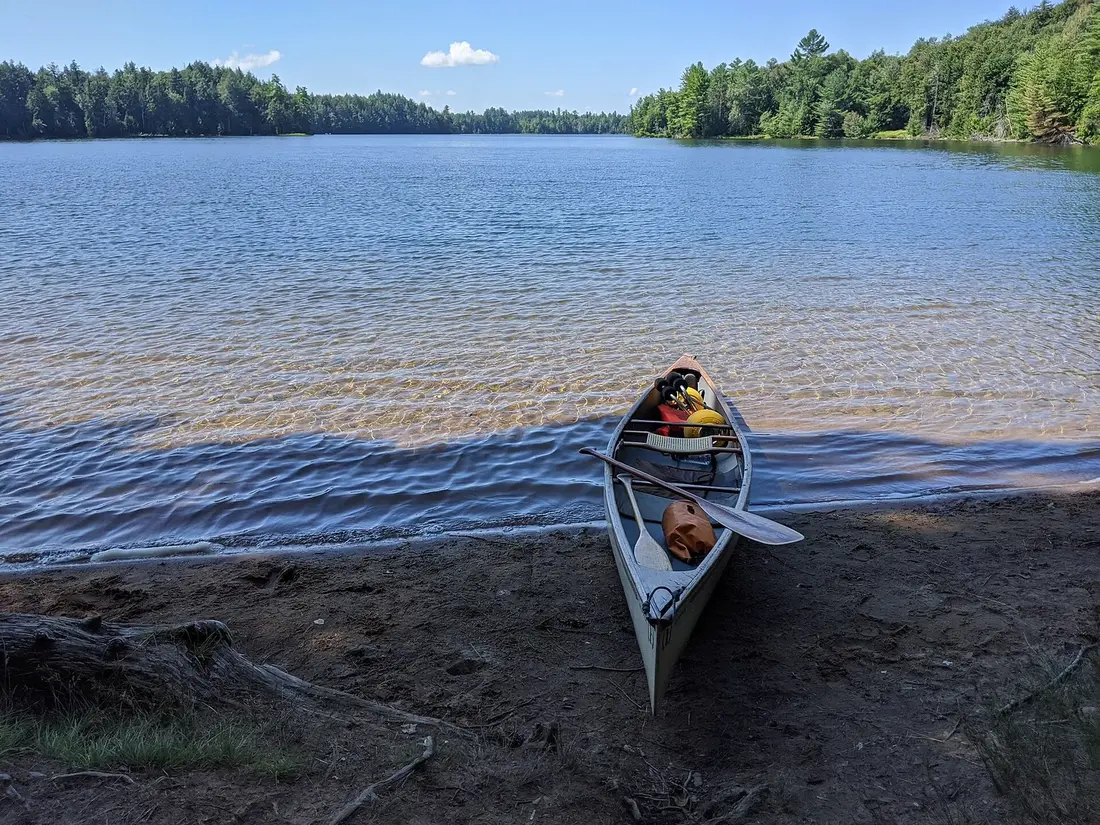
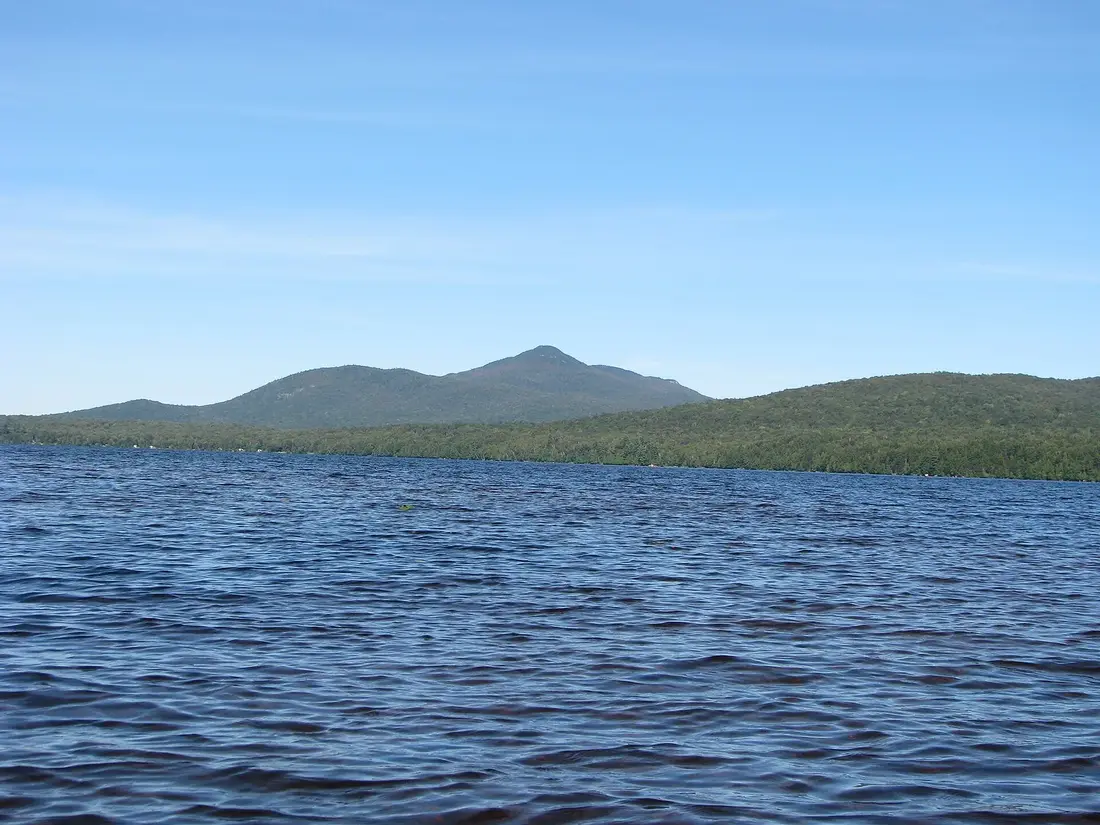


Photos on this page: SaranacLake by Mwanner at en.wikipedia, CC BY-SA 3.0; St Regis Canoe Area by Marty Plante, CC BY-SA 4.0; Meacham Lake Franklin County New York by Mwanner, CC BY-SA 3.0. Resized and cropped for this site. All photo credits