
The Adirondack Experience
The Adirondack Experience museum at Blue Mountain Lake, 89 road miles down NY 30: the galleries, boats, season, tickets, café and a day plan.
The Adirondack Experience, The Museum on Blue Mountain Lake, is the Adirondack Park's big history museum: more than 20 buildings on about 121 acres on a hillside above Blue Mountain Lake, with boats, a private railroad car, a log hotel from 1876 and galleries on the people who have lived and worked in these mountains. It is about 89 road miles south of the cabins, straight down NY 30 through Paul Smiths, Tupper Lake and Long Lake. It is open every day from late May to mid-October and closed the rest of the year.
What the museum is
For its first sixty years the place was called the Adirondack Museum, and older guidebooks and maps use that name. In 2017 it became Adirondack Experience: The Museum on Blue Mountain Lake, and the museum shortens that to ADKX. It grew out of the Adirondack Historical Association, formed in 1948.
The collection is large for a museum this far from a city. The museum counts about 30,000 objects, more than 70,000 photographs, 9,000 books and 800 collections of original manuscripts. What you walk through is a campus, a set of exhibition halls, historic cabins and cottages, pavilions and gardens spread over a slope that drops toward the lake. The museum counts more than 20 buildings and structures on about 121 acres on its visitor page, and more than 24 historic and contemporary buildings in a 2026 press release, depending on what is counted.
One general admission ticket covers every exhibition on the campus, with no separate tickets inside. The museum recommends at least four hours, and with the drive from the cabins that makes this a full day. It is the best single place in the park to learn how the Adirondacks came to be the way they are, which makes it a good first-week outing that puts names and stories to what you see on the rest of your trips.
The museum's history
The hillside has hosted visitors since the 1870s. In 1867 Miles Talcott Merwin bought 11,230 acres here, most of Blue Mountain included. The Log Hotel went up in 1876; it is the one building original to the site and is listed on the National Register of Historic Places. In 1880 Tyler Merwin added a large frame hotel with a broad veranda over the lake, and by 1907 Merwin's Blue Mountain House could hold as many as 100 guests. The rustic gazebo on the campus today is a reproduction of one of that hotel's open-air summerhouses.
The museum itself began after the Second World War. Harold K. Hochschild, a business executive and amateur historian, and William Wessels formed the Adirondack Historical Association in 1948, and the New York State Legislature chartered it in 1949. The Adirondack Museum opened on August 4, 1957. Its first director, Robert Bruce Inverarity, who led it from 1954 to 1965, described its mission as "ecological in nature," meaning the story of people and the land together. The museum still gives an annual Harold K. Hochschild Award; the 2026 recipients were Dick Beamish and the Adirondack Explorer magazine.
The museum changed hands in 2026. David M. Kahn, director since 2011, retired, and on May 28, 2026 the trustees named Christopher Dobbs the new executive director. The next big addition is already announced: a permanent exhibition, Nature of Belonging: The Black Experience in the Adirondacks, set to open in summer 2027, with $2 million from New York State announced in 2025. Charles Clark III is its curator. It covers more than 200 years of Black life in the region, from the Timbuctoo settlements of formerly enslaved people and abolitionists to the region's residents today. Timbuctoo was a settlement of Black farmers in North Elba, near Lake Placid, about two miles from the John Brown Farm.
Life in the Adirondacks
The main exhibition is Life in the Adirondacks, 19,000 square feet of galleries on the park and its people. Start in the Wilderness Stories introduction theater, a video on the region and the themes ahead, then walk through five galleries.
Call of the Wilderness
This gallery is about how visitors reached the mountains in the age of the great camps and hotels. Its centerpiece is a recreated private railroad station and a real Pullman car with soundscapes, and figures of people who shaped the park, among them Theodore Roosevelt, the surveyor Verplanck Colvin, the conservationist Clarence Petty and Frank Owen. The car is the Louisville, built in 1890 and first named the Oriental, and it shows how first-class travelers rode north. Look also for Clarence Petty's well-worn boots, which traveled all over the Adirondacks; he lived to 104.
A Peopled Wilderness
The Adirondacks were never empty. This gallery tells Mohawk and Abenaki history with artifacts, video interviews, music, a language-learning station and a recreated traditional campsite. One object in the collection to look for is a Kanien'kehá:ka (Mohawk) gustoweh, a headdress with an ash frame, beadwork and feathers, still worn at certain ceremonies. Closer to the cabins, the Akwesasne Cultural Center and the Six Nations Indian Museum in Onchiota tell this history in the communities' own places.
Roughing It
Roughing It covers the nineteenth-century Great Camps and the long tradition of living in the woods. Its best-known piece is the log cabin of Anne LaBastille (1933 to 2011), the conservationist and author whose memoir Woodswoman, published in 1976, told of her life in a cabin she built on Twitchell Lake. The cabin was taken down and rebuilt inside the gallery, with her typewriter on the desk. LaBastille was also the first scientist appointed a commissioner of the Adirondack Park Agency. The museum marked the book's 50th anniversary in September 2026 with tours, paddles on Twitchell Lake and a new biography by Penny Harr, a member of the museum's exhibit staff.
Adirondack Tough
Adirondack Tough: Working in the Wilderness is about the jobs that built the region: iron mining underground and in open pits, lumbering, maple sugaring and ice harvesting. The interactive log-jam activity is a good hands-on stop for teenagers.
Our Adirondack Park
The last gallery has a giant walk-on map of the park and a multi-screen media room. Find the cabins' corner at the Park's northern edge, then trace NY 30 down to where you are standing. Before you leave, the museum asks visitors to add a favorite Adirondack memory or story.
Boats and boating
Boats and Boating in the Adirondacks covers how people moved through a region of lakes and rivers, for work and for fun. More than fifty boats are on exhibit each year. The heart of it is the Adirondack guideboat, which the museum calls "an indigenous craft." Next to the guideboats are wooden canoes by J. Henry Rushton, among them the Sairy Gamp, a canoe that weighs ten and a half pounds, on loan from the Smithsonian Institution.
The faster end of the hall has the Skeeter, a 1905 Gold Cup race boat. The collection also holds a 1910 naphtha launch that belonged to Alfred Gwynne Vanderbilt, whose family owned Great Camp Sagamore near Raquette Lake. If you have paddled Meacham Lake or the Saint Regis Canoe Area on this trip, this is the hall that shows where those carries and routes came from.
Work in the Woods and Woods and Waters
Work in the Woods is a hands-on exhibition about logging, one of the region's most important industries. It shows the tools, the tree species cut, the products made from them, life in a logging camp and how the industry has changed. Guests who drive past the log trucks on NY 30 will recognize the modern end of the story.
Woods and Waters: Outdoor Recreation in the Adirondacks traces the history of outdoor recreation in the region, built on new research by the environmental and Adirondack historian Phil Terrie, with historic and present-day photographs of people in the woods and on the water. It is the right room for anyone who has been counting fire towers this trip; the fire tower challenge guide has the ones near the cabins.
Art at the museum
Artists and Inspiration in the Wild holds about 200 works on the Adirondacks as subject and home. The painters include Thomas Cole, Asher B. Durand and Arthur Fitzwilliam Tait, the photographer Seneca Ray Stoddard and Rockwell Kent, alongside Edna West Teall, Dorothy Dehner, the photographer Margaret Bourke-White and contemporary artists Takeyce Walter, Niio Perkins and Natasha Smoke Santiago. During the season, Abenaki, Mohawk and other Adirondack artists come to the campus as artists in residence and demonstrate their craft.
Rustic furniture has its own building. Bull Cottage, built around 1901 for the Reverend Archibald Bull, holds Tree Art: Adirondack Rustic Furniture, one-of-a-kind pieces such as a cedar bed by Joseph Bryere and a cedar and birch hutch from the Hiram Duryea Camp. If you have sat in an Adirondack chair on the cabin decks, the story of the Adirondack chair is a good read before this visit.
The historic buildings on the campus
Much of the campus is outdoors, and the walk between buildings is part of the visit. These are the historic buildings and outdoor exhibits the museum lists:
- The Log Hotel. Built in 1876 as part of Merwin's Blue Mountain House and listed on the National Register. It closed in 2022 for restoration of an almost 150-year-old structure, paid for in part by a Preservation League of New York State grant and the Gerry Charitable Trust, and it was still closed in 2026, so check the museum's site if you want to see inside. Its exhibit is Hotels, Camps and Clubs.
- Bull Cottage. The rustic furniture collection, described above.
- The Buck Lake Club. A twentieth-century one-room log cabin used as a hunting camp, moved to the museum in the 1990s.
- The Artist's Cottage. The summerhouse of the landscape painter Gustave Wiegand, furnished from the rustic furniture collection.
- Sunset Cottage. A one-room cabin from Camp Cedars on Forked Lake, with split-spruce pole siding.
- Reising Schoolhouse. A one-room schoolhouse built in 1907, now a family activity room with games, toys and crafts from an earlier era.
- The Kids' Cabin. A kid-sized cabin with an old kitchen and laundry to try.
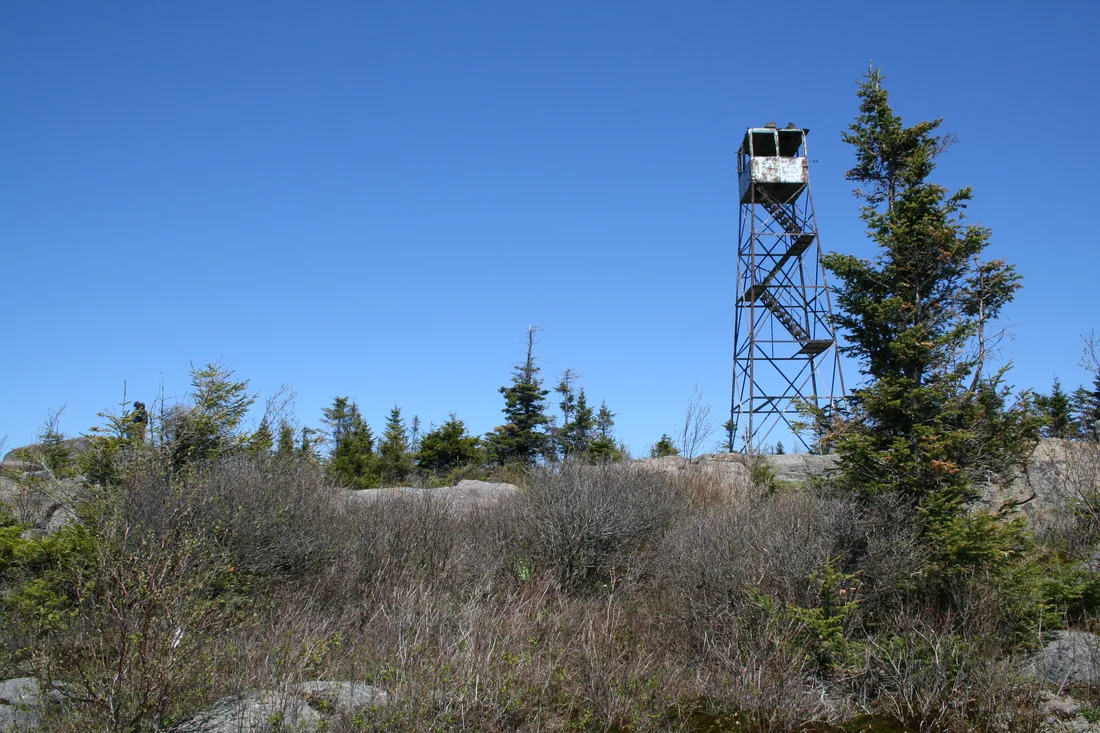
- The Whiteface Mountain fire tower. A fire tower that stands on the campus. You can climb it for a view over the museum grounds and Blue Mountain.
The Marion River Carry Pavilion
Down by the pond, the Marion River Carry Pavilion holds a 1901 H.K. Porter Company steam engine and passenger car, the steam launch Osprey and a diorama of the steamboat and rail links that carried travelers through the central Adirondacks around 1900. The engine ran on the Marion River Carry Railroad, which the museum describes as the shortest standard-gauge railroad in the world when it opened in 1900: three-quarters of a mile long and six miles from any other rail line. A stagecoach from about 1840 is also in the collection; it ran between the Pottersville train station and the steamboat landing on Schroon Lake.
The grounds, boats and trails
In a normal summer the museum lends boats on Minnow Pond and opens two walking trails. Both were closed for the whole 2026 season, so check the boathouse and trail pages on the museum's site before you plan around them.
When the boathouse is open, it runs from July through Labor Day or September, about 10:30 a.m. to 4:30 p.m. with the last boat out at 3:30, for up to 30 minutes per boat on Minnow Pond, first come, first served, with no extra charge beyond admission. Riders must be 6 or older, everyone wears a life jacket the boathouse provides, and boats stay inside the buoys. The fleet is historic: guideboats by J.H. Rushton (about 1906) and John Blanchard (about 1920), a Skaneateles skiff from about 1900, a Rushton Indian Girl canoe, 1950s Old Town canoes and a Thompson Hiawatha from about 1921. Guideboats are for people with rowing experience; staff help match a boat to your skill.
The Minnow Pond Trail is an easy walk of about three-quarters of a mile from the center of campus to Minnow Pond, about 90 acres at about 2,000 feet, in the Raquette River watershed, where loons, otters, beavers and wood ducks live. Sign in at the kiosk in the Fowler Lot and follow the orange or blue markers. The Blue View Trail is a shorter, steeper spur with a higher view over Blue Mountain Lake. The trail is natural ground with short steep rises, and the museum does not recommend it for strollers or wheelchairs. Hikers under 18 go with an adult.
Without the boats and trails, the outdoor part of a visit is the Experience Gardens, more than a dozen gardens of native plants, perennials, ferns and trees; the Merwin Hill Pavilion, a shady place to rest with a wide view; the Lake View Deck; and feeding the trout at the pond by the Marion River Carry Pavilion. The museum also runs guided nature hikes on Thursdays in July, August and September when its trails are open.
Season and hours
The museum is open one season a year, from late May to mid-October, every day including holidays, 10 a.m. to 5 p.m. From mid-October to late May the campus is closed to visitors. The 2026 season ran from Friday, May 22 to Monday, October 12, the Monday holiday weekend in October.
The 2027 dates were not yet posted in October 2026. In recent years the museum has opened on the Friday before Memorial Day, May 23 in 2025 and May 22 in 2026, so expect late May 2027 and confirm the dates on the museum's site before you plan around them.
| When | What is open |
|---|---|
| Late May to late June | The full campus and café. Black flies are out in the woods, so the indoor galleries make a good outing in that stretch; the bug guide has the dates. |
| July and August | The busiest weeks. In a normal year the boathouse, trails and Thursday nature hikes run. |
| September to mid-October | Quieter, with fall color on the drive. FallFest is held on a Sunday in early October (October 4 in 2026). |
| Mid-October to late May | Closed to visitors. |
FallFest runs from 10 a.m. to 5 p.m. with games, live music and the museum's annual kids' fishing derby, and a regular museum ticket gets you in. For leaf timing on the drive, see the fall foliage guide.
Tickets
These are the museum's 2026 prices. They change from year to year, so treat them as a guide and check the museum's site for the current ones.
| Ticket | Online | At the door |
|---|---|---|
| Adults | $22 | $24 |
| Seniors 65 and up | $19 | $21 |
| Veterans (ID) | $19 | $21 |
| Youth 5 to 17 | $13 | $15 |
| Students (ID) | $13 | $15 |
| Children 4 and under, active military, members | Free | Free |
Buying online saves $2 a ticket; you can also buy at the admissions desk in the Visitor Center. SNAP EBT cardholders pay $5 a person for up to three people through Museums for All, and teachers from the twelve Adirondack Park counties get in free with a school ID. Year-round Park residents get in free on the second and fourth Sunday of each month with proof of residency; that is for people who live in the Park, so cabin guests buy regular tickets.
Food at the Lake View Café
The Lake View Café is on the campus, with outdoor seating on a deck that looks over Blue Mountain Lake. It serves lunch and snacks, with beer and wine, on a menu that changes. The museum lists more than one set of hours (open with the museum, 10 a.m. to 5 p.m., with grab-and-go food from 10 to 4 in one place; 10 to 3 and 10 to 4 in others), so plan lunch for midday and do not count on a late meal.
You may bring your own food. Food and drink are not allowed inside the exhibition buildings, so leave the cooler in the car or eat outdoors. A packed lunch from the cabin kitchen works well, and the groceries and supplies page has where to shop in Malone the day before.
Accessibility, strollers and dogs
The museum says most of its facilities and exhibitions are fully accessible. The campus sits on a mountainside slope, so allow time between buildings. Wheelchairs, wheeled walkers and strollers are lent free at the museum, first come, first served. A sighted guide is available on request; email the museum a week ahead. The museum publishes an accessibility guide online, linked from its visitor page. The Minnow Pond Trail is the one part of the grounds the museum does not recommend for wheelchairs or strollers.
Pets are not allowed on the campus, and that includes emotional support and therapy animals; trained service animals are welcome. Parking is free, with an electric car charging station available first come, first served, and RV and trailer parking across the road from the main drive. If your dog came on the trip, plan this as a day without it; the dog guide has the dog-friendly outings near the cabins.
The drive down NY 30
The museum is at 9097 State Route 30 in Blue Mountain Lake, 89 road miles from the cabins. Allow about two and a quarter hours each way without stops. The route is one road almost all the way:
- From the cabins take the county roads to County Route 25 and follow it to NY 30, about 7 miles.
- Turn south on NY 30 and stay on it for about 45 miles, past Meacham Lake and Paul Smiths, to the junction where NY 3 joins it near Tupper Lake.
- Follow NY 3 and NY 30 together for about four miles into Tupper Lake, cut through town on County Route 44 (Hosley Avenue and Stetson Road) and pick NY 30 up again on Wawbeek Avenue.
- Stay on NY 30 south for about 20 miles to Long Lake, cross the lake on the NY 30 bridge in the hamlet, and continue on NY 30, which shares the road with NY 28N for the last 10 miles to Blue Mountain Lake.
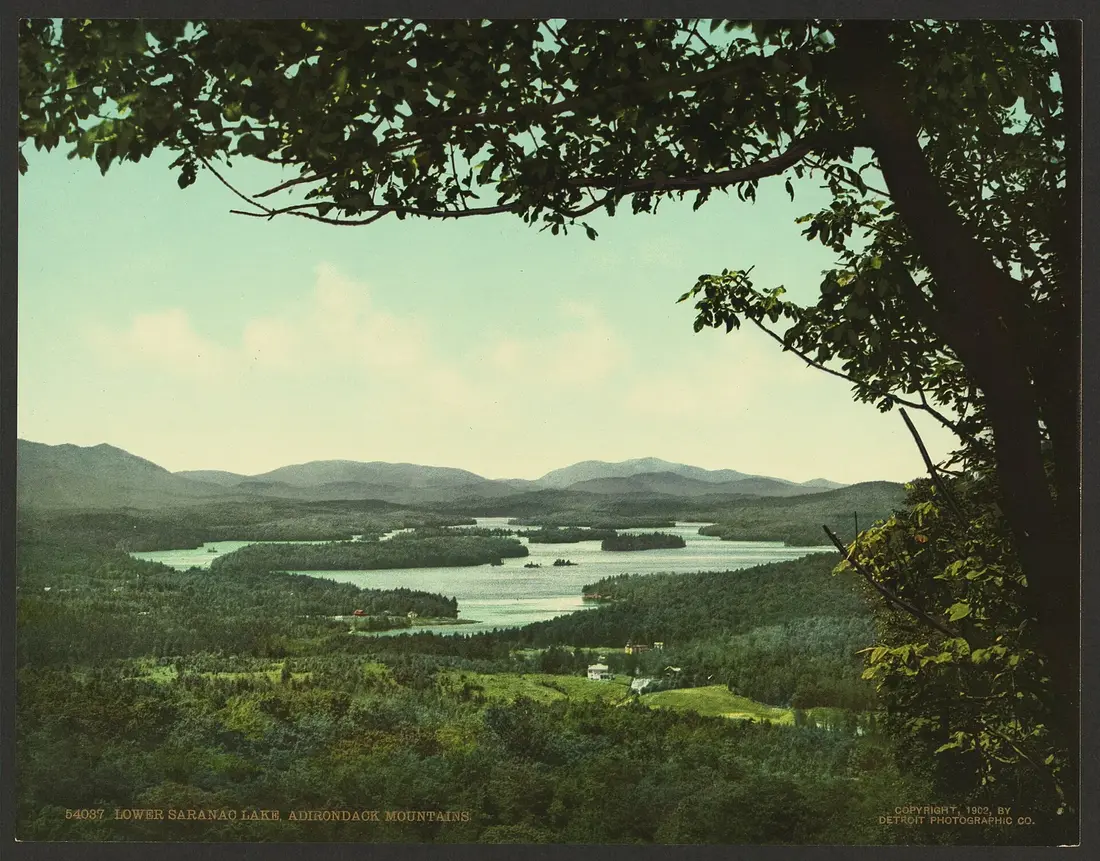
Heading south, you pass the Blue Mountain trailhead at the top of a long hill; the museum is about 1.5 miles further down NY 30. This stretch of NY 30 is part of the Adirondack Trail, a state scenic byway that follows the road from Malone south to Fonda.
Tupper Lake, about 57 road miles from the cabins and roughly two-thirds of the way, is the town for fuel and a break; Stewart's Shops is at 124 Park Street. Short work zones come and go on NY 30 in summer, so check 511NY before you leave. The road is two lanes with long stretches of forest, so watch for deer at dawn and dusk; the getting to the cabins guide and the winter driving guide cover the roads near the cabins.
On the way
Paul Smiths
About 31 road miles from the cabins, NY 30 passes Paul Smith's College and its Visitor Interpretive Center, with more than 25 miles of trails open dawn to dusk every day and a lodge open Thursday to Monday, 9 a.m. to 5 p.m. It makes a good leg-stretch on the way home. The Saranac Lake and Paul Smiths guide has the story of Paul Smith's hotel and the rest of the area.
Tupper Lake
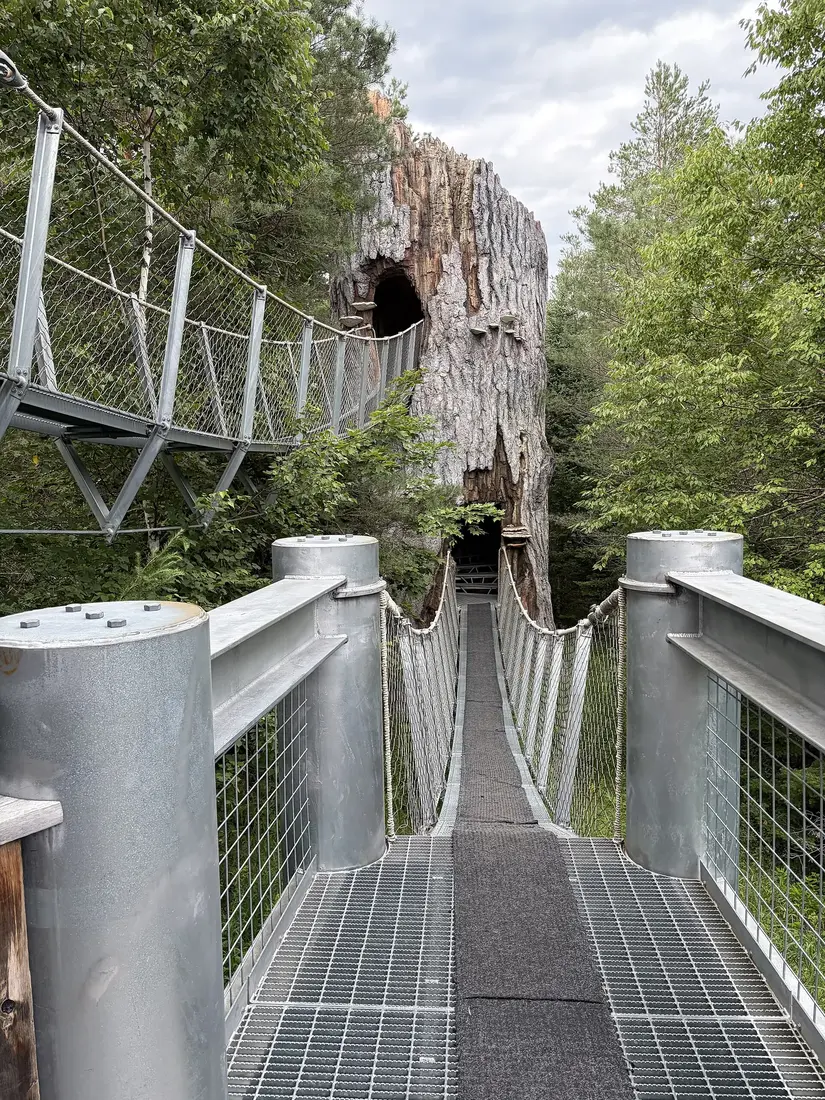
Tupper Lake, about 57 road miles out, is the place on the route for fuel and a coffee. It is home to The Wild Center, a natural history museum with a treetop walk; on a two-museum trip, save it for its own day with the Wild Center guide, because each one fills most of a day. Paddlers can look at the Raquette River and hikers at the Tupper Lake Triad for another trip.
Long Lake
Long Lake, about 79 road miles from the cabins, is the last hamlet before the museum. NY 30 crosses the lake on a bridge right in the hamlet. The town beach sits on Route 30 in the center of the hamlet, a north-facing sand beach with a view of the Seward Range, restrooms, a gazebo and two swimming docks, with Red Cross lifeguards and summer hours of 10 a.m. to 6 p.m. Float planes for scenic flights take off and land nearby. Hoss's Country Corner on Route 30, a general store the Hosley family opened in 1972, sells books on Adirondack history, outdoor gear, maple syrup and local food.
Blue Mountain after the museum
Blue Mountain rises above the museum and the hamlet. The Blue Mountain trailhead is at the top of the long hill on NY 30, about 1.5 miles past the museum toward Long Lake, with parking on the right. The trail is 4.2 miles round trip with 1,550 feet of climbing to a 3,750-foot summit. The first stretch follows an old road, the climbing gets steep after about 1.25 miles and crosses open rock slabs that can be slippery on the way down, and the last part follows a ridge to the tower. The fire tower was built in 1917 and was the first restored tower on the Forest Preserve, and the best views are from its cab.
With the drive from the cabins, the museum and the Blue Mountain climb are too much for one day, so make the hike its own trip. The tower counts toward the Hamilton County Fire Tower Challenge; the towers near the cabins are in the fire tower challenge guide.
A day from the cabins
This plan gives the museum its recommended four hours and gets you home for an evening in the hot tub.
| Time | Plan |
|---|---|
| 7:45 a.m. | Leave the cabins with a full tank and a packed snack. County Route 25 to NY 30, then south. |
| 9:15 a.m. | Coffee and a stop in Tupper Lake, about 57 road miles out. |
| 10:20 a.m. | Arrive at the museum soon after the doors open at 10. Start with Life in the Adirondacks while the halls are quiet. |
| 12:30 p.m. | Lunch at the Lake View Café or a picnic outdoors. |
| 1:15 p.m. | Boats and Boating, the Marion River Carry Pavilion, Bull Cottage and the fire tower. |
| 3:00 p.m. | Last look from the Lake View Deck, then head north. |
| 3:20 p.m. | Stretch your legs at the Long Lake town beach. |
| 5:00 p.m. | A short walk on the trails at the Paul Smith's VIC, which stay open until dusk. |
| 6:30 p.m. | Back at the cabins, dinner on the grill and the hot tub. |
On a short October day, skip the VIC and head straight home so the last miles are in daylight. For other full-day plans from the cabins, the day trips page lists every one.
Questions
When is the Adirondack Experience open?
The museum is open every day from late May to mid-October, 10 a.m. to 5 p.m., and closed the rest of the year. The 2026 season ran from May 22 to October 12. The 2027 dates were not yet posted in October 2026; the museum has opened on the Friday before Memorial Day in recent years, so expect late May and check its website.
How far is the museum from the cabins?
It is about 89 road miles, almost all of it on NY 30 through Paul Smiths, Tupper Lake and Long Lake. Allow about two and a quarter hours each way without stops, and fuel up in Tupper Lake. The getting to the cabins guide covers the roads near the cabins.
How much are tickets?
In 2026 adult tickets were $22 online and $24 at the door, seniors 65 and up and veterans $19 and $21, and youth 5 to 17 and students $13 and $15. Children 4 and under get in free. One ticket covers every exhibition on the campus. Prices can change each season, so check the museum's site.
How long should we plan to stay?
The museum recommends at least four hours. With about two and a quarter hours of driving each way, that makes a full day. Leave the cabins by about 7:45 a.m., eat lunch at the Lake View Café or bring a picnic, and head north by mid-afternoon.
Can we bring our dog?
No. Pets, including emotional support and therapy animals, are not allowed on the campus; trained service animals are welcome. Plan the museum as a day without the dog. The dog guide lists dog-friendly outings near the cabins.
Is the museum accessible for wheelchairs?
The museum says most of its facilities and exhibitions are fully accessible, and it lends wheelchairs, walkers and strollers free, first come, first served. The campus is on a slope, so allow time between buildings. The Minnow Pond Trail is natural ground and not recommended for wheelchairs or strollers.
Is there food at the museum?
Yes. The Lake View Café has lunch, snacks, beer and wine, with a deck over Blue Mountain Lake. You can also bring your own food and eat outdoors; food and drink are not allowed inside the exhibition buildings.
Sources
Facts on this page were checked against these sources in October 2026. Hours, fees and schedules change; confirm before you go.
- theadkx.org theadkx.org/about/history/
- theadkx.org theadkx.org/visit/plan-your-visit/
- theadkx.org theadkx.org/exhibitions/current/the-log-hotel/
- theadkx.org theadkx.org/exhibitions/current/life-in-the-adirondacks/
- experienceouradirondacks.com experienceouradirondacks.com/story/highlights-of-history-can-t-miss-ar
- theadkx.org theadkx.org/adirondack-experience-to-celebrate-50th-anniversary-of-woo
- theadkx.org theadkx.org/exhibitions/current/boats-and-boating-in-the-adirondacks/
- theadkx.org theadkx.org/exhibitions/current/work-in-the-woods/
- theadkx.org theadkx.org/exhibitions/current/woods-and-waters/
- theadkx.org theadkx.org/exhibitions/artistsandinspiration/artists-inspiration-in-t
- theadkx.org theadkx.org/visit/to-do/
- theadkx.org theadkx.org/exhibitions/current/bull-cottage/
- theadkx.org theadkx.org/exhibitions/current/the-buck-lake-club/
- theadkx.org theadkx.org/exhibitions/current/outdoor-exhibits/
- theadkx.org theadkx.org/education/resources/podcasts/episode-5-the-rickety-rackety
- theadkx.org theadkx.org/visit/to-do/borrow-a-boat/
- theadkx.org theadkx.org/visit/to-do/trails/
- theadkx.org theadkx.org/visit/lake-view-cafe/
- theadkx.org theadkx.org/category/press-room
- theadkx.org theadkx.org/first-major-exhibition-exploring-more-than-200-years-of-bl
- theadkx.org theadkx.org/adirondack-experience-to-open-for-2025-season/
- wcax.com wcax.com/2026/10/02/adirondack-experience-fallfest-is-this-weekend/
- experienceouradirondacks.com experienceouradirondacks.com/hiking/blue-mountain
- experienceouradirondacks.com experienceouradirondacks.com/swimming/long-lake-public-beach
- airport-data.com airport-data.com/airport/NY9/
- ADK Taste adktaste.com/blog/hoss-country-corner
- Paul Smith's College paulsmiths.edu/vic/
- locations.stewartsshops.com locations.stewartsshops.com/ny/tupper-lake
- theadkx.org theadkx.org/adirondack-experience-receives-historic-2m-in-state-fundin
- napoleonexhibit.com napoleonexhibit.com/store/-The-Oriental-L-N-Railroad-car-Adirondack-Mu
- adirondackscenicbyways.org adirondackscenicbyways.org/byway.html
- nystateparks.blog nystateparks.blog/tag/gerrit-smith/
In this guide
Stay nearby
The aviation cabin: flight-themed décor, a Jøtul gas stove, a large open deck with its own hot tub, and a smokeless fire pit on the lawn.
 The AviatorCabin 3 · 2 bd · 1 ba · sleeps 4
More in Day Trips
Sources
32 references, listed in full at the end of this guide: official park, state, tourism-office and business sources, checked October 2026.
Related guides


Photos on this page: Wild Center 01 by Dclemens1971, CC BY 4.0; Saint Regis Fire Tower 2010 t6 by John Sweeney, CC BY-SA 3.0. Resized and cropped for this site. All photo credits